Democracy Gone Astray

Democracy, being a human construct, needs to be thought of as directionality rather than an object. As such, to understand it requires not so much a description of existing structures and/or other related phenomena but a declaration of intentionality.
This blog aims at creating labeled lists of published infringements of such intentionality, of points in time where democracy strays from its intended directionality. In addition to outright infringements, this blog also collects important contemporary information and/or discussions that impact our socio-political landscape.

All the posts here were published in the electronic media – main-stream as well as fringe, and maintain links to the original texts.

[NOTE: Due to changes I haven't caught on time in the blogging software, all of the 'Original Article' links were nullified between September 11, 2012 and December 11, 2012. My apologies.]

Showing posts with label Slavery. Show all posts

Monday, August 06, 2018

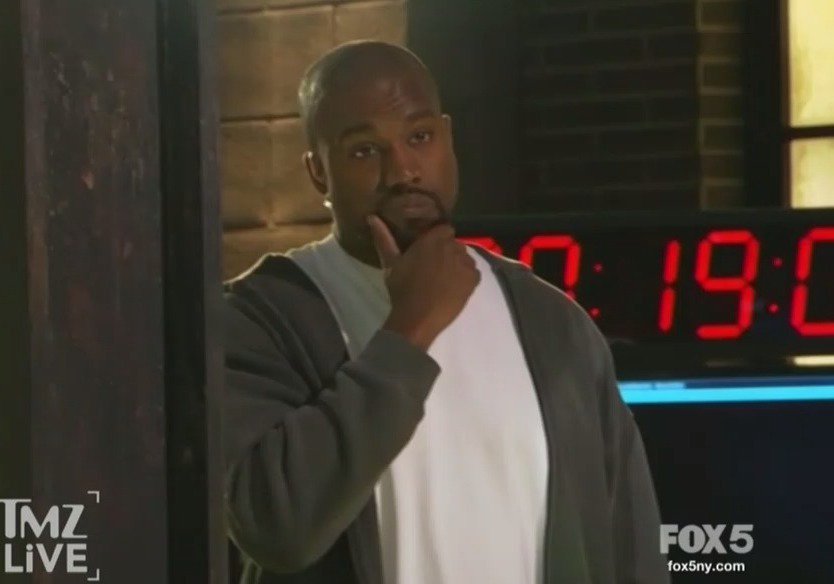
Kanye West Calls Slavery A ‘Choice,’ Gets Schooled On History

Kanye West dropped by TMZ on Tuesday to tell the newsroom staff that he loves President Donald Trump and that he believes slavery “sounds like a choice,” only to get completely shut down by writer Van Lathan.

“When you hear about slavery for 400 years ... for 400 years? That sounds like a choice,” West said.

Friday, September 23, 2016

Saudi Official Allegedly Brought Slave To London, Foreign Office Diplomatic Immunity Figures Reveal

A Saudi official has been accused of bringing a slave to London, as a string of crimes committed by people with diplomatic immunity are released in new Foreign Office documents.

According to the Foreign Office, 11 “serious and significant” offences were allegedly committed by people immune from prosecution as diplomats in the UK last year.

Among the alleged offences were sexual offences involving children and causing actual bodily harm.

Sunday, February 28, 2016

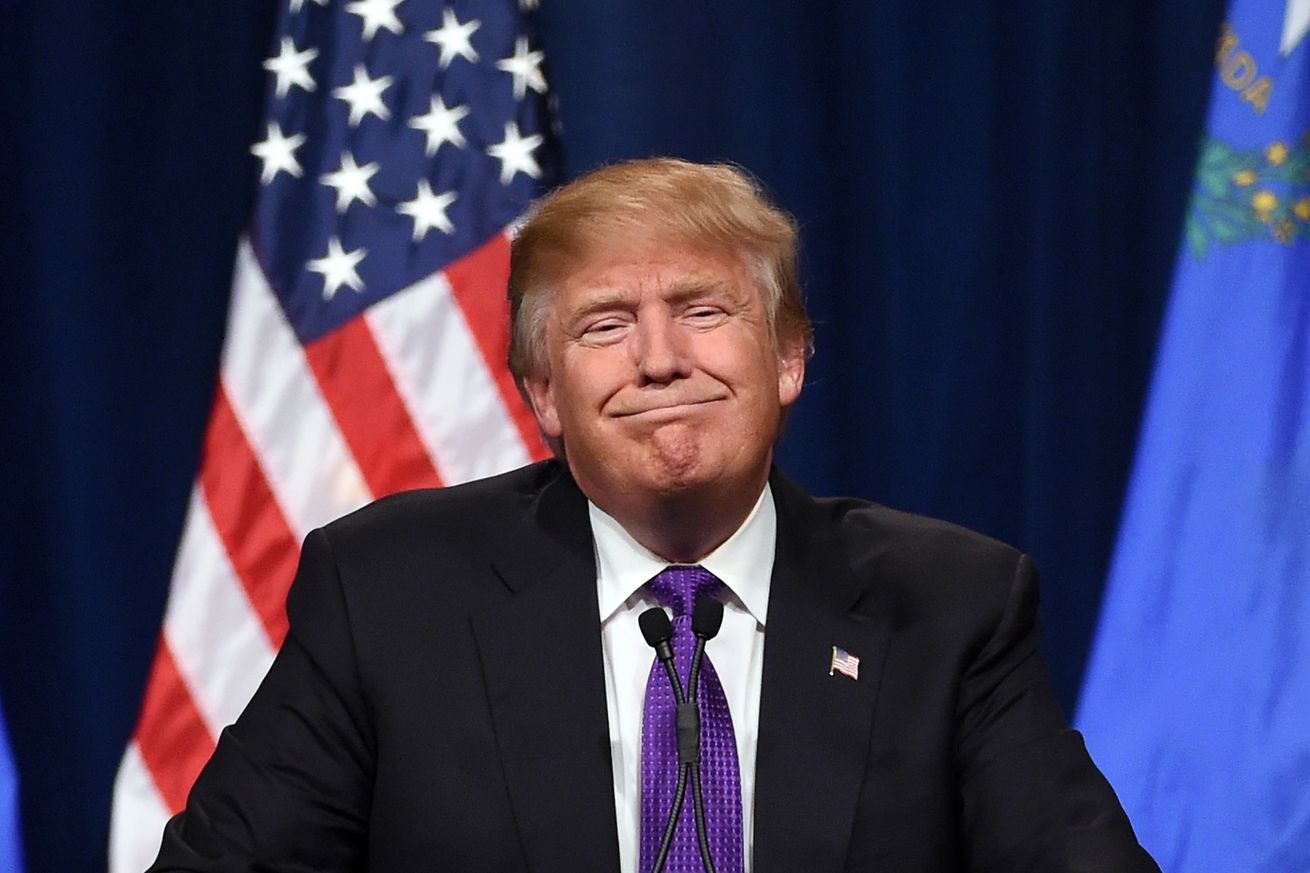
Nearly 20 percent of Trump’s supporters disapprove of Lincoln freeing the slaves

The New York Times took a dive into whether Donald Trump's supporters are unusually racist — or, in the newspaper's delicate phrasing, "responsive to religious, social and racial intolerance." And they came up with a stunning statistic: Nearly one in five Trump supporters didn't approve of freeing slaves in the Confederacy.

Tuesday, February 16, 2016

Allegations of conscripted labour in Canadian mine: the fifth estate

A Vancouver-based mining company that struck gold in the small North African country of Eritrea is being accused in a B.C. lawsuit of permitting forced labour to be used in the construction of its mine.

The allegations filed by three former Eritrean conscripts in B.C.'s Supreme Court accuse Nevsun Resources of being "an accomplice to the use of forced labour, crimes against humanity and other human rights abuses at the Bisha mine."

Thursday, February 11, 2016

Capitalism, Slavery, Racism and Imprisonment of People of Color Cannot Be Separated

Slavery didn't end; it evolved. That's the powerful argument made in Slaves of the State by Dennis Childs. Ever since a clause in the 13th Amendment allowed for enslavement as "punishment for crime," the groundwork has been laid for the prison industrial complex to function as the 21st century equivalent of chattel slavery. Order your copy of this eye-opening book by making a donation to Truthout today!

The following is an interview with Dr. Dennis Childs, author of Slaves of the State: Black Incarceration From the Chain Gang to the Penitentiary.

Saturday, February 06, 2016

The 13th Amendment Created Legal Slavery Through Incarceration

Slavery didn't end, it evolved. That's the powerful argument made in Slaves of the State: Black Incarceration From the Chain Gang to the Penitentiary by Dennis Childs. Ever since a clause in the 13th Amendment allowed for enslavement as "punishment for crime," the groundwork has been laid for the prison industrial complex to function as the 21st century equivalent of chattel slavery. Order your copy of this eye-opening book by making a donation to Truthout today!

In this excerpt from Slaves of the State, Dennis Childs illustrates how the 13th Amendment plated a primary role in perpetuating slavery:

Monday, October 19, 2015

Huckabee Suggests Poor People Should Be Sold Into Slavery For Stealing

The United States criminal justice system could be improved if we sell poor people convicted of crimes into slavery, according to Republican presidential candidate Mike Huckabee.

The former Arkansas governor weighed in on our nation’s current criminal justice system during an appearance yesterday on Mickelson in the Morning, a leading Iowa radio program.

Tuesday, September 22, 2015

Constitutionally, Slavery Is Indeed a National Institution

Sean Wilentz’s latest op-ed in the New York Times, “Constitutionally, Slavery Is No National Institution,” argues that it is a “myth that the United States was founded on racial slavery.” Instead, the Princeton professor demonstrates a woeful misreading of the debates over the drafting of the Constitution. That the document does not contain the words “slave” or “slavery” in no way indicates that it was written to reject the institution. In the debates, the delegates almost always employed euphemisms such as “this unique species of property,” “this unhappy class,” or “such other persons,” as stand-ins for the more repugnant “slaves.” They simply carried that practice over to the final document.

Saturday, September 19, 2015

Thousands Of Indonesian Fishermen Rescued After Slave Island Probe

AMBON, Indonesia — More than 2,000 fishermen have been rescued this year from brutal conditions at sea, liberated as a result of an Associated Press investigation into seafood brought to the U.S. from a slave island in eastern Indonesia.

Dozens of Burmese men in the bustling port town of Ambon were the latest to go home, some more than a decade after being trafficked onto Thai trawlers. Grabbing one another's hands, the men walked together toward buses last week. As they pulled away for the airport, some of those still waiting their turn to go home cheered, throwing their arms in the air.

Friday, July 24, 2015

Slavery and racism is easy to rationalize if you dehumanize an entire people

How do humans justify the terrible deeds we commit? This question perplexed the Globe'sKonrad Yakabuski in his column last week on slavery in the United States and the murder in Charleston, South Carolina, of nine African Americans by a white racist. "It seems incomprehensible how anyone could have rationalized" slavery, he wrote. We all know what he means. Yet in a perverse way it's also the easiest thing in the world to explain: white Americans simply denied the humanity of their black slaves.

Friday, May 29, 2015

The Real "Looting": From Slavery to Policing and Beyond

In April, another unarmed Black person was killed by police. Freddie Gray, a 25-year-old African-American male, was arrested by Baltimore police on April 12, given a "rough ride" and a week later died of a spinal cord injury he received in the police van.


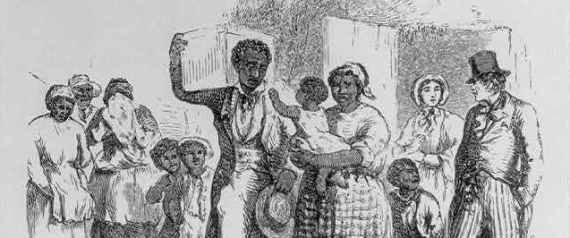
Much has been, and will still be, written about Baltimore. However, one word that has been overused in that coverage is "riot." We must keep in mind: The protests and property destruction in Baltimore may have been a spontaneous reaction to police violence but they were not isolated. They are part of a growing uprising against generations-long systemic racism across the United States.

Sunday, March 29, 2015

Burmese Slaves Catch Seafood For Global Supply: AP Investigation

BENJINA, Indonesia - The Burmese slaves sat on the floor and stared through the rusty bars of their locked cage, hidden on a tiny tropical island thousands of miles from home.

Just a few yards away, other workers loaded cargo ships with slave-caught seafood that clouds the supply networks of major supermarkets, restaurants and even pet stores in the United States.

Sunday, November 30, 2014

Up to 13,000 working as slaves in UK

As many as 13,000 people in Britain are victims of slavery, about four times the number previously thought, analysis for the government has found.

The figure for 2013 marks the first time the government has made an official estimate of the scale of modern slavery in the UK, and includes women forced into prostitution, domestic staff, and workers in fields, factories and fishing.

The National Crime Agency (NCA)’s human trafficking centre had previously put the number at 2,744.

Tuesday, November 25, 2014

Almost 36 Million People Around The World Live As Slaves

LONDON, Nov 17 (Thomson Reuters Foundation) - Almost 36 million people are living as slaves across the globe with an index on Monday listing Mauritania, Uzbekistan, Haiti, Qatar and India as the nations where modern-day slavery is most prevalent.

The Walk Free Foundation, an Australian-based human rights group, estimated in its inaugural slavery index last year that 29.8 million people were born into servitude, trafficked for sex work, trapped in debt bondage or exploited for forced labor.

Friday, October 24, 2014

5 Things About Slavery You Probably Didn't Learn In Social Studies: A Short Guide To 'The Half Has Never Been Told'

Edward Baptist's new book, "The Half Has Never Been Told: Slavery And The Making Of American Capitalism", drew a lot of attention last month after the Economist said it was too hard on slave owners.
What you might not have taken away from the ensuing media storm is that "The Half Has Never Been Told" is quite a gripping read. Baptist weaves deftly between analysis of economic data and narrative prose to paint a picture of American slavery that is pretty different from what you may have learned in high school Social Studies class.

Monday, July 07, 2014

"Counter-Revolution of 1776": Was U.S. Independence War a Conservative Revolt in Favor of Slavery?

As the United States prepares to celebrate Independence Day, we look at why July 4 is not a cause for celebration for all. For Native Americans, it may be a bitter reminder of colonialism, which brought fatal diseases, cultural hegemony and genocide. Neither did the new republic’s promise of "life, liberty and the pursuit of happiness" extend to African Americans. The colonists who declared their freedom from England did not share their newly founded liberation with the millions of Africans they had captured and forced into slavery. We speak with historian Gerald Horne, who argues the so-called Revolutionary War was actually a conservative effort by American colonists to protect their system of slavery. He is the author of two new books: "The Counter-Revolution of 1776: Slave Resistance and the Origins of the United States of America" and "Race to Revolution: The U.S. and Cuba During Slavery and Jim Crow." Horne is professor of history and African American studies at the University of Houston.

Video
Source: democracynow.org
Author: --

Wednesday, April 30, 2014

Cliven Bundy Stands By Pro-Slavery Comments In Rambling Press Conference

WASHINGTON -- Nevada rancher Cliven Bundy doubled down on his controversial remarks about slavery Thursday, insisting that perhaps the "Negro people" were better off as the property of white owners because then, at least, they had gardens and chickens to tend to instead of being dependent on the government.

"Cliven Bundy's a-wondering about these people," said Bundy, referring to himself in the third person. "Now I'm talking about the black community. I'm a-wondering. Are they better off with their young women aborting their children? Are they better off with the young men in prison? Are they better off with the older people on their sidewalks in front of their government-issued homes with a few children? Are they better off, are they happier than they was in the South in front of their homes with their chickens and their gardens and their children around them, and their man having something to do? Are they better off?"

Friday, April 18, 2014

Head Of Top Conservative Think Tank Makes Spectacularly Uninformed Statement About Slavery

Jim DeMint, the former U.S. senator from South Carolina who now leads the conservative Heritage Foundation, went on a Christian radio show last week where he discussed the topic of slavery. He offered some rather unusual views on the subject of slavery while he was a guest on this show.
Well the reason that the slaves were eventually freed was the Constitution, it was like the conscience of the American people. Unfortunately there were some court decisions like Dred Scott and others that defined some people as property, but the Constitution kept calling us back to ‘all men are created equal and we have inalienable rights’ in the minds of God. But a lot of the move to free the slaves came from the people, it did not come from the federal government. It came from a growing movement among the people, particularly people of faith, that this was wrong. People like Wilberforce who persisted for years because of his faith and because of his love for people. So no liberal is going to win a debate that big government freed the slaves. In fact, it was Abraham Lincoln, the very first Republican, who took this on as a cause and a lot of it was based on a love in his heart that comes from God.

Sunday, February 02, 2014

The Subhuman Conditions That Slaves And Child Laborers Face In India Are Worse Than You Imagined

During the largest firsthand investigation into slavery and child labor, a group of Harvard researchers documented more than 3,000 cases of forced labor in India’s handmade carpet sector.

And they say that figure is just "the tip of the iceberg."
Eight researchers from Harvard University’s FXB Center for Health and Human Rights found that the practices of forced and child labor are thriving and many workers in the world’s largest exporter of handmade carpets are subjected to abhorrent conditions.

Slavery in the Modern World

The Problem of Slavery in the Age of Emancipation
By David Brion Davis.
Buy this book

With this book, David Brion Davis brings to a conclusion one of the towering achievements of historical scholarship of the past half-century, his three-volume study of the “problem of slavery.” It must also set a record for the length of time—forty-eight years—between the appearance of the first and last works in a three-part series, a point I raise not to chide Davis for being dilatory but to commend him for perseverance. As in the previous volumes, Davis exhibits his command of a remarkable range of primary and secondary sources and of different nations’ historical experiences. And like its predecessors, the new volume reflects how scholarship on slavery has evolved, partly under the impact of the first two works in this trilogy.