Democracy Gone Astray

Democracy, being a human construct, needs to be thought of as directionality rather than an object. As such, to understand it requires not so much a description of existing structures and/or other related phenomena but a declaration of intentionality.
This blog aims at creating labeled lists of published infringements of such intentionality, of points in time where democracy strays from its intended directionality. In addition to outright infringements, this blog also collects important contemporary information and/or discussions that impact our socio-political landscape.

All the posts here were published in the electronic media – main-stream as well as fringe, and maintain links to the original texts.

[NOTE: Due to changes I haven't caught on time in the blogging software, all of the 'Original Article' links were nullified between September 11, 2012 and December 11, 2012. My apologies.]

Showing posts with label Corporate Tax Cut. Show all posts

Saturday, September 19, 2015

Corporate Tax Cuts Have Made Canada a Poorer Country

Even though we are neighbours, Canada does not follow the U.S. in spending astronomical amounts of funds to develop and purchase weapons and use them in wars. Our health care expense is way lower than that of the U.S. The U.S. spends about 17 per cent of its GDP on health care, whereas the Canada medical share is around 11 per cent.

So where has the Canadian government's money gone?

Monday, December 15, 2014

What Really Happens When You Cut Taxes On Oil Companies

Tax cuts are often spoken of as an unalloyed good in American politics. But the state of Alaska is learning the hard way those cuts — especially when they are for taxes on oil companies — don’t always deliver as promised.
Alaska is the only state with neither a state income tax nor a state sales tax. For revenue, it relies entirely on federal funding and various taxes on oil production in the state. Back in 2013, the oil taxes were altered by legislation passed under former Governor Sean Parnell (R). The logic of the bill — which flattened the tax rate, thus cutting the tax burden for high-dollar oil profits and raising it for low-dollar profits — was that it would spur renewed oil industry activity in the state. But that expected economic ferment has not materialized. And now, as the price of oil drops lower and lower, Alaska’s state budget is falling well into the red.

Saturday, November 29, 2014

Obama Threatens To Veto Corporate Tax Cut Deal For Locking Out Middle Class

WASHINGTON -- The Obama administration on Tuesday threatened to veto a bipartisan tax deal that would reportedly create permanent tax perks for corporations without advancing key tax breaks for middle- and low-income families.

"The President would veto the proposed deal because it would provide permanent tax breaks to help well-connected corporations while neglecting working families,” White House spokeswoman Jennifer Friedman said in a statement provided to HuffPost.

Congressional negotiators from both parties and both chambers have been working since the midterm elections to strike a deal extending a host of business tax preferences that, according to a report in PoliticoPro, would cost upwards of $400 billion over the next 10 years.

Monday, September 22, 2014

Did Corporate Tax Cuts Really Pay for Themselves As Harper Claims?

In a little noticed comment, Prime Minister Stephen Harper was recently reported to say:
"Dropping our tax rate has not caused the government's corporate income tax revenues to fall, which indicates that it does in fact attract business."
No one seems to have questioned his statement, even though it was made on the same day Canada dropped to 15th place on the World Economic Forum's index of global competitiveness from 9th in 2009. These rankings show corporate tax rates bearing little relationship to measures of global competitiveness.

Monday, December 30, 2013

Stephen Harper's historic tax-cutting legacy

According to a significant chorus of opinion on the right, Stephen Harper’s government has abandoned conservative economic principles. Bastions of conservatism like the The National Citizens Coalition (which Harper once headed), the Canadian Taxpayers Federation and columnist Andrew Coyne, among others, have criticized the Harper government for being unfaithful to the ideology of economic conservatism. The Harperites, who were supposed to be purists, have proven to be just another big-spending, deficit-running, pork-barrelling government like so many other Liberal and Progressive Conservative administrations of yesteryear, according to this critique.

Tuesday, December 17, 2013

Oklahoma Plan For School Storm Shelters Thwarted By Tax Cut

OKLAHOMA CITY (AP) — After a huge tornado ripped through the Oklahoma City suburbs this spring and demolished two elementary schools, killing seven children, a longtime legislator thought the time was ripe for the state to act on a well-known problem.

Although Oklahoma averages more than 50 tornadoes a year, and sometimes gets more than 100, about 60 percent of public schools have no shelters. Cash-strapped districts can't afford to build them.

Rep. Joe Dorman, who represents the small farming town of Rush Springs, proposed a bond issue, taking advantage of the state's rebounding economy and revenue from a business tax that was already on the books.

Friday, August 02, 2013

Obama's Better Bargain and Our Perverse Politics

President Obama introduced yet another plan to create jobs and pump the sagging economy yesterday, pitched as a “grand bargain” between Republicans and Democrats (or more accurately, Democrats and the business community). It’s perhaps not a terrible plan considering the current political atmosphere. But taking one step back, Obama’s offer is a deeply revealing snapshot of a dynamic that’s become deeply skewed and perhaps hopelessly corrupted.

Friday, April 05, 2013

Hundreds of bankers to save average £54,000 a year through tax cut

Hundreds of millionaires working in Britain's banks will save an average of almost £54,000 when the top rate of tax is cut this weekend, according to figures compiled by the Labour party.

The changes mean that 643 bankers, each earning more than £1m, could get a combined tax cut worth at least £34.6m.

Labour's figures were derived from details of published accounts by banks showing the number of employees earning more than £1m in the past year. It is not known what proportion of these – other than the employees of HSBC – currently pay taxes in the UK.

Wednesday, October 03, 2012

A few kind words for corporate tax cuts

Note To Economists: calling your latest research paper “A Canadian good news story” may not be the surest way to attract attention; in fact it sounds uncomfortably similar to “A worthwhile Canadian initiative”—once declared the world’s most boring headline.

And yet the report in question, released earlier this month by renowned Canadian tax expert Jack Mintz and co-author Duanjie Chen and published by the University of Calgary’s School of Public Policy, ought to be required reading for all politicians. Especially those for whom the notion that corporations aren’t paying their “fair share” has particular appeal.

Monday, August 13, 2012

Romney running mate likes Tory tax cuts

He's no fan of Canada's health-care system, insisting it's plagued by inefficiencies and relies on medical equipment that is "old, unreliable and obsolete."

But he sees the federal Conservative government's record on corporate tax cuts as a perfect model for the U.S., once asking: "How on Earth are our businesses going to be able to compete with the Canadians?"

A Wisconsin congressman with at least a fleeting knowledge of nearby Canada has been catapulted into the spotlight by Saturday's announcement that 42-year-old Paul Ryan - a leading conservative voice in the U.S. House of Representatives - will be Republican nominee Mitt Romney's running mate in this year's U.S. presidential election.

Tuesday, July 10, 2012

Obama: No More Tax Breaks for Top Earners

President Obama appeared at the White House on Monday to push for an extension of the Bush tax cuts for one year, except for earners above $250,000—there, the president is “100 percent committed” to letting those tax cuts expire, in the words of senior campaign adviser Robert Gibbs.

Let’s get this out of the way up front: there’s no way Congress reaches a deal on this before the November elections, nor even makes a meaningful effort. Republicans think they could win control of the Senate, so there’s no reason to negotiate now from a weaker position, and Democrats believe the same about their chances to retake the House.

Rather, tax justice is clearly something Obama’s team believes can be a powerful election-year narrative. (A belief no doubt shared by Republicans, for inverted reasons).

Saturday, June 09, 2012

Mitch McConnell Tax Cut Line Ignores Recent History

Slate's Dave Weigel noticed a paradox at the heart of a statement Senator Mitch McConnell released Friday afternoon.

McConnell was responding to President Obama's Friday-morning press conference, in which the president said that increased government spending was the only way out of the economic crisis, and that the private sector was "doing fine." McConnell's statement:

    "It’s baffling that in the face of all evidence to the contrary, this President still believes that spending money we don’t have to inflate the government is the answer to America’s economic problems. The economy would respond much more favorably to providing the tax certainty Americans deserve by extending all the tax rates and assuring employers they do not have to budget for the largest tax increase in American history next year. The Obama Economy is even slower now than when we extended the rates in 2010 -- raising taxes on job creators in this slow economy is simply not the elixir for his failed policies.”

Thursday, April 05, 2012

Stand Up For Your Budget, Paul Ryan

Given the nature of partisan politics, it’s inevitable that people’s reaction to the speech President Obama gave yesterday about Paul Ryan’s budget will be not just shaped, but largely determined, by their political views—Republicans will see it as an example of what the Wall Street Journal called “dishonest political abuse” while Democrats will see it as necessary truth-telling. (Amy Davidson and John Cassidy have more on the speech.) And since my take on Ryan’s budget (which I wrote about in the magazine this week) is very similar to Obama’s, it’s hardly surprising that I fall into the latter camp. But what I really think about the speech is that even if you completely disagree with the political views that Obama enunciated in it—which were, on the whole, traditional center-liberal views about the value of government and the welfare state—you should see it as a real improvement on the way most American political debate is conducted. This was a speech that engaged directly and honestly with the positions Ryan set forth in his budget, made clear exactly where the fundamental disagreements between the two parties are located, and in effect asked voters to choose between them.

Monday, February 27, 2012

The Era of Tax Cut Stupidity that Starved BC

A decade ago, neatly coinciding with British Columbia's 37th general election, began one of the world's greatest-ever commodity booms.

The province's newly-minted BC Liberal government, sworn into office in June 2001, was presented with an historic opportunity to reap windfall revenues from the development of British Columbia's abundant natural resources -- coal, copper, natural gas, forest products and the like -- and the economic activity associated with their extraction and export.

It did not happen.

Instead, the BC Liberals deliberately enacted massive tax cuts -- intended to benefit the province's wealthiest families and individuals, and most-profitable corporations -- and effectively knee-capped government revenues.

Today, the receipts generated by Victoria's Consolidated Revenue Fund (CRF) -- B.C.'s main financial account -- have sunk to a level not seen since the late 1960s/early 1970s.

Friday, February 24, 2012

Ottawa sends a tough fiscal message to the provinces


Ottawa is launching a two-track fiscal offensive against the provinces: challenging them to focus on spending cuts and corporate tax breaks while warning it won’t back down on its majority-backed agenda in order to ease the provinces’ financial burdens.

The message was delivered by Prime Minister Stephen Harper Thursday in Iqaluit, where he took the opportunity to shed light on how federal-provincial relations will work now that he has a majority.

When asked whether he should heed warnings the economy can’t absorb chopping at the federal level while provinces like Ontario begin a period of deep austerity, Mr. Harper said provincial affairs were not his concern.

“We ran on a clear mandate to create jobs and growth, and to do that by making investments while at the same time making sure that our deficit falls and we return to balance. That's the program on which we ran,” he said.

“That approach has been widely supported by analysts both inside the country and around the world, so I think that’s the appropriate course. Obviously, other … governments will have to make their own decisions in their own context.”
Wednesday, February 22, 2012

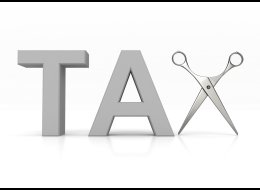
Corporations Don't Need a Tax Cut, So Why Is Obama Proposing One?


The Obama administration is proposing to lower corporate taxes from the current 35 percent to 28 percent for most companies and to 25 percent for manufacturers.

The move is supposed to be "revenue neutral" -- meaning the administration is also proposing to close assorted corporate tax loopholes to offset the lost revenues. One such loophole allows corporations to park their earnings overseas where taxes are lower.

Why isn't the White House just proposing to close the loopholes without reducing overall corporate tax rates? That would generate more tax revenue that could be used for, say, public schools.

It's not as if corporations are hurting. Quite the contrary. American companies are booking higher profits than ever. They're sitting on $2 trillion of cash they don't know what to do with.

And it's not as if corporate taxes are high. In fact, corporate tax receipts as a share of profits is now at its lowest level in at least 40 years. According to the Congressional Budget Office, corporate federal taxes paid last year dropped to 12.1 percent of profits earned from activities within the United States. That's a gigantic drop from the 25.6 percent, on average, that corporations paid from 1987 to 2008.

Obama Administration To Propose Cutting Corporate Tax Rate From 35 Percent To 28 Percent


WASHINGTON — President Barack Obama on Wednesday proposed a lower corporate tax rate and an end to dozens of loopholes he said helps companies move jobs and profits overseas. "It's not right and it needs to change," he said.

The president wants to lower the corporate tax rate from the current 35 percent, the highest in the world after Japan. Under his plan, manufacturers would receive incentives so that their effective tax rate could be even lower.

Obama's election-year plan would set a new 28 percent corporate tax rate, still higher than the 25 percent rate sought by congressional Republicans.

"It's a framework that lowers the corporate tax rate and broadens the tax base in order to increase competitiveness for companies across the nation," Obama said in a statement.

Corporations would have to give up dozens of cherished loopholes and subsidies that they now enjoy. Corporations with overseas operations would also face an unspecified minimum tax on their foreign earnings.

Wednesday, January 25, 2012

Corporate tax cuts create no jobs while starving government of revenue

South of the border we have the strange phenomenon of the "true conservative" Gingrich attacking his opponent Mitt Romney as a predator capitalist.

"You are using the arguments of the left," Romney tells the former House Speaker.

Indeed, it is a peculiar meeting of minds: the Occupy Movement and Newt Gingrich agreeing that folks like Mitt Romney are self-interested profit-takers and predators, not job creators.

Here in Canada we have a similar meeting of the minds on the impact of corporate tax cuts.

Just about everyone who has examined the issue -- business, labour, right and left -- agrees that the cuts in the federal corporate tax rate from 28 per cent 10 years ago to 15 per cent today have not created any significant investment in job-creating activity.

To start with, there is the fact that Canadian firms are sitting on huge piles of cash.

Canadian corporate cash reserves have climbed nine per cent since last year and 27.3 per cent since 2007.

Statistics Canada reports that Canadian businesses hold more than $583 billion in Canadian currency and deposits, and more than $276 billion in foreign currency.

Corporate Canada ‘hoarding’ cash from tax breaks: study

Corporate tax breaks designed to lure Canadian businesses into hiring employees and investing in equipment are instead fuelling higher dividends and allowing companies to “hoard” billions, says a new study.

The study, prepared by the Canadian Labour Congress and scheduled to be made public Wednesday morning, found the “leading cash hoarder” was Potash Corporation of Saskatchewan whose coffers grew by over $5 billion between 2000 and 2010.

In second place was George Weston Limited, which has accumulated $4 billion, followed by Barrick Gold Corporation with $3.9 billion. Embattled Research in Motion was in fourth place with $2.6 billion and Kinross Gold Corporation has set aside $2 billion.

“Cuts to corporate taxes have resulted in a major loss of government revenues, without the anticipated result of higher corporate investment in machinery and equipment, new plants and other areas of company operations,” wrote authors David Macdonald and Andrew Jackson. “Instead, we have seen a big increase in the divident payouts and in financial assets.”

Wednesday, January 18, 2012

Ontario losing billions in funding revenue, Commission told

Two prominent Canadian economists have told the Commission on Quality Public Services and Tax Fairness that the provincial treasury is forfeiting billions of dollars in tax revenue by failing to adopt policies that could be used to fund sustainable public services.

Speaking to the Commission at its public hearing in Ottawa yesterday, CUPE National economist Toby Sanger said the approach adopted by the McGuinty government on tax polices was misguided and is failing to recoup billions in revenues.

“We don’t need anymore tax cuts,” Sanger told Commission chair Judy Wasylycia-Leis, a former federal MP and chair of the Public Services Foundation of Canada which is conducting the work of the Commission.

“I have three messages to the government,” Sanger continued. “Austerity doesn’t work. Public sector spending is not out of control. And through a system of fair taxation Ontario could reach a balanced budget.

Sanger’s position was similar to that delivered by David McDonald, an independent economist associated with the Canadian Centre for Policy Alternatives and a contributor to Progressive Economics Forum.

“Debt is cheap now. It is well within the capacity of the government to cover this debt without attacking public services,” said McDonald.