Democracy Gone Astray

Democracy, being a human construct, needs to be thought of as directionality rather than an object. As such, to understand it requires not so much a description of existing structures and/or other related phenomena but a declaration of intentionality.
This blog aims at creating labeled lists of published infringements of such intentionality, of points in time where democracy strays from its intended directionality. In addition to outright infringements, this blog also collects important contemporary information and/or discussions that impact our socio-political landscape.

All the posts here were published in the electronic media – main-stream as well as fringe, and maintain links to the original texts.

[NOTE: Due to changes I haven't caught on time in the blogging software, all of the 'Original Article' links were nullified between September 11, 2012 and December 11, 2012. My apologies.]

Showing posts with label Default. Show all posts

Tuesday, June 30, 2015

Paul Krugman Urges Greeks To Vote 'No' On Bailout Referendum

Paul Krugman is urging Greeks to vote “no” in a referendum that could determine their country’s future in the European Union.

In a New York Times blog post published Sunday evening, the Nobel Prize-winning economist argued that the July 5 referendum would simply preserve the same dysfunctional austerity regime that has left Greece languishing for five years.


Sunday, June 28, 2015

Greece's Bailout Money Doesn't Really End Up In Greece

In 2010 and 2012, Greece accepted bailout deals from European creditors totaling hundreds of billions of euros in order to prevent the collapse of the Greek banking system. The funds kept Greece from a potential default that would force it out of the eurozone, but most of the enormous sum of money involved in the bailouts ultimately didn't end up funding public services or directly going to the Greek people.

Greece debt crisis talks end in renewed deadlock

Gruelling negotiations between Greece and its creditors broke up without agreement as lenders warned the country that it must accept more austerity if it is to avoid defaulting on its debts.

A third meeting of eurozone finance ministers in less than a week was called to a halt on Wednesday evening amid fresh deadlock over an agreement on greater spending cuts in Athens in exchange for rescue funds.

Saturday, June 27, 2015

Greek Government Signals New Concessions As Debt Talks Deadline Nears

ATHENS, June 20 (Reuters) - Greece's left-wing government promised on Saturday to offer concessions to creditors to unlock billions of euros in funds and stave off default but kept a defiant anti-austerity tone ahead of a vital summit of euro zone leaders next week.

With its banks hanging on life support from the European Central Bank, and billions of euros being withdrawn daily, Greece may have to impose capital controls within days unless a breakthrough is made at Monday's summit.

Greek Central Bank Warns Country Will Likely Exit EU Without Deal

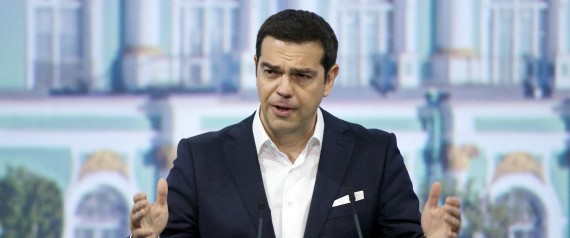
ATHENS, Greece (AP) — Greek Prime Minister Alexis Tsipras says demands by the country's rescue lenders to slash pensions are "incomprehensible" and warned that a failure in bailout talks would hurt all of Europe.

His comments were made as the country's central bank warned of "dramatic" economic consequences of not reaching a deal this week, and a day before a meeting of eurozone finance ministers.

Creditors had until last week pegged Thursday's meeting as a key date by which a breakthrough in the talks would have to be reached. Those expectations have faded this week, however, as both sides remain at odds over what reforms Greece should make to get more loans.

'It’s going to be bad, whatever happens': Greece on edge as eurozone exit looms

“Everybody’s doing it,” said Joanna Christofosaki, in front of a Eurobank cash dispenser in the leafy Athens neighbourhood of Kolonaki. “Our friends have all done it. Nobody wants their money to be worthless tomorrow. Nobody wants to be unable to get at it.”

A researcher in the archaeology department at the Academy of Athens, Christofosaki said she knew plenty of people who had “€10,000 somewhere at home” and plenty of others who chose to keep their stash at the office. Was she among them? “If I was, I certainly wouldn’t tell you.”

Friday, October 25, 2013

Morgan Griffith, GOP Rep, Compares Default To American Revolution

Rep. Morgan Griffith (R-Va.) compared the looming default to the American Revolution on Saturday after a meeting with House Republicans.

The Hill reports Griffith suggested that even if it resulted in a severely damaging default, the House should reject an unfavorable agreement from the Senate.

“We have to make a decision that’s right long-term for the United States, and what may be distasteful, unpleasant and not appropriate in the short run may be something that has to be done,” Griffith said, according to The Hill. “I will remind you that this group of renegades that decided that they wanted to break from the crown in 1776 did great damage to the economy of the colonies. They created the greatest nation and the best form of government, but they did damage to the economy in the short run.”

Wednesday, October 09, 2013

Far-Right Republicans Could Hit A Tipping Point As Support Falters

Tension is brewing in the Republican Party as the federal government shutdown enters its seventh day and far-right members of the GOP show no sign of letting up.

The shutdown -- which has already affected hundreds of thousands of federal employees and hit critical government programs -- is bringing the Republican Party to a boiling point, angering GOP fundraisers and throwing a wrench in the works for the upcoming 2014 elections.

“People are totally annoyed,” one GOP fundraiser told the Washington Post.

Monday, October 07, 2013

Banks Stockpile Cash For Government Default They Say Won't Happen

Banks are totally not worried about the U.S. government defaulting, sparking a nightmarish financial panic. Yes, they're stocking extra cash in ATMs to satisfy cash-hungry zombie hordes. But they're sure they won't need it!

Bank executives are adding 20 to 30 percent more cash to their ATMs and re-reading their dog-eared copies of What To Expect When You're Expecting A Financial Shitstorm, according to the New York Times and the Financial Times.

Friday, October 04, 2013

Obama To Wall Street: You Should Be Scared

WASHINGTON -- A self-described "exasperated" President Barack Obama told Wall Street CEOs on Wednesday that they should not take for granted that the Republican-led House of Representatives will raise the nation's debt ceiling by Oct. 17.

"I think this time is different," the president said, when asked by CNBC's John Harwood whether the financial markets were right to assume that the upcoming conflict would ultimately get resolved in time. "I think they should be concerned."

Tuesday, October 01, 2013

Student Loan Defaults Surge To Highest Level In Nearly 2 Decades

Recent college students are defaulting on federal loans at the highest rate in nearly two decades, reflecting "crisis" levels of student debt and a lackluster economy that leaves graduates with bleak employment prospects.

One in 10 recent borrowers defaulted on their federal student loans within the first two years, the highest default rate since 1995, according to annual figures made public Monday by the Department of Education.

Wednesday, January 16, 2013

Here's What Happened the Last Time the U.S. Defaulted on Its Debt

Once upon a time, Congress didn't want to raise the debt ceiling, and sent the country into default. It was bad, and we shouldn't do it again. The end.

Oh, you wanted to hear the rest of the story? Okay, here it is. Back in 1979, Congress waited, and waited, and waited to lift the debt ceiling, because Congress never likes taking responsibility for the tax and spending decisions it's already made. Now, Congress usually does the right thing after it's exhausted every other possibility, at least when it comes to paying our bills, and this debt limit increase was no exception. Congress did raise it right before defaulting on our obligations would have been unavoidable ... but that didn't let us avoid defaulting on our debt. At least not $120 million or so of it. That's because the logistically and technologically-challenged Treasury couldn't get the checks out in time on such short notice. As Donald Marron of the Tax Policy Center explains, the Treasury got swamped with an inordinately high demand for Treasury bills, which it couldn't meet due to a word-processing error. So we defaulted on some of them.

Thursday, February 09, 2012

Greek Leaders Agree On Austerity Measures To Satisfy Lenders

Greek political leaders have reached a deal on austerity measures that satisfy European Union and International Monetary Fund lenders, according to The Financial Times.

The AP is also reporting that the Greek Prime Minister's office is saying that the coalition parties struck a deal with new cuts.

The agreement would allow Greece to get a 130 billion euro ($172 billion) bailout, staving off default.

Here is the full report from Reuters:

Greek leaders clinched a long-stalled deal on reforms and austerity measures needed to secure a bailout and avoid a messy default, government sources said, hours before the country's financial backers were to meet in Brussels on Thursday.

Athens' partners in the European Union and the International Monetary Fund have been exasperated by a lack of agreement on the sacrifices they demanded in return for a 130 billion euro ($172 billion) bailout, with time running out for Greece before a major March 20 bond redemption.

Finance Minister Evangelos Venizelos set off for Brussels without a complete deal after all-night talks with leaders of the three Greek coalition parties and chief EU and IMF inspectors left one sensitive issue - pension cuts - unresolved.

But following further negotiation on Thursday, two government sources said an overall agreement had been reached.

Sunday, August 07, 2011

Downgrading Democracy

The decision of Standard & Poor’s to remove the United States from its list of risk-free borrowers—by shifting the country’s rating from AAA to AA-plus—was a predictable enough play out of the absurd debt-ceiling debate. The job-killing agreement reached by the Obama administration and Republican Congressional leaders reads as if was written with the goal of stalling out whatever fragile recovery might have been taking place, and that has effectively been recognized by both the markets and the S&P report, which explicitly refused to endorse the GOP strategy of addressing debt and deficit challenges merely with cuts.

Senate majority leader Harry Reid, D-Nevada, noted as much when he said: “The action by S&P reaffirms the need for a balanced approach to deficit reduction that combines spending cuts with revenue-raising measures like closing taxpayer-funded giveaways to billionaires, oil companies and corporate jet owners.”

Why S&P Is Wrong

In what sounded at first like something from the Onion, Standard & Poor's postponed its planned downgrade of US debt for a few hours today after the White House pointed out that it had made a $2 trillion arithmetic error in its calculation of future deficits. Seriously. These guys are supposed to have the most sophisticated stable of financial analysts on the planet, but apparently they can't come within $2 trillion of figuring out something that's a simple matter of looking through OMB tables and CBO reports.

But set that aside for the moment. What's $2 trillion between friends? We all agree on the rough size of America's fiscal woes and $2 trillion one way or the other isn't all that decisive. So the question of the day is: Should S&P have downgraded our debt? Felix Salmon says emphatically yes:

The US does not deserve a triple-A rating, and the reason has nothing whatsoever to do with its debt ratios. America's ability to pay is neither here nor there: the problem is its willingness to pay. And there’s a serious constituency of powerful people in Congress who are perfectly willing and even eager to drive the US into default. The Tea Party is fully cognizant that it has been given a bazooka, and it's just itching to pull the trigger. There's no good reason to believe that won’t happen at some point.

Thursday, July 28, 2011

How Default Threatens National Security

Last August, the chairman of the Joint Chiefs of Staff, Admiral Mike Mullen, shocked plenty of people when he declared that "the single biggest threat to national security is the debt." As zero hour approaches for the government to default on its debt, experts from both sides of the aisle are echoing Mullen's warning that fiscal matters pose a more immediate threat to national security than terrorism, rogue nations, or foreign wars.

By refusing to raise the debt ceiling, argues Bruce Bartlett, an economist who worked in George H.W. Bush's White House, conservative members of the House are undermining the country's ability to defend itself. In a post in a post titled "The Constitution and National Security Trump the Debt Limit," he writes, "Republicans are playing not just with fire, but the financial equivalent of nuclear weapons." That's not an idle metaphor. Politicians and economists can debate the effects a debt default would have on credit and stock markets, but there's little doubt that any default would make a mess of military operations. Something similar already happened in 1995, when the federal government shut down during Bill Clinton's budget battle with then-House Speaker Newt Gingrich.

Wednesday, July 27, 2011

Canada's Debt Ceiling Fears: What A Default In Washington Means For Canadians

If Americans are experiencing feelings of helplessness over the political wrangling that is keeping Washington from raising its debt ceiling in the face of a fast-approaching deadline, they should try watching the drama unfold from this side of the border. Despite the fact that Canadians have no control over what happens in Washington, if an agreement is not reached by Aug. 2, to raise the annual amount of debt needed to fund government spending, we will no doubt share in the consequences.

“We are connected to the U.S., to their political decisions,” says James Marple, a senior economist at TD Economics.

Tuesday, July 26, 2011

The U.S. Will Not Default on August 2

The only thing that matters for global markets over the coming days is whether a deal can be struck in Washington over the debt ceiling. That said, there is one major misconception – fostered by politicians – about what the stakes actually are. On August 2, the U.S. government will reach the limit of its statutory borrowing authority as determined by the Treasury Department. It will not, however, default on its debts even if a deal isn’t reached.

You wouldn’t know that listening to the rhetoric out of Washington. I have been highly critical of the Republicans in general and the Tea Party especially for blithely charting a path that risks the financial leadership of the U.S. and our collective ability to function effectively in the future. The U.S. has no near term issue paying the interest on its debts, and this crisis is therefore one of choice rather than necessity.

Monday, July 25, 2011

Are There Any Republican Adults in the Room: The Challenge Confronting Our Country

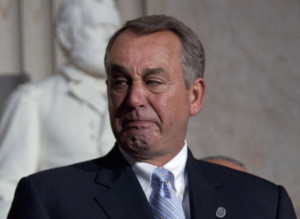
At the hastily called White House news conference following the collapse of discussions with Speaker John Boehner on raising the debt ceiling and deficit reduction, President Obama rhetorically asked: "Is there anything that the Republicans can say 'yes' to?" Yes, there is: his resignation or re-election defeat.

If it were not clear before, it is unmistakably clear now that the majority of Republicans in Congress are prepared to subordinate the best interests and welfare of our country, and violate their oaths of office, in pursuit of defeating Obama; at all costs.

Thursday, July 21, 2011

40 Percent Less Government Will Be Fun!

So suppose the debt-ceiling deadline passes. Nothing to worry about, right? There's still enough money for Social Security, Medicare, interest payments, military payrolls, and veterans benefits, isn't there? That's more or less true, but unfortunately, that's all there's money for. Megan McArdle runs down a small sample of the things that will have to be zeroed out:

  • You just cut the IRS and all the accountants at Treasury, which means that the actual revenue you have to spend is $0.
  • The nation's nuclear arsenal is no longer being watched or maintained
  • The doors of federal prisons have been thrown open, because none of the guards will work without being paid, and the vendors will not deliver food, medical supplies, electricity, etc.
  • The border control stations are entirely unmanned, so anyone who can buy a plane ticket, or stroll across the Mexican border, is entering the country. All the illegal immigrants currently in detention are released, since we don't have the money to put them on a plane, and we cannot actually simply leave them in a cell without electricity, sanitation, or food to see what happens.
  • All of our troops stationed abroad quickly run out of electricity or fuel. Many of them are sitting in a desert with billions worth of equipment, and no way to get themselves or their equipment back to the US.
  • Our embassies are no longer operating, which will make things difficult for foreign travellers
  • No federal emergency assistance, or help fighting things like wildfires or floods. Sorry, tornado people! Sorry, wildfire victims! Try to live in the northeast next time!
  • Housing projects shut down, and Section 8 vouchers are not paid. Families hit the streets.
  • The money your local school district was expecting at the October 1 commencement of the 2012 fiscal year does not materialize, making it unclear who's going to be teaching your kids without a special property tax assessment.
  • The market for guaranteed student loans plunges into chaos. Hope your kid wasn't going to college this year!
  • The mortgage market evaporates. Hope you didn't need to buy or sell a house!
  • The FDIC and the PBGC suddenly don't have a government backstop for their funds, which has all sorts of interesting implications for your bank account.
  • The TSA shuts down. Yay! But don't worry about terrorist attacks, you TSA-lovers, because air traffic control shut down too. Hope you don't have a vacation planned in August, much less any work travel.
  • Unemployment money is no longer going to the states, which means that pretty soon, it won't be going to the unemployed people.

How about if we just call this the "Republican Budget Plan"? If you'd like it to be permanent, you can call it the "Michele Bachmann Plan."

Origin
Source: Mother Jones