Democracy Gone Astray

Democracy, being a human construct, needs to be thought of as directionality rather than an object. As such, to understand it requires not so much a description of existing structures and/or other related phenomena but a declaration of intentionality.
This blog aims at creating labeled lists of published infringements of such intentionality, of points in time where democracy strays from its intended directionality. In addition to outright infringements, this blog also collects important contemporary information and/or discussions that impact our socio-political landscape.

All the posts here were published in the electronic media – main-stream as well as fringe, and maintain links to the original texts.

[NOTE: Due to changes I haven't caught on time in the blogging software, all of the 'Original Article' links were nullified between September 11, 2012 and December 11, 2012. My apologies.]

Showing posts with label Elites. Show all posts

Wednesday, July 12, 2017

The Federal Government Is Setting Up to Protect the Elite from Nuclear Attack While Letting the Rest of Us Die

If a nuclear attack threatens the U.S., who is most likely to survive? It’s a question often explored in disaster films, and one that has resulted in the growth of an industry devoted to sheltering the wealthy and the powerful in the wake of a serious attack.

Journalist Garrett Graff explores this phenomenon in his new book, Raven Rock: The Story of the US Government’s Secret Plan to Save Itself—While the Rest of Us Die, where he brings to light how the U.S. government has begun to renovate and strengthen secret bunkers across the country to protect high-ranking government officials from a nuclear attack. The book looks at the intensified effort by the government and Congress to fund the top secret “Continuity of Government” plan, and a preview from the New York Post details a number of hidden bunkers scattered across the country.
Thursday, June 29, 2017

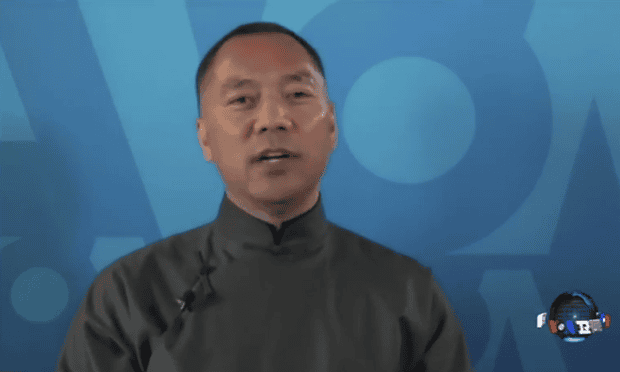
China chases billionaire who threatens 'explosive' allegations against elite

A flamboyant Chinese billionaire known for his love of supercars and social media has claimed he is the victim of a political witch hunt after he threatened to lift the lid on “explosive information” about corruption at the top of Chinese politics.

On Wednesday China’s foreign ministry confirmed that, at Beijing’s request, Interpol had issued a red notice for the arrest of Guo Wengui, a 50-year-old tycoon who had in recent months taken the highly unusual step of speaking out about alleged cases of corruption involving the relatives of senior leaders.

Tuesday, June 20, 2017

Europe’s elite put on grand show of unity in Rome

ROME — Europe’s prominence descended on the Italian capital Saturday to celebrate their Union’s 60th anniversary with a single aim: fare bella figura.

After a year in which the EU has had to stomach the Brexit vote, bitter fights over refugees and the resurgence of far-right populism, failure was not an option. Yet for a club riven by division over matters large and small, keeping up appearances was no small order.

Tuesday, March 07, 2017

How Global Elites Profit from Unaffordability

Unaffordability is in the eye of the beholder. For those of us not fortunate enough to own a house in a global city such as Vancouver, but choose to live and work here anyway, it is a constant oppressive force. If you are too young, too newly arrived or too late to buy in before home prices exploded, unaffordability poses an exhausting series of questions on life’s horizon: Do I belong in this city? Will I ever be able to set down roots? What if rent finally gets too high for me stay? Where will I go then?

But if you belong to the community of wealthy elites that also gravitate to these cities, unaffordability means something else entirely. Insanely high real estate costs don’t dissuade the extremely rich from buying homes in places like Sydney, London and Vancouver. High prices make owning a house there more desirable. They confer social status. And if, like many members of this elite, you own several homes — one as a place to live in and the others as investments or safe havens for your wealth — you want home prices to keep going up. They are, after all, making you even wealthier.

Wednesday, October 15, 2014

Why Government Spends More Per Pupil at Elite Universities Than at Public Universities

Imagine a system of college education supported by high and growing government spending on elite private universities that mainly educate children of the wealthy and upper-middle class, and low and declining government spending on public universities that educate large numbers of children from the working class and the poor.

You can stop imagining. That's the American system right now.

Sunday, May 11, 2014

All the Presidents’ Bankers: The Hidden Alliances That Drive American Power

The following excerpt is from Truthdig contributor Nomi Prins’ best-selling new book “All the Presidents’ Bankers: The Hidden Alliances That Drive American Power.” In this section, Prins writes about the period during the administration of Lyndon Johnson when bankers began to move away from the president as they saw their global ambitions hemmed in by the Vietnam War.

Johnson and the Bankers’ Economy

In his spirited inaugural speech on January 20, 1965, Johnson declared, “In a land of great wealth, families must not live in hopeless poverty. In a land rich in harvest, children just must not go hungry.”

Thursday, November 28, 2013

Boris Johnson IQ comments reveal 'unpleasant, careless elitism', says Clegg

Nick Clegg has attacked the "unpleasant, careless elitism" of Boris Johnson and his remarks about IQ, and accused him of talking about people as if they were dogs.

The deputy prime minister laid into Johnson after the Conservative London mayor mocked the 16% "of our species" with an IQ below 85 and called for more to be done to help the 2% of the population who have an IQ above 130.

Johnson made the remarks during a speech in honour of Margaret Thatcher, declaring that inequality was essential to foster "the spirit of envy" and hailing greed as a "valuable spur to economic activity".

Tuesday, November 12, 2013

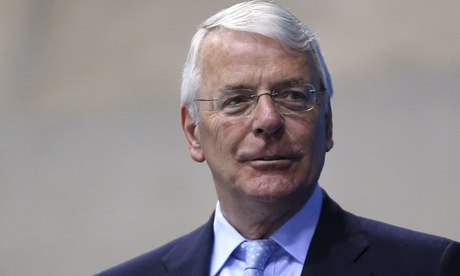
John Major 'shocked' at privately educated elite's hold on power

Sir John Major has expressed his shock at the way in which every sphere of modern public life is dominated by a private school-educated elite and well-heeled middle class. He also suggested interest rates should go back to "normal levels of 3% to 5 %" as one way of helping pensioners deal with the recent squeeze on earnings.

The former prime minister has been warning for months about the threat of so-called net curtain poverty, and claimed the government needed to do more to address the quiet poverty gripping the responsible middle class. He blamed the slowdown in social mobility on Labour policies, including the abolition of grammar schools.

Tuesday, December 11, 2012

Politico Accidentally Exposes Beltway Elite

Politico editors Jim VandeHei and Mike Allen today have published what may be the most revealing piece I have ever read about the Washington power elite. The value of the piece is almost entirely anthropological. That is to say, read at face value, it tells the reader almost nothing new. But examined as a cultural specimen, it offers profound insight. The piece reads as if it were written by Upton Sinclair, if he were taken prisoner and trying to smuggle messages out to the world past a particularly literal-minded group of censors.

Tuesday, July 17, 2012

Twilight of the Elites: Chris Hayes on How the Powerful Rig the System, from Penn State to Wall St.

Amidst a series of recent scandals that have rocked the global banking system, journalist Chris Hayes joins us to discuss his new book, "Twilight of the Elites: America After Meritocracy." The book examines how Wall Street and other major institutions, from Congress to the Catholic Church to Major League Baseball, have been crippled by corruption and incompetence. Hayes is host of the MSNBC weekend show, "Up with Chris Hayes," and is editor-at-large of The Nation magazine. "One of the most insidious aspects of the current distribution of resources in this country and the current inequality we have isn’t just that it’s bad for people on the bottom of the social pyramid but that it makes people at the top worse," Hayes says. "It conditions them to be incompetent and corrupt."


Video
Source: Democracy Now!
Author: --

Sunday, June 24, 2012

Why Elites Fail

In 1990, at the age of 11, I stood in a line of sixth graders outside an imposing converted armory on Manhattan’s Upper East Side, nervously anticipating a test that would change my life. I was hoping to gain entrance to Hunter College High School, a public magnet school that runs from grades seven through twelve and admits students from all five boroughs. Each year, between 3,000 and 4,000 students citywide score high enough on their fifth-grade standardized tests to qualify to take Hunter’s entrance exam in the sixth grade; ultimately, only 185 will be offered admission. (About forty-five students, all from Manhattan, test into Hunter Elementary School in the first grade and automatically gain entrance to the high school.)

I was one of the lucky ones who made it through, and my experience there transformed me. It was at Hunter that I absorbed the open-minded, self-assured cosmopolitanism that is the guiding ethos of the current American ruling class. What animates the school is a collective delight in the talent and energy of its students and a general feeling of earned superiority. In 1982 a Hunter alumnus profiled the school in a New York magazine article called “The Joyful Elite” and identified its “most singular trait” as the “exuberantly smug loyalty of its students.”

Friday, June 08, 2012

Why Elites Fail

In 1990, at the age of 11, I stood in a line of sixth graders outside an imposing converted armory on Manhattan’s Upper East Side, nervously anticipating a test that would change my life. I was hoping to gain entrance to Hunter College High School, a public magnet school that runs from grades seven through twelve and admits students from all five boroughs. Each year, between 3,000 and 4,000 students citywide score high enough on their fifth-grade standardized tests to qualify to take Hunter’s entrance exam in the sixth grade; ultimately, only 185 will be offered admission. (About forty-five students, all from Manhattan, test into Hunter Elementary School in the first grade and automatically gain entrance to the high school.)