Democracy Gone Astray

Democracy, being a human construct, needs to be thought of as directionality rather than an object. As such, to understand it requires not so much a description of existing structures and/or other related phenomena but a declaration of intentionality.
This blog aims at creating labeled lists of published infringements of such intentionality, of points in time where democracy strays from its intended directionality. In addition to outright infringements, this blog also collects important contemporary information and/or discussions that impact our socio-political landscape.

All the posts here were published in the electronic media – main-stream as well as fringe, and maintain links to the original texts.

[NOTE: Due to changes I haven't caught on time in the blogging software, all of the 'Original Article' links were nullified between September 11, 2012 and December 11, 2012. My apologies.]

Showing posts with label Nuclear Disaster. Show all posts

Wednesday, July 12, 2017

The Federal Government Is Setting Up to Protect the Elite from Nuclear Attack While Letting the Rest of Us Die

If a nuclear attack threatens the U.S., who is most likely to survive? It’s a question often explored in disaster films, and one that has resulted in the growth of an industry devoted to sheltering the wealthy and the powerful in the wake of a serious attack.

Journalist Garrett Graff explores this phenomenon in his new book, Raven Rock: The Story of the US Government’s Secret Plan to Save Itself—While the Rest of Us Die, where he brings to light how the U.S. government has begun to renovate and strengthen secret bunkers across the country to protect high-ranking government officials from a nuclear attack. The book looks at the intensified effort by the government and Congress to fund the top secret “Continuity of Government” plan, and a preview from the New York Post details a number of hidden bunkers scattered across the country.

Wednesday, July 05, 2017

Forget North Korea. The Next Nuclear Crisis Festers On The India-Pakistan Border

WASHINGTON ― While President Donald Trump is focused on North Korea’s nuclear madman, a more alarming threat is rising in South Asia: an explosive mix of nuclear weapons, terrorism and hair-trigger war plans.

Pakistan, already a major nuclear weapons power with well over 100 warheads and the missiles to carry them, is racing to expand its arsenal of short-range tactical weapons meant as a deterrent against India, its larger, more powerful neighbor and blood enemy. India is thought to have around 100 nuclear warheads of its own. (North Korea is estimated to possess enough fissile material to make several warheads.)

Wednesday, December 28, 2016

Pakistani Defense Minister Makes Nuclear Threat Against Israel After Fake News Provocation

Pakistan’s defense minister, Khawaja Muhammad Asif, wrote a frightening Twitter post in response to a fake news article stating that Israel would attack Pakistan with nuclear weapons.

“Israeli def min threatens nuclear retaliation presuming pak role in Syria against Daesh,” Asif wrote on Twitter Friday, referring to the Islamic State. “Israel forgets Pakistan is a Nuclear state too.”

According to The New York Times, Asif appeared to be responding to a fake news article published earlier in the week on awdnews.com titled, “Israeli Defense Minister: If Pakistan send ground troops into Syria on any pretext, we will destroy this country with a nuclear attack.”

Wednesday, April 06, 2016

Fukushima on the Hudson? The Growing Dangers of Indian Point

It was a beautiful spring day and, in the control room of the nuclear reactor, the workers decided to deactivate the security system for a systems test. As they started to do so, however, the floor of the reactor began to tremble. Suddenly, its 1,200-ton cover blasted flames into the air. Tons of radioactive radium and graphite shot 1,000 meters into the sky and began drifting to the ground for miles around the nuclear plant. The first firemen to the rescue brought tons of water that would prove useless when it came to dousing the fires. The workers wore no protective clothing and eight of them would die that night—dozens more in the months to follow.

Saturday, October 24, 2015

As Underground Fire Smolders Near Radioactive Waste, EPA Dismisses Concerns

A St. Louis-area community is on edge as a 5-year-old fire burning underneath a landfill threatens to interact with nearby nuclear waste, with potentially deadly consequences.

Residents in Bridgeton, Missouri, met in a packed church Thursday to discuss a solution to the growing problem that has county and school officials talking emergency evacuation plans, according to Fox 2 Now.

Monday, April 27, 2015

Darlington Unit 2 Leak: Heavy Water Breach At Nuclear Reactor Contained:OPG

TORONTO - Ontario Power Generation says there was no risk to its staff or the public after a leak of heavy water from Darlington's Unit 2 nuclear reactor.

OPG spokesman Neal Kelly says they don't know the exact amount but estimate about 7,000 litres of heavy water leaked during routine maintenance Tuesday afternoon, while the reactor was running.

Friday, August 30, 2013

The intolerable costs of nuclear power and benefits of saying no

Welcome to the nuclear renaissance.


Entergy Corp, one of the largest nuclear-power producers in the U.S., issued a surprise press release Tuesday, saying it plans "to close and decommission its Vermont Yankee Nuclear Power Station in Vernon, Vermont. The station is expected to cease power production after its current fuel cycle and move to safe shutdown in the fourth quarter of 2014." Although the press release came from the corporation, it was years of people's protests and state legislative action that forced its closure. At the same time that activists celebrate this key defeat of nuclear power, officials in Japan admitted that radioactive leaks from the Fukushima Daiichi nuclear catastrophe are far worse than previously acknowledged.

Friday, April 05, 2013

Fukushima Cooling System Fails For Second Time In A Month

TOKYO -- Power was restored Friday to a cooling system at a tsunami-damaged nuclear plant in Japan that failed for the second time in a month after an outage caused by construction work to keep out rats suspected of setting off the earlier blackout.

Power for the cooling system for a storage pool for fuel was restored after a two-hour break at reactor No. 3, and there was no immediate danger from the breakdown, according to Tokyo Electric Power Co., the utility that operates Fukushima Dai-ichi in northeastern Japan.

Monday, February 25, 2013

Hanford Nuclear Reservation Tanks Leaking Radioactive Waste Underground, Governor Inslee Says

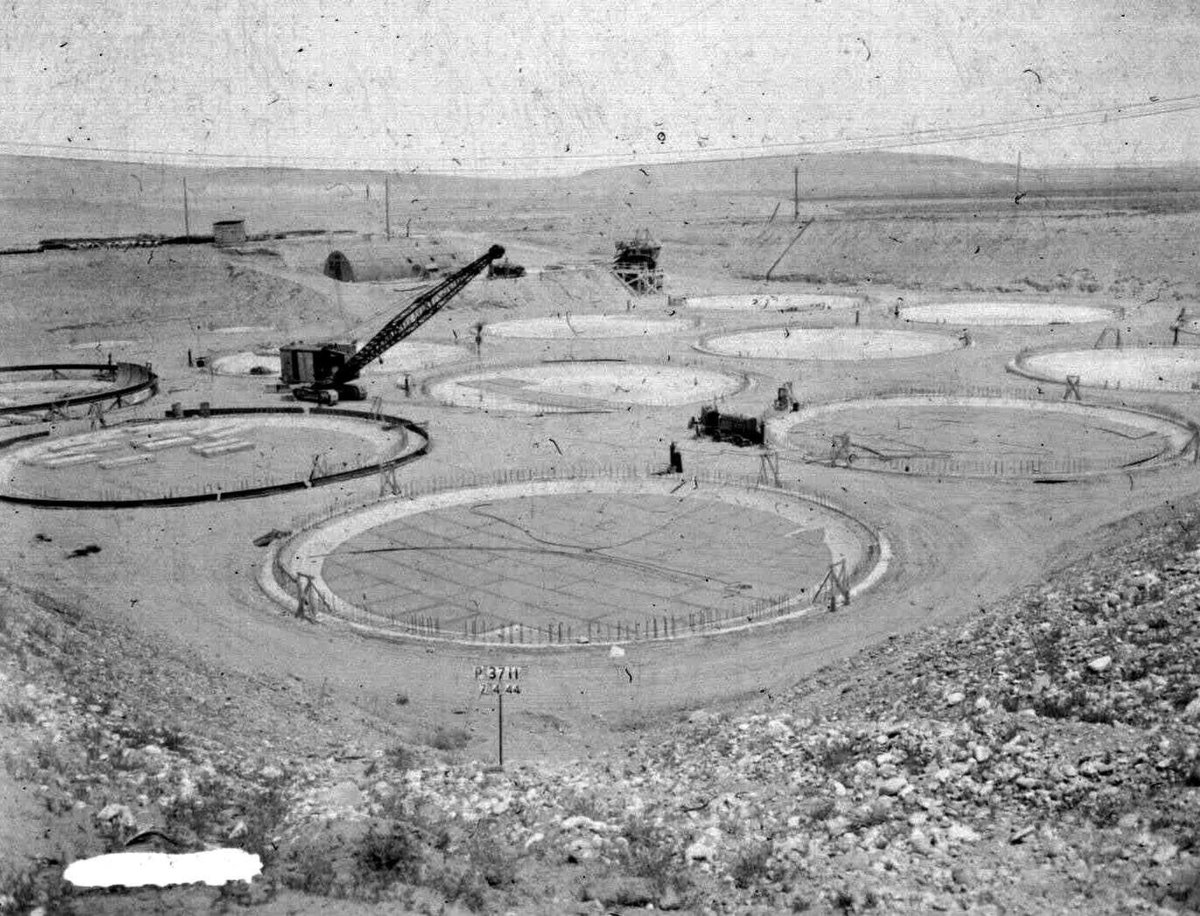
YAKIMA, Wash. (AP) -- Six underground tanks that hold a brew of radioactive and toxic waste at the nation's most contaminated nuclear site are leaking, federal and state officials said Friday, prompting calls for an investigation from a key senator.

Washington Gov. Jay Inslee said the leaking material poses no immediate risk to public safety or the environment because it would take a while -- perhaps years -- to reach groundwater.

But the leaking tanks raise new concerns about delays for emptying them and strike another blow to federal efforts to clean up south-central Washington's Hanford Nuclear Reservation, where successes often are overshadowed by delays, budget overruns and technological challenges.

Saturday, February 16, 2013

Hanford Nuclear Tank Leaking Radioactive Waste

OLYMPIA, Wash. -- The long-delayed cleanup of the nation's most contaminated nuclear site became the subject of more bad news Friday, when Washington Gov. Jay Inslee announced that a radioactive waste tank there is leaking.

The news raises concerns about the integrity of similar tanks at south-central Washington's Hanford nuclear reservation and puts added pressure on the federal government to resolve construction problems with the plant being built to alleviate environmental and safety risks from the waste.

Saturday, October 20, 2012

Leaked Report Suggests Long-Known Flood Threat To Nuclear Plants, Safety Advocates Say

An un-redacted version of a recently released Nuclear Regulatory Commission report highlights the threat that flooding poses to nuclear power plants located near large dams -- and suggests that the NRC has misled the public for years about the severity of the threat, according to engineers and nuclear safety advocates.

"The redacted information shows that the NRC is lying to the American public about the safety of U.S. reactors," said David Lochbaum, a nuclear engineer and safety advocate with the Union of Concerned Scientists.

Saturday, September 15, 2012

Flood Threat To Nuclear Plants Covered Up By Regulators, NRC Whistleblower Claims

In a letter submitted Friday afternoon to internal investigators at the Nuclear Regulatory Commission, a whistleblower engineer within the agency accused regulators of deliberately covering up information relating to the vulnerability of U.S. nuclear power facilities that sit downstream from large dams and reservoirs.

The letter also accuses the agency of failing to act to correct these vulnerabilities despite being aware of the risks for years.

Friday, March 23, 2012

As Reactors Age, the Money to Close Them Lags

WASHINGTON — The operators of 20 of the nation’s aging nuclear reactors, including some whose licenses expire soon, have not saved nearly enough money for prompt and proper dismantling. If it turns out that they must close, the owners intend to let them sit like industrial relics for 20 to 60 years or even longer while interest accrues in the reactors’ retirement accounts.

Decommissioning a reactor is a painstaking and expensive process that involves taking down huge structures and transporting the radioactive materials to the few sites around the country that can bury them. The cost is projected at $400 million to $1 billion per reactor, which in some cases is more than what it cost to build the plants in the 1960s and ’70s.

Mothballing the plants makes hundreds of acres of prime industrial land unavailable for decades and leaves open the possibility that radioactive contamination in the structures could spread. While the radioactivity levels decline over time, many communities worry about safe oversight.

Bills that once seemed far into the future may be coming due. The license for Vermont Yankee in Vernon, Vt., at 40 the nation’s oldest reactor, expires on Wednesday, for example. And while the Nuclear Regulatory Commission has granted its owner, Entergy, a new 20-year permit, the State of Vermont is trying to close the plant.

Sunday, March 11, 2012

Prayers, protests mark Japan tsunami anniversary

The people of Japan paused for a moment of silence to mark the one-year anniversary of a powerful earthquake and subsequent tsunami that killed almost 19,000 people and left hundreds of thousands of others homeless.

Entire cities and towns were wiped off the land by the twin disasters, and more than 340,000 people who lost homes are still living in temporary housing a year later.

Emperor Akihito led a national memorial service in Tokyo, and smaller memorials were held across the country.

The moment of silence was observed at 2:46 p.m. local time Sunday, at the exact moment the 9.0-magnitude earthquake hit last year and unleashed a wall of water that hit Japan's northeast coast.

While much of the debris has been gathered into massive piles, very little rebuilding has begun.

Friday, March 09, 2012

Japan Earthquake Anniversary: U.S. Slow To Update Nuclear Safety Requirements Following Disaster, Experts Say

In the aftermath of the earthquake and tsunami in Japan last March, with the world captivated by the worst nuclear disaster in a generation, U.S. regulators were urged to look closely at the security of the nation's 65 nuclear power plants.

"There is no question that the accident at the Fukushima Daiichi site ... will be regarded as a seminal event in the history of nuclear power," Nuclear Regulatory Commission chairman Gregory Jaczko said in a speech last May. "We have the responsibility to the American people to conduct a comprehensive safety review to determine whether there are lessons and what they are. I can assure you that this safety review will be systematic and methodical and will be conducted with the appropriate sense of urgency."

Yet with the one-year anniversary at hand, environmental groups and safety advocates charge that the government has been slow to react, and that it has put off suggestions to fix an "incomplete" and "patchwork" array of safety requirements for dealing with severe emergencies such as earthquakes, major floods or other natural disasters. Instead, the groups claim that regulators have prioritized short-term upgrades, including some that have been on the books for years but were never turned into enforceable regulations.

Thursday, March 08, 2012

No lessons learned from Japan's nuclear disaster in U.S. politics

Super Tuesday demonstrated the rancour rife in Republican ranks, as the four remaining major candidates slug it out to see how far to the right of President Barack Obama they can go. While attacking him daily for the high cost of gasoline, both sides are travelling down the same perilous road in their support of nuclear power. This is mind-boggling, on the first anniversary of the Fukushima nuclear disaster, with the chair of the U.S. Nuclear Regulatory Commission warning that lessons from Fukushima have not been implemented in this country. Nevertheless, Democrats and Republicans agree on one thing: They're going to force nuclear power on the public, despite the astronomically high risks, both financial and environmental.

One year ago, on March 11, 2011, the Tohoku earthquake and tsunami hit the northeast coast of Japan, causing more than 15,000 deaths, with 3,000 more missing and thousands of injuries. Japan is still reeling from the devastation -- environmentally, economically, socially and politically. Naoto Kan, Japan's prime minister at the time, said last July, "We will aim to bring about a society that can exist without nuclear power." He resigned in August after shutting down production at several power plants. He said that another catastrophe could force the mass evacuation of Tokyo, and even threaten "Japan's very existence." Only two of the 54 Japanese power plants that were online at the time of the Fukushima disaster are currently producing power. Kan's successor, Prime Minister Yoshihiko Noda, supports nuclear power, but faces growing public opposition to it.

Wednesday, February 15, 2012

Russia Nuclear Disaster Narrowly Averted In Submarine Fire

MOSCOW, Feb 14 (Reuters) - Russia came close to nuclear disaster in late December when a blaze engulfed a nuclear-powered submarine carrying atomic weapons, a leading Russian magazine reported, contradicting official assurances that it was not armed.

Russian officials said at the time that all nuclear weapons aboard the Yekaterinburg nuclear submarine had been unloaded well before a fire engulfed the 167-metre (550 feet) vessel and there had been no risk of a radiation leak.

But the respected Vlast weekly magazine quoted several sources in the Russian navy as saying that throughout the fire on Dec. 29 the submarine was carrying 16 R-29 intercontinental ballistic missiles, each armed with four nuclear warheads.

"Russia, for a day, was on the brink of the biggest catastrophe since the time of Chernobyl," Vlast reported. The 1986 disaster in modern-day Ukraine is regarded as the world's worst nuclear accident.

Neither the Russian Defence Ministry nor the office of Deputy Prime Minister Dmitry Rogozin, who has responsibility for military matters, would immediately comment on the report. A spokesman for the navy could not be contacted.
               

Tuesday, January 10, 2012

Doomsday clock ticks closer to midnight amid climate, nuclear threats

The end of the world is not nigh. But it’s closer.

The venerable Bulletin of Atomic Scientists has moved the Doomsday Clock ahead to five minutes to midnight — signalling that we’re one minute nearer to global extinction.

That’s a reversal from January 2010, when the University of Chicago-based clock was reset from five to six minutes to midnight, because of an agreement between the U.S. and China on carbon emission reduction, and a warming relationship between new Russian and American leaders Dmitry Medvedev and Barack Obama that boosted hope for progress on cutting stockpiles of nuclear weapons.

“Two years ago it appeared that world leaders might address the truly global threats that we face,” said Allison Macfarlane, a nuclear expert and chair of the Bulletin’s science and security board. “In many cases that trend has been reversed.”

The clock was first set 60 years ago to focus on the danger of nuclear weapons. Since 2007, it has also monitored the perils posed by global warming.

The reasons for this year’s setback were alarming but not surprising.

“Faced with the clear and present dangers of nuclear proliferation and climate change, and the need to find sustainable and safe sources of energy, world leaders are failing to change (from) business as usual,” said scientist Lawrence Krauss, a co-chair of the Bulletin’s board of sponsors.


Monday, January 09, 2012

Nuclear commission says Point Lepreau leaks 'unsettling'

The head of Canada's Nuclear Safety Commission calls two recent incidents at New Brunswick's Point Lepreau nuclear generating station are "unsettling."

On Dec. 13, there was a radioactive spill. Up to six litres of heavy water splashed to the floor, forcing an evacuation of the reactor building and halt of operations.

Then, on Dec. 14, NB Power issued a news release, admitting there had been another type of spill three weeks earlier. About 23 barrels of water laced with the toxic chemical hydrazine was released into the Bay of Fundy.

Both incidents occurred as part of preparations for restarting the plant, which has been undergoing refurbishments for nearly four years.

"Since this plant is almost finished refurbishing, it's a bit unsettling to hear about hydrazine and heavy water leak one after the other," safety commission president Michael Binder said during a regularly scheduled meeting in Ottawa on Dec. 15.

Saturday, January 07, 2012

Damaged pump diaphragm caused heavy water spill at N.B.'s Point Lepreau nuclear plant

Officials at New Brunswick Power have pegged a damaged pump diaphragm as the culprit of a recent radioactive heavy water spill at the Point Lepreau nuclear power plant.

Staff were evacuated from the plant in mid-December after four to six litres of the heavy water spilled from a monitoring equipment.

Officials say the moderator system at the plant, located in Lepreau near Saint John, will be reloaded with heavy water over the next few days.

The heavy-water system was being refilled at the time of the spill as part of the utility’s plan to restart the generating station after it was refurbished.

The plant’s restoration is three years behind schedule and $1-billion over the original $1.4-billion budget.

NB Power says there were no health concerns for workers or the public and officials will continue to investigate the incident.

Original Article
Source: Globe