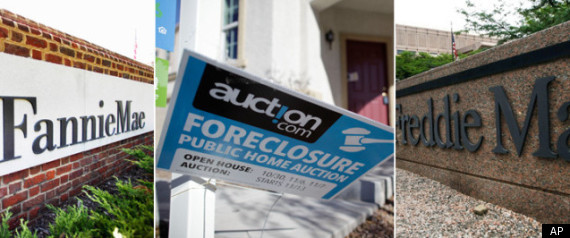
Under the deal announced Monday, the bank will pay $3.6 billion to Fannie Mae and buy back $6.75 billion in loans that the North Carolina-based bank and its Countrywide banking unit sold to the government agency from Jan. 1, 2000 through Dec. 31, 2008. That includes about 30,000 loans.
Democracy Gone Astray
Democracy, being a human construct, needs to be thought of as directionality rather than an object. As such, to understand it requires not so much a description of existing structures and/or other related phenomena but a declaration of intentionality.
This blog aims at creating labeled lists of published infringements of such intentionality, of points in time where democracy strays from its intended directionality. In addition to outright infringements, this blog also collects important contemporary information and/or discussions that impact our socio-political landscape.
All the posts here were published in the electronic media – main-stream as well as fringe, and maintain links to the original texts.
[NOTE: Due to changes I haven't caught on time in the blogging software, all of the 'Original Article' links were nullified between September 11, 2012 and December 11, 2012. My apologies.]
Showing posts with label Fannie Mae. Show all posts
Monday, January 07, 2013
Bank Of America, Fannie Mae Settlement: Bank To Pay $3.6 Billion To Settle Mortgage Claims
Under the deal announced Monday, the bank will pay $3.6 billion to Fannie Mae and buy back $6.75 billion in loans that the North Carolina-based bank and its Countrywide banking unit sold to the government agency from Jan. 1, 2000 through Dec. 31, 2008. That includes about 30,000 loans.
Thursday, August 02, 2012
It’s Time for Obama to Fire DeMarco—Will He?
Fannie Mae and Freddie Mac won’t reduce the principal of underwater homeowners—FHFA head Edward DeMarco made that official yesterday. Despite the fact that FHFA analysts concluded this week that forgiving certain mortgage debts could save public money, DeMarco said yesterday he would not allow it because of the “costs and risks”—he is particularly concerned that people might strategically default to qualify for help.
This is a nonsense argument—as Treasury Secretary Timothy Geithner pointed out in a letter [pdf] to DeMarco yesterday, strategic default is an incredibly risky strategy:
A borrower who defaults cannot be certain that he and she will obtain a HAMP modification, much less…principal reduction. Therefore, a borrower would take a substantial risk be deliberately defaulting: they would have to choose to damage their credit for years to come and perjure themselves on the chance that they would be found eligible for the program.
This is a nonsense argument—as Treasury Secretary Timothy Geithner pointed out in a letter [pdf] to DeMarco yesterday, strategic default is an incredibly risky strategy:
A borrower who defaults cannot be certain that he and she will obtain a HAMP modification, much less…principal reduction. Therefore, a borrower would take a substantial risk be deliberately defaulting: they would have to choose to damage their credit for years to come and perjure themselves on the chance that they would be found eligible for the program.
Monday, March 26, 2012
Fannie Mae, Freddie Mac Resistance To Principal Reduction Costs Taxpayers
SPRINGFIELD, Mass. -- After two years of bewildering futility, John and Linda DeCaro thought they had finally found a way to hang on to their home.
They could no longer afford their mortgage payments and had slipped into delinquency. They could not refinance to take advantage of low-interest rates because they were among the nearly 11 million American homeowners who are "underwater," meaning that they owed the bank more than their house was worth. Bank of America had already initiated foreclosure proceedings.
Then in the spring of 2011, a nonprofit lender, Boston Community Capital, presented a potential fix, one it has used to aid some 200 underwater borrowers in Massachusetts over the last two years. The bank would buy the DeCaros' home at market value -- about $87,000, which was barely half of their mortgage balance -- and then sell it back to them for a little more, providing a manageable loan. Bank of America affirmed the sale price as fair value.
They could no longer afford their mortgage payments and had slipped into delinquency. They could not refinance to take advantage of low-interest rates because they were among the nearly 11 million American homeowners who are "underwater," meaning that they owed the bank more than their house was worth. Bank of America had already initiated foreclosure proceedings.
Then in the spring of 2011, a nonprofit lender, Boston Community Capital, presented a potential fix, one it has used to aid some 200 underwater borrowers in Massachusetts over the last two years. The bank would buy the DeCaros' home at market value -- about $87,000, which was barely half of their mortgage balance -- and then sell it back to them for a little more, providing a manageable loan. Bank of America affirmed the sale price as fair value.
Tuesday, February 14, 2012
After Mortgage Settlement, Fannie Mae, Freddie Mac Face Renewed Pressure On Principal Reduction
Top law enforcement officials in several states are signaling they will pressure Fannie Mae and Freddie Mac to correct what is widely seen as one of the biggest deficiencies of the $25 billion mortgage settlement announced on Thursday: It simply doesn't help that many homeowners.
Borrowers whose loans are backed by the government-controlled mortgage giants -- nearly half of all outstanding mortgages in the United States -- are not eligible for payouts under the deal. State officials who negotiated the deal say they could not convince Fannie Mae and Freddie Mac, or the Federal Housing Finance Agency, which oversees the loan giants, to join onto the settlement because they are steadfastly opposed to principal reductions -- loan write-downs for borrowers whose homes are at risk of foreclosure.
"This is a glaring weakness of the overall settlement," said one state official who spoke on condition of anonymity. "Fannie and Freddie were absolutely opposed to principal reduction. You'd ask why, and they'd say 'moral hazard to the taxpayer.'"
So far, the mortgage giants and the FHFA have only said that they're avoiding principal reduction because of the cost to taxpayers.
Principal reductions are hailed by many economists and housing experts as the most effective way to help homeowners who are underwater on their mortgages, owing more than the home is worth. About 1 in 5 homes in the U.S. are currently underwater.
Borrowers whose loans are backed by the government-controlled mortgage giants -- nearly half of all outstanding mortgages in the United States -- are not eligible for payouts under the deal. State officials who negotiated the deal say they could not convince Fannie Mae and Freddie Mac, or the Federal Housing Finance Agency, which oversees the loan giants, to join onto the settlement because they are steadfastly opposed to principal reductions -- loan write-downs for borrowers whose homes are at risk of foreclosure.
"This is a glaring weakness of the overall settlement," said one state official who spoke on condition of anonymity. "Fannie and Freddie were absolutely opposed to principal reduction. You'd ask why, and they'd say 'moral hazard to the taxpayer.'"
So far, the mortgage giants and the FHFA have only said that they're avoiding principal reduction because of the cost to taxpayers.
Principal reductions are hailed by many economists and housing experts as the most effective way to help homeowners who are underwater on their mortgages, owing more than the home is worth. About 1 in 5 homes in the U.S. are currently underwater.
Thursday, February 09, 2012
Ex-Fannie Mae Employee: Executives 'Philosophically Opposed' To Loan Forgiveness
Fannie Mae executives are refusing to forgive part of homeowners' mortgage debt because they are "philosophically opposed" to the idea, according to an account of a former Fannie Mae employee cited in a letter sent Wednesday by members of the House Oversight Committee.
The head of the Federal Housing Finance Agency, which oversees Fannie Mae and Freddie Mac, previously has said that concerns about losing taxpayer money had kept the two mortgage giants from reducing the principal on struggling borrowers' loans. Fannie Mae and Freddie Mac have cost taxpayers about $169 billion since their government takeover in 2008.
Congressmen Elijah Cummings (D-Md.) and John Tierney (D-Mass.), members of the House's Committee on Oversight and Government Reform, wrote the FHFA's acting director, Edward DeMarco, on Wednesday saying he had omitted critical details in a Jan. 20 letter that claimed a desire to minimize taxpayer losses was why his agency was reluctant to press Fannie Mae and Freddie Mac to offer reductions in principal to underwater homeowners.
According to the Cummings-Tierney letter, a former Fannie Mae employee approached the House Oversight Committee to reveal that Fannie Mae had planned a pilot program to offer principal reductions but that Fannie Mae senior executives had nixed it in mid-2010 since they were "philosophically opposed to writing down principal balances," as that ex-employee put it. Although the Federal Housing Finance Agency was aware of the pilot program, DeMarco failed to mention it in his Jan. 20 letter, Cummings and Tierney wrote. This account is similar to what a former Fannie Mae staffer told The Huffington Post last fall.
The head of the Federal Housing Finance Agency, which oversees Fannie Mae and Freddie Mac, previously has said that concerns about losing taxpayer money had kept the two mortgage giants from reducing the principal on struggling borrowers' loans. Fannie Mae and Freddie Mac have cost taxpayers about $169 billion since their government takeover in 2008.
Congressmen Elijah Cummings (D-Md.) and John Tierney (D-Mass.), members of the House's Committee on Oversight and Government Reform, wrote the FHFA's acting director, Edward DeMarco, on Wednesday saying he had omitted critical details in a Jan. 20 letter that claimed a desire to minimize taxpayer losses was why his agency was reluctant to press Fannie Mae and Freddie Mac to offer reductions in principal to underwater homeowners.
According to the Cummings-Tierney letter, a former Fannie Mae employee approached the House Oversight Committee to reveal that Fannie Mae had planned a pilot program to offer principal reductions but that Fannie Mae senior executives had nixed it in mid-2010 since they were "philosophically opposed to writing down principal balances," as that ex-employee put it. Although the Federal Housing Finance Agency was aware of the pilot program, DeMarco failed to mention it in his Jan. 20 letter, Cummings and Tierney wrote. This account is similar to what a former Fannie Mae staffer told The Huffington Post last fall.
Tuesday, December 27, 2011
The Big Lie
So this is how the Big Lie works.
You begin with a hypothesis that has a certain surface plausibility. You find an ally whose background suggests that he’s an “expert”; out of thin air, he devises “data.” You write articles in sympathetic publications, repeating the data endlessly; in time, some of these publications make your cause their own. Like-minded congressmen pick up your mantra and invite you to testify at hearings.
You’re chosen for an investigative panel related to your topic. When other panel members, after inspecting your evidence, reject your thesis, you claim that they did so for ideological reasons. This, too, is repeated by your allies. Soon, the echo chamber you created drowns out dissenting views; even presidential candidates begin repeating the Big Lie.
Thus has Peter Wallison, a resident scholar at the American Enterprise Institute, and a former member of the Financial Crisis Inquiry Commission, almost single-handedly created the myth that Fannie Mae and Freddie Mac caused the financial crisis. His partner in crime is another A.E.I. scholar, Edward Pinto, who a very long time ago was Fannie’s chief credit officer. Pinto claims that as of June 2008, 27 million “risky” mortgages had been issued — “and a lion’s share was on Fannie and Freddie’s books,” as Wallison wrote recently. Never mind that his definition of “risky” is so all-encompassing that it includes mortgages with extremely low default rates as well as those with default rates nearing 30 percent. These latter mortgages were the ones created by the unholy alliance between subprime lenders and Wall Street. Pinto’s numbers are the Big Lie’s primary data point.
You begin with a hypothesis that has a certain surface plausibility. You find an ally whose background suggests that he’s an “expert”; out of thin air, he devises “data.” You write articles in sympathetic publications, repeating the data endlessly; in time, some of these publications make your cause their own. Like-minded congressmen pick up your mantra and invite you to testify at hearings.
You’re chosen for an investigative panel related to your topic. When other panel members, after inspecting your evidence, reject your thesis, you claim that they did so for ideological reasons. This, too, is repeated by your allies. Soon, the echo chamber you created drowns out dissenting views; even presidential candidates begin repeating the Big Lie.
Thus has Peter Wallison, a resident scholar at the American Enterprise Institute, and a former member of the Financial Crisis Inquiry Commission, almost single-handedly created the myth that Fannie Mae and Freddie Mac caused the financial crisis. His partner in crime is another A.E.I. scholar, Edward Pinto, who a very long time ago was Fannie’s chief credit officer. Pinto claims that as of June 2008, 27 million “risky” mortgages had been issued — “and a lion’s share was on Fannie and Freddie’s books,” as Wallison wrote recently. Never mind that his definition of “risky” is so all-encompassing that it includes mortgages with extremely low default rates as well as those with default rates nearing 30 percent. These latter mortgages were the ones created by the unholy alliance between subprime lenders and Wall Street. Pinto’s numbers are the Big Lie’s primary data point.
Friday, December 16, 2011
Syron, Mudd Sued by SEC Over Subprime Disclosures While at Freddie, Fannie
Daniel Mudd, the former chief executive officer of Fannie Mae, and Richard Syron, ex-CEO of Freddie Mac, were sued by the U.S. Securities and Exchange Commission for understating by hundreds of billions of dollars the subprime loans held by the firms.
The lawsuits filed today in Manhattan federal court were followed by an SEC statement that it had entered into “non- prosecution agreements” with each company. Fannie Mae, the government-sponsored enterprise which issues almost half of all mortgage-backed securities, and Freddie Mac, the McLean, Virginia-based mortgage-finance company, had “agreed to accept responsibility” for their conduct, the SEC said.
The agency said in the lawsuits that Syron, Mudd and other executives understated exposure to subprime mortgage loans. From 2007 to 2008, Freddie Mac executives said the company’s exposure was from $2 billion to $6 billion when it was actually as high as $244 billion, according to one SEC complaint.
From 2006 to 2008, Washington-based Fannie Mae executives said the firm’s exposure to subprime mortgage and reduced- documentation loans was about $4.8 billion when it was almost 10 times greater, according to the regulator.
The lawsuits filed today in Manhattan federal court were followed by an SEC statement that it had entered into “non- prosecution agreements” with each company. Fannie Mae, the government-sponsored enterprise which issues almost half of all mortgage-backed securities, and Freddie Mac, the McLean, Virginia-based mortgage-finance company, had “agreed to accept responsibility” for their conduct, the SEC said.
The agency said in the lawsuits that Syron, Mudd and other executives understated exposure to subprime mortgage loans. From 2007 to 2008, Freddie Mac executives said the company’s exposure was from $2 billion to $6 billion when it was actually as high as $244 billion, according to one SEC complaint.
From 2006 to 2008, Washington-based Fannie Mae executives said the firm’s exposure to subprime mortgage and reduced- documentation loans was about $4.8 billion when it was almost 10 times greater, according to the regulator.
Tuesday, November 29, 2011
Fannie, Freddie Improperly Foreclosed On Homeowners, Costing Government Billions: Watchdog
The report released Tuesday also said the Federal Housing Finance Agency gave "undue deference" to Fannie and Freddie officials and didn't scrutinize more than $35 million in bonuses and compensation to Fannie and Freddie executives.
FHFA's inspector general had previously released each of the findings on an individual basis. But the semi-annual report to Congress sketched a portrait of abuse at the two mortgage giants that the government failed to stop.
Fannie, Freddie and the FHFA didn't respond to the report. But they have responded to similar allegations in previous reports.
Fannie and Freddie own or guarantee about half of U.S. mortgages, or nearly 31 million loans. The Bush administration seized control of the mortgage giants in September 2008.
Wednesday, September 28, 2011
Freddie Protecting Banks, Not Taxpayers, And Never Mind Homeowners
For many months, people concerned about the anemic American economy have focused on the housing market, and the reality that many of the nation's homeowners remain underwater, owing banks more than their homes are worth. Eyes have turned to Fannie Mae and Freddie Mac, the two government-controlled mortgage behemoths that collectively back about half of the nation's $11 trillion worth of outstanding home loans: If they would forgive a significant slice of this debt for homeowners facing difficulty, that would give borrowers a greater stake in their properties, diminishing the foreclosure crisis. The move would put more money in people's pockets via lowered mortgage payments -- money that borrowers would in turn spend, generating jobs for other people.
But the government body that now supervises Fannie and Freddie, the Federal Housing Finance Agency, has refused to go along, asserting that this kind of help for homeowners would be unfair to taxpayers, who ultimately own the mortgages. Better to hold firm and extract what they can from distressed borrowers, returning something to the taxpayers who ponied up north of $140 billion to rescue Fannie and Freddie three years ago.
In a trenchant piece in the Wall Street Journal late last month, the agency's acting director, Edward J. DeMarco, dismissed as irresponsible suggestions that he should be thinking about the broader housing market and the health of the economy, calling campaigns launched in that spirit "a very slippery slope." In DeMarco's world, his responsibilities begin and end with the taxpayer, on whose behalf he has been laboring to collect as much as he can from a teeming storehouse of delinquent mortgages.
But the government body that now supervises Fannie and Freddie, the Federal Housing Finance Agency, has refused to go along, asserting that this kind of help for homeowners would be unfair to taxpayers, who ultimately own the mortgages. Better to hold firm and extract what they can from distressed borrowers, returning something to the taxpayers who ponied up north of $140 billion to rescue Fannie and Freddie three years ago.
In a trenchant piece in the Wall Street Journal late last month, the agency's acting director, Edward J. DeMarco, dismissed as irresponsible suggestions that he should be thinking about the broader housing market and the health of the economy, calling campaigns launched in that spirit "a very slippery slope." In DeMarco's world, his responsibilities begin and end with the taxpayer, on whose behalf he has been laboring to collect as much as he can from a teeming storehouse of delinquent mortgages.
Subscribe to:
Posts (Atom)