Democracy Gone Astray

Democracy, being a human construct, needs to be thought of as directionality rather than an object. As such, to understand it requires not so much a description of existing structures and/or other related phenomena but a declaration of intentionality.
This blog aims at creating labeled lists of published infringements of such intentionality, of points in time where democracy strays from its intended directionality. In addition to outright infringements, this blog also collects important contemporary information and/or discussions that impact our socio-political landscape.

All the posts here were published in the electronic media – main-stream as well as fringe, and maintain links to the original texts.

[NOTE: Due to changes I haven't caught on time in the blogging software, all of the 'Original Article' links were nullified between September 11, 2012 and December 11, 2012. My apologies.]

Showing posts with label Fukushima's Meltdown. Show all posts

Thursday, January 30, 2014

Shock Doctrine in Japan: Shinzo Abe’s Rightward Shift to Militarism, Secrecy in Fukushima’s Wake

Democracy Now! is broadcasting from Tokyo, Japan, today in the first of three special broadcasts. At a critical time for Japan and the region, we begin our coverage looking at the country’s rightward political shift under Prime Minister Shinzo Abe, who was re-elected just over a year ago. As head of the Liberal Democratic Party, Abe is known as a conservative hawk who has pushed nationalistic and pro-nuclear policies. In December, he visited the controversial Yasukuni war shrine, which honors Japanese soldiers who died in battle, including several war criminals who were tried by the International Military Tribunal after World War II. The visit sparked outrage from China and South Korea, who consider the shrine a symbol of Japanese militarism and its refusal to atone for atrocities committed in the first half of the 20th century. We speak about Japan’s increasingly pro-nuclear, nationalistic stance with Koichi Nakano, professor at Sophia University in Tokyo and director of the Institute of Global Concern.

Video
Source: democracynow.org
Author: --

Friday, August 30, 2013

The intolerable costs of nuclear power and benefits of saying no

Welcome to the nuclear renaissance.


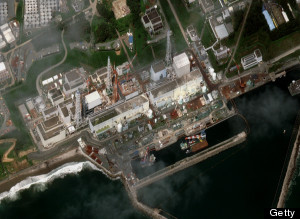
Entergy Corp, one of the largest nuclear-power producers in the U.S., issued a surprise press release Tuesday, saying it plans "to close and decommission its Vermont Yankee Nuclear Power Station in Vernon, Vermont. The station is expected to cease power production after its current fuel cycle and move to safe shutdown in the fourth quarter of 2014." Although the press release came from the corporation, it was years of people's protests and state legislative action that forced its closure. At the same time that activists celebrate this key defeat of nuclear power, officials in Japan admitted that radioactive leaks from the Fukushima Daiichi nuclear catastrophe are far worse than previously acknowledged.

Tuesday, August 06, 2013

Fukushima Radioactive Water May Overflow Into Sea

TOKYO — The operator of Japan's wrecked Fukushima nuclear power plant said Tuesday it is struggling to stop contaminated underground water from leaking into the sea.

Tokyo Electric Power Co. said some of the water is seeping over or around an underground barrier it created by injecting chemicals into the soil that solidified into a wall.

The latest problem involves underground water which has built up over the last month since the company began creating the chemical walls to stop leaks after it detected radiation spikes in water samples in May.

Friday, April 05, 2013

Fukushima Cooling System Fails For Second Time In A Month

TOKYO -- Power was restored Friday to a cooling system at a tsunami-damaged nuclear plant in Japan that failed for the second time in a month after an outage caused by construction work to keep out rats suspected of setting off the earlier blackout.

Power for the cooling system for a storage pool for fuel was restored after a two-hour break at reactor No. 3, and there was no immediate danger from the breakdown, according to Tokyo Electric Power Co., the utility that operates Fukushima Dai-ichi in northeastern Japan.

Sunday, March 11, 2012

Japan’s 3/11

When the time came for Japan to stop in remembrance, there was not one moment of silence but two: The first, at 2:46 P.M., when the biggest quake in the nation’s history struck one year ago. And then the second: In tiny towns up and down the coast, they paused again, exactly thirty-three minutes later, to mark the moment when the tsunami arrived.

The moment that Japan remembers as 3/11 was not one disaster but three—an earthquake, a tsunami, and a nuclear meltdown. And then there was the repercussion that nobody expected in the rush of stoicism and sacrifice that so impressed the world. As evidence piled up of government failures—cover-ups, bureaucratic paralysis, an industry that disguised honest assessments of the risks—Japan’s confidence in the political establishment that has created its modern miracle collapsed: the “fourth disaster” of March 11,” as one commentator puts it.

Prayers, protests mark Japan tsunami anniversary

The people of Japan paused for a moment of silence to mark the one-year anniversary of a powerful earthquake and subsequent tsunami that killed almost 19,000 people and left hundreds of thousands of others homeless.

Entire cities and towns were wiped off the land by the twin disasters, and more than 340,000 people who lost homes are still living in temporary housing a year later.

Emperor Akihito led a national memorial service in Tokyo, and smaller memorials were held across the country.

The moment of silence was observed at 2:46 p.m. local time Sunday, at the exact moment the 9.0-magnitude earthquake hit last year and unleashed a wall of water that hit Japan's northeast coast.

While much of the debris has been gathered into massive piles, very little rebuilding has begun.

Saturday, March 10, 2012

Fukushima Anniversary: How Climate Change Endangers Nuclear Safety

WASHINGTON -- A year after a 30-foot tsunami ravaged the Fukushima Daiichi nuclear power plant in Japan, some scientists say regulators underestimate the threat that climate change poses to nuclear power plants in the U.S.
"There are clear lessons learned from the Fukushima disaster, yet our government allows the risks to remain," said Jordan Weaver, a scientist with the Natural Resources Defense Council.

"It doesn't have to take an earthquake and a tsunami to trigger a severe nuclear meltdown. In addition to human error and hostile acts, more common occurrences like hurricanes, tornadoes and flooding -- all of which took place around the country last year -- could cause the same type of power failure in U.S. plants."

Nuclear reactor facilities, which need a reliable source of water for cooling purposes, are usually located near the ocean or alongside a large lake or river. There are 104 nuclear reactors at 65 sites across the U.S., nine of them located within 2 miles of the coast. That's a somewhat fraught positioning from the lens of climate science, particularly since the Intergovernmental Panel on Climate Change report from 2007 found that ocean levels are rising roughly 1.2 inches each decade, with some scientists predicting that water levels could rise by as much as a meter by the end of the century.

Tuesday, December 27, 2011

Japan Fukushima Disaster: Probe Finds Response Failed

TOKYO -- Japan's response to the nuclear crisis that followed the March 11 tsunami was confused and riddled with problems, including an erroneous assumption an emergency cooling system was working and a delay in disclosing dangerous radiation leaks, a report revealed Monday.

The disturbing picture of harried and bumbling workers and government officials scrambling to respond to the problems at Fukushima Dai-ichi nuclear power plant was depicted in the report detailing a government investigation.

The 507-page interim report, compiled by interviewing more than 400 people, including utility workers and government officials, found authorities had grossly underestimated tsunami risks, assuming the highest wave would be 6 meters (20 feet). The tsunami hit at more than double those levels.

The report criticized the use of the term "soteigai," meaning "outside our imagination," which it said implied authorities were shirking responsibility for what had happened. It said by labeling the events as beyond what could have been expected, officials had invited public distrust.

"This accident has taught us an important lesson on how we must be ready for soteigai," it said.

Wednesday, August 17, 2011

The explosive truth behind Fukushima's meltdown

It is one of the mysteries of Japan's ongoing nuclear crisis: How much damage did the 11 March earthquake inflict on the Fukushima Daiichi reactors before the tsunami hit? 

The stakes are high: if the earthquake structurally compromised the plant and the safety of its nuclear fuel, then every similar reactor in Japan may have to be shut down. With almost all of Japan's 54 reactors either offline (in the case of 35) or scheduled for shutdown by next April, the issue of structural safety looms over any discussion about restarting them.

Plant operator Tokyo Electric Power Co (Tepco) and Japan's government are hardly reliable adjudicators in this controversy. "There has been no meltdown," government spokesman Yukio Edano repeated in the days after 11 March. "It was an unforeseeable disaster," Tepco's then president Masataka Shimizu famously and improbably said later. Five months since the disaster, we now know that meltdown was already occurring as Mr Edano spoke. And far from being unforeseeable, the disaster had been repeatedly forewarned by industry critics.