Democracy Gone Astray

Democracy, being a human construct, needs to be thought of as directionality rather than an object. As such, to understand it requires not so much a description of existing structures and/or other related phenomena but a declaration of intentionality.
This blog aims at creating labeled lists of published infringements of such intentionality, of points in time where democracy strays from its intended directionality. In addition to outright infringements, this blog also collects important contemporary information and/or discussions that impact our socio-political landscape.

All the posts here were published in the electronic media – main-stream as well as fringe, and maintain links to the original texts.

[NOTE: Due to changes I haven't caught on time in the blogging software, all of the 'Original Article' links were nullified between September 11, 2012 and December 11, 2012. My apologies.]

Showing posts with label Japan. Show all posts

Thursday, September 28, 2023

At Camp David, Biden hails ‘new era of partnership’ between U.S., South Korea and Japan

CAMP DAVID, Md. — President Joe Biden on Friday signed historic agreements with the leaders of South Korea and Japan, bridging the fraught history between the two countries with promises of strengthening each nation’s economic and national security interests.

In what was a clear message to China, Biden welcomed Japanese Prime Minister Fumio Kishida and South Korean President Yoon Suk Yeol for the first trilateral meeting between the three countries that wasn’t held on the sidelines of an international gathering.

Wednesday, September 20, 2023

EU’s best Western ally is now in the East

If he hadn’t been speaking Japanese, Prime Minister Shinzō Abe could easily have been mistaken for an EU leader.

Visiting Brussels on Thursday to meet Commission President Jean-Claude Juncker and Council President Donald Tusk, Abe seemed to sing all the favorite tunes from the EU songbook. He fiercely defended the need for a free and fair international trading system, spoke out in favor of liberal democratic ideals, including human rights and the rule of law, called for protecting the environment, for nuclear disarmament of North Korea, and for avoiding a no-deal Brexit “by all means.”

Sunday, September 17, 2023

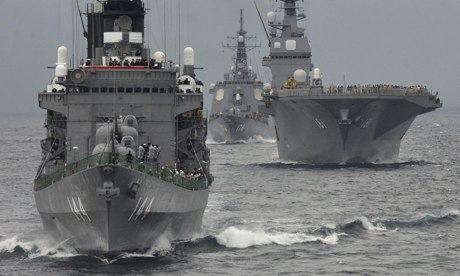
Japan to get first aircraft carrier since second world war amid China concerns


Japan is to acquire at least one aircraft carrier for the first time since the second world war, as it attempts to counter Chinese maritime expansion in the Pacific ocean.

The government will upgrade its two existing Izumo-class helicopter carriers so they can transport and launch fighter jets, according to media reports. The plans are expected to be included in new defence guidelines due to be released next month.

Monday, February 01, 2016

Why a Stable Balance of Power in Asia Calls for a Resurgent Japan

NEW DELHI -- The international spotlight on Japan's prolonged economic woes has helped obscure one of Asia's furthest-reaching but least-noticed developments -- the political rise of the world's third largest economy. By initiating national security reforms and seeking a more active role in shaping the evolving balance of power in Asia, Japan wants to stop punching below its weight and take its rightful place in the world.

Sunday, May 31, 2015

Okinawans Want Their Land Back. Is That So Hard to Understand?

Living in a country where people learn world geography through frequently fought overseas wars, Americans are accustomed to reading about places where we've fought wars - Vietnam, Iraq, Afghanistan and elsewhere. But one formerly war-ravaged part of the world most Americans don't think much about is Okinawa.

Once the independent kingdom of Ryukyu, Okinawa, was annexed by Japan in 1872. At the end of World War II, exactly 70 years ago, Okinawa was the site of one of the war's most ferocious battles. Caught between the armies of Japan and the United States, Okinawans suffered unspeakable horrors during the "typhoon of steel." Viewed as expendable under imperial Japan, many Okinawans were killed outright by Japanese soldiers or forced to commit mass suicide. An estimated 120,000 Okinawans - between one-third and one-quarter of the population - died between March and June 1945.

Saturday, September 13, 2014

Poll: A Majority Of Chinese Expect War With Japan; 90 Percent Of Japanese Dislike Chinese

Rising tensions between China and Japan are taking their toll, according to a new pollby Genron NPO/China Daily.

Among those Chinese citizens surveyed in Beijing, Shanghai, Chengdu, Shenyang and Xian, a majority (53.4 percent) believe “there will be a military conflict” with Japan in the coming years. The Japanese polled were more ambivalent, but they also feared “conflict within a few years.”

Friday, August 22, 2014

Russia Holds Military Exercises On Islands Partly Claimed By Japan

MOSCOW, Aug 12 (Reuters) - Russia began military exercises in a Pacific island chain parts of which are also claimed by Japan, a Russian Defense Ministry spokesman said on Tuesday, a potential blow to Japanese Prime Minister Shinzo Abe's efforts to keep the door open to dialog with Moscow despite strains over the Ukraine crisis.

"Exercises began involving military units in the region, which are deploying to the Kurile Islands," Colonel Alexander Gordeyev, a spokesman for Russia's Eastern Military District, told the Russian news agency Interfax.

Saturday, March 29, 2014

Robert Kaplan: The End Of A Stable Pacific

Robert Kaplan is the author of “Asia's Cauldron: The South China Sea and the End of a Stable Pacific”

Kaplan spoke with The WorldPost editor Nathan Gardels on March 25, 2014.

Friday, February 28, 2014

China Proposes Controversial New Holidays Amid Growing Tensions With Japan

A new plan proposed in China's parliament would establish two new national holidays in remembrance of conflicts with Japan in the 1930s and 1940s, China’s Xinhua News Agency reported Tuesday.

Many perceive Beijing's push for the new holidays, which comes amid growing political and economic tensions between China and Japan, as an antagonistic move against the Japanese.

Friday, January 31, 2014

If The U.S. And Japan Don't Deter China, Dominos Will Fall

Yoichi Funabashi, former editor-in-chief of Japan’s leading paper, Asahi Shimbun, is chairman of the Rebuild Japan Initiative Foundation and a member of The WorldPost Editorial Board. He spoke with The WorldPost last week.

THE WORLDPOST: How should the U.S. and Japan deal with the rising tensions with China over territorial claims in the East China Sea?

FUNABASHI: It is imperative for the U.S. and Japan to strengthen deterrence against the background of China’s more assertive posturing, particularly with respect to their territorial claims over the Senkaku Islands.

Thursday, January 30, 2014

Shock Doctrine in Japan: Shinzo Abe’s Rightward Shift to Militarism, Secrecy in Fukushima’s Wake

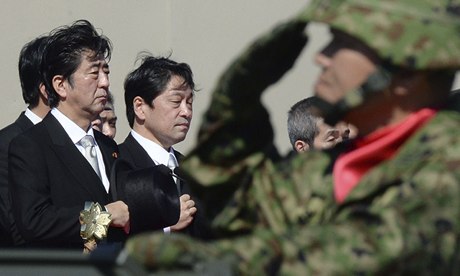
Democracy Now! is broadcasting from Tokyo, Japan, today in the first of three special broadcasts. At a critical time for Japan and the region, we begin our coverage looking at the country’s rightward political shift under Prime Minister Shinzo Abe, who was re-elected just over a year ago. As head of the Liberal Democratic Party, Abe is known as a conservative hawk who has pushed nationalistic and pro-nuclear policies. In December, he visited the controversial Yasukuni war shrine, which honors Japanese soldiers who died in battle, including several war criminals who were tried by the International Military Tribunal after World War II. The visit sparked outrage from China and South Korea, who consider the shrine a symbol of Japanese militarism and its refusal to atone for atrocities committed in the first half of the 20th century. We speak about Japan’s increasingly pro-nuclear, nationalistic stance with Koichi Nakano, professor at Sophia University in Tokyo and director of the Institute of Global Concern.

Video
Source: democracynow.org
Author: --

Monday, December 23, 2013

China lashes out at Japan defence plans

China's military has condemned Japan's plans to boost defence spending, accusing Tokyo of raising regional tensions under the pretext of safeguarding national security.

In a statement issued on Saturday, Geng Yansheng, defence ministry spokesman, said China "resolutely opposes" Japan's five-year defence plan, accusing its Asian neighbour of maintaining a "Cold War mentality".

Geng accused Japan of manufacturing fears of Chinese aggression and denying responsibility for having invaded China and other countries in the last century.

Wednesday, December 18, 2013

Japan increases defence budget amid tensions with China

Japan is to significantly increase its defence spending over the next five years to acquire surveillance drones, fighter jets, naval destroyers and amphibious vehicles to counteract China's growing military activity in the region.

New defence and security strategies ordered by Japan's conservative prime minister, Shinzo Abe, and approved on Tuesday, include the creation of a new amphibious unit modelled on the US marines, which would be called on to retake islands captured by an enemy – a clear response to Chinese naval and aerial activity near the disputed Senkaku islands.

Monday, December 09, 2013

Meet The Tiny Rock That Could Start World War III

Sunday morning, South Korea announced that it was extending its air defense zone to include a tiny reef off its coast. Now China, Japan, and South Korea’s flight zones overlap for the first time, upping military tensions in a region already rife with them.

Socotra Rock, known as Ieodo in Korea and Suyan Rock in China, is a submerged reef that houses a Korean research station. Both Korea and China claim it as part of their “exclusive economic zones,” (EEZ) a legal term for the maritime region in which the country has special development rights.

Sunday, December 08, 2013

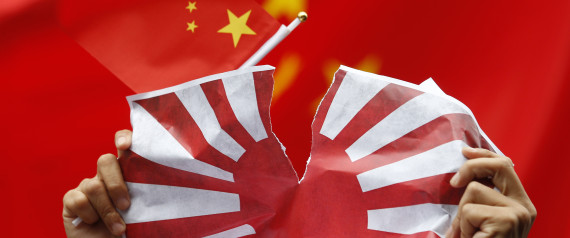
The old hatreds behind the China-Japan provocation war

If China were a contestant in an online game — such as, say, World of Warcraft — it would probably be accused of trolling, the internet term for committing gratuitous mischief for the sheer delight of getting a rise out of others.

But as this is the real world, with the possibility of real war, we should probably rule out a playful adolescent urge as China's motive for its surprise declaration of an Air Defence Identification Zone for much of the East China Sea.

Apart from being one of the world's busiest transportation corridors, this zone also includes that grouping of hotly contested rocky islets known in China as the Diaoyu and in Japan as the Senkaku islands.

Once famous for providing albatross feathers to the world's milliners, the uninhabited islands are claimed by both countries.

Thursday, November 28, 2013

Biden to press Beijing on air defence zone in bid to ease China-Japan dispute

The US announced on Wednesday that Joe Biden, the vice-president, will use a visit to Beijing to discuss in person China’s unilateral declaration of an expanded air defense zone over the East China sea.

Biden’s trip to Japan, China and South Korea, which begins on 1 December, was meant to be mainly about economic issues but will now be dominated by rising tensions over the disputed Senkaku Islands, which are claimed by Japan and China and fall under Beijing’s expanded air defense zone.

Wednesday, November 27, 2013

Is Shinzo Abe's 'new nationalism' a throwback to Japanese imperialism?

The deepening confrontation between Japan and its giant neighbour, China, over a disputed island chain, which this week sucked in US military forces flying B-52 bombers, holds no terrors for Kenji Fujii, captain of the crack Japanese destroyer JS Murasame.

As a battleship-grey drizzle sweeps across Yokosuka harbour, home port to the Japan maritime self-defence force and the US Seventh Fleet, Fujii stands four-square on his helicopter deck, a totemic red Japanese sun-ray ensign flapping at the flagstaff behind him. His stance exudes quiet purposefulness.

Friday, November 22, 2013

3 Countries That Are Bailing on Climate Action

When Japan dramatically slashed its plans last week for reducing greenhouse gas emissions by 2020, from 25 percent to just 3.8 percent compared to 2005 figures, the international reaction was swift and damning.

Britain called it "deeply disappointing." China's climate negotiator, Su Wei, said, "I have no way of describing my dismay." The Alliance of Small Island Nations, which represents islands most at risk of sea level rise, branded the move "a huge step backwards."

Tuesday, August 06, 2013

Fukushima Radioactive Water May Overflow Into Sea

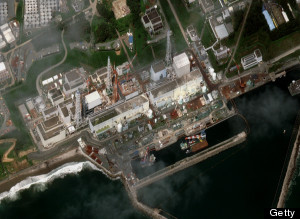
TOKYO — The operator of Japan's wrecked Fukushima nuclear power plant said Tuesday it is struggling to stop contaminated underground water from leaking into the sea.

Tokyo Electric Power Co. said some of the water is seeping over or around an underground barrier it created by injecting chemicals into the soil that solidified into a wall.

The latest problem involves underground water which has built up over the last month since the company began creating the chemical walls to stop leaks after it detected radiation spikes in water samples in May.

Friday, May 24, 2013

Japan the Model

A generation ago, Japan was widely admired — and feared — as an economic paragon. Business best sellers put samurai warriors on their covers, promising to teach you the secrets of Japanese management; thrillers by the likes of Michael Crichton portrayed Japanese corporations as unstoppable juggernauts rapidly consolidating their domination of world markets.

Then Japan fell into a seemingly endless slump, and most of the world lost interest. The main exceptions were a relative handful of economists, a group that happened to include Ben Bernanke, now the chairman of the Federal Reserve, and yours truly. These Japan-obsessed economists viewed the island nation’s economic troubles, not as a demonstration of Japanese incompetence, but as an omen for all of us. If one big, wealthy, politically stable country could stumble so badly, they wondered, couldn’t much the same thing happen to other such countries?