Democracy Gone Astray

Democracy, being a human construct, needs to be thought of as directionality rather than an object. As such, to understand it requires not so much a description of existing structures and/or other related phenomena but a declaration of intentionality.
This blog aims at creating labeled lists of published infringements of such intentionality, of points in time where democracy strays from its intended directionality. In addition to outright infringements, this blog also collects important contemporary information and/or discussions that impact our socio-political landscape.

All the posts here were published in the electronic media – main-stream as well as fringe, and maintain links to the original texts.

[NOTE: Due to changes I haven't caught on time in the blogging software, all of the 'Original Article' links were nullified between September 11, 2012 and December 11, 2012. My apologies.]

Showing posts with label Honduras. Show all posts

Tuesday, March 15, 2016

Hillary Clinton's Response To Honduran Coup Was Scrubbed From Her Paperback Memoirs

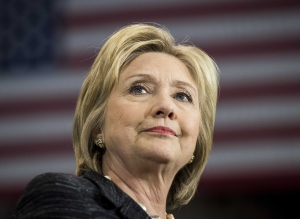
Those who want to know what former Secretary of State Hillary Clinton said about Honduras' 2009 coup in her autobiography shouldn't bother with the paperback version.

Clinton's role in the aftermath of Honduran President Manuel Zelaya's ouster has come under greater scrutiny since the March 3 assassination of environmental and indigenous rights activist Berta Cáceres. Critics argue that the U.S. push for new elections in the months after the coup helped legitimize the actions of the Honduran military, destabilize the country and pave the way for the extreme violence that followed. Killings of activists like Cáceres and others have become devastatingly common.

Thursday, May 28, 2015

Conditions in Canadian-owned factories the worst in Honduras

Conditions in Canadian-owned Gildan garment factories are among the worst in Honduras says Reyna Tejada, a former factory worker and representative from CODEMUH, a feminist labour organization. Tejada was in Vancouver to speak at the CUPE-BCconvention, held April 29 to May 2.
Gildan factories produce t-shirts, fleeces and apparel for other companies to put their logos and graphics on. The company currently has contracts for brands such as New Balance and Secret.

Tuesday, August 26, 2014

Children Deported To Honduras Are Getting Killed: Report

As a debate continues to rage in the United States over whether to treat the influx of unaccompanied minors at the border as refugees or to summarily deport them, The Los Angeles Times reports that minors deported to Honduras over the last month are being killed.

A morgue director in the city Honduran city of San Pedro Sula told The Los Angeles Times that “at least five, perhaps as many as 10” children killed there since February had been deported from the United States.

Monday, August 25, 2014

Five Children Murdered After They Were Deported Back To Honduras

Between five and ten migrant children have been killed since February after the United States deported them back to Honduras, a morgue director told the Los Angeles Times. Lawmakers have yet to come up with best practices to deal with the waves of unaccompanied children apprehended by Border Patrol agents, but some politicians refute claims that children are fleeing violence and are opting instead to fund legislation that would fast-track their deportations.

Friday, January 31, 2014

Goldcorp mine in Honduras extract profits while poisoning land and population

Hondurans are not lazy, they’re not inferior and they're not communists. They are, however, victims of a (self-devouring) globalized corporatocracy, especially since the military coup in 2009 destroyed the fledgling democracy of president Manuel Zelaya, and reversed his attempts to use public resources for the benefit of Hondurans.
Ever since that transformative moment, freedom and democracy have been extinguished, as have the lives of many peaceful, freedom-loving Hondurans, while those who commit or support these crimes --with impunity -- control the levers of power.

Monday, December 30, 2013

A Mission Gone Wrong -- Why are we still fighting the drug war?

One night in May of 2012, a Honduran police inspector received a phone call from an agent of the U.S. Drug Enforcement Administration, a man he knew as Tony. Tony told him to get his men ready. They were about to intercept a large cocaine shipment, one of many such missions that U.S. and Honduran forces collaborate on each year. At 8 P.M., four helicopters flew east from a base near the city of La Ceiba to a smaller refuelling base deep in the wet lowlands of La Moskitia, on the Honduran side of the Mosquito Coast. Along with the inspector, the helicopters carried ten D.E.A. agents, eighteen other members of the Honduran security forces, and eight Guatemalan pilots. Around 11 P.M., they lifted off again. Their target was a small plane heading for a Honduran village called Ahuas.

The U.S. military monitors what it can of the hundreds of tons of cocaine that enter the U.S. by plane, boat, automobile, submarine, tunnel, backpack, and catapult. Its maps show red lines veining South America and North America with such tangled complexity that they are known as “spaghetti slides.” Most of the air routes, however, follow a predictable path. They begin in Venezuela and head north, avoiding Colombian airspace, where authorities can shoot down suspicious aircraft. Then they turn west, toward La Moskitia.

Friday, October 05, 2012

'Charter Cities' and escalating human rights violations in Honduras: Will Canadian investment continue?

Canada's economic plot for Honduras is wavering. The "Charter Cities" initiative that Harper's Conservatives have been discreetly championing for months has erupted in a constitutional challenge and a flurry of human rights abuses.

Yesterday, NDP MP for Toronto-Danforth Craig Scott submitted a letter to Minister of Foreign Affairs John Baird and Minister of State for Foreign Affairs Diane Ablonczy regarding recent violence in Honduras and links to Canadian investment.

Thursday, September 06, 2012

How Canada helped make Honduras the violence and impunity capital of the world

There is no end in sight to violence and repression in Honduras. There is no end in sight to the impunity and corruption with which the powerful economic, military and political sectors act.

There is also no end in sight to American and Canadian governments and businesses maintaining political, economic and military relations with the Honduras, empowering and legitimizing the regime. American and Canadian businesses and investors are, in effect, benefiting from the repression, violence, corruption and impunity.

Thursday, April 26, 2012

Honduran Congress consults with Canadian government and mining companies, but not its own people

Honduran civil society organizations are once again denouncing Honduran authorities for refusing to consult with them over a new mining law. They have already issued a public statement about the worrisome contents of the proposed bill that they gained access to in January. In this earlier statement, they criticized the law for privileging water supplies for industrial use, continued promotion of open-pit mining despite strong consensus in Honduras against this form of mining, and lack of opportunities for meaningful and binding prior consultation with communities, amongst other complaints.

Meanwhile, according to this latest communiqué and other news reports, Honduran legislators are now seeking input from Canadian experts. This is hardly random, but rather in response to a strong Canadian government and industry lobby over the last couple of years following the military-backed ouster of President Mel Zelaya. Prior to the coup, a mining bill was pending for debate that would have increased taxes in the mining sector, prohibited open-pit mining and the use of toxic substances such as cyanide and mercury, and would have required companies to obtain prior community approval before mining concessions could be granted.

It is important to note that a recent national poll carried out in September 2011 by the Research Centre for Democracy (CESPAD), demonstrates that Honduran social and environmental organizations enjoy broad public support. The study found “strong support for the environmental movement, particularly with regard to reforms of the mining law and for more responsible and just natural resource management.” The same survey also found that some 91% of Hondurans are currently opposed to open-pit mining based on their prior experiences.

Sunday, February 19, 2012

Honduras prison fire: Inmates awoke to a nightmare around them


COMAYAGUA, HONDURAS—Jose Enrique Guevara woke up to screams and a flash of heat from the fire about to engulf his prison bunk bed.

As flames devoured men around him and tore at his back, Guevara bolted for a corner, seeking to escape the conflagration. But the only door to the overcrowded barracks was locked.

“You can’t imagine what it’s like, knowing that everyone is burning, hearing and seeing how they cry as they’re eaten by flames,” said Guevara, 33, who was serving an 11-year sentence for auto theft in the Comayagua prison. “It all happened in seconds.”

As scores around him died, Guevara survived only by a fellow inmate’s act of heroism: the man picked up a bench and smashed the lock.

Only three of 105 inmates in Guehis dormitory survived the worst prison fire in a century. In all, 358 perished in the blaze that broke out just before 11 p.m. local time Tuesday, including a woman who had come to the medium-security farm prison to spend Valentine’s Day with her husband.

Wednesday, February 15, 2012

Honduras Prison Fire Kills At Least 300 Inmates

TEGUCIGALPA, Honduras -- A fire started by an inmate tore through a severely overcrowded Honduran prison, burning and suffocating inmates in their locked cells and killing as many as 356 people in one of the world's deadliest prison fires in a century, authorities said Wednesday.

The local governor, a former prison employee, told reporters that an inmate called her moments before the fire and said he was going to set the facility on fire and kill everyone inside.

Survivors told investigators that an unidentified inmate screamed "We will all die here!" as he lit fire to his bedding late Tuesday night in the prison in the central town of Comayagua. The lockup housed people convicted of serious crimes such as homicide and armed robbery.

The blaze spread within minutes, killing about 100 inmates in their cells as firefighters struggled to find officials who had keys, Comayagua fire department spokesman Josue Garcia said.

 "We couldn't get them out because we didn't have the keys and couldn't find the guards who had them," Garcia said.

Others prisoners were set free by guards but died from the flames or smoke as they tried to flee into the fields surrounding the facility, where prisoners convicted of crimes grow corn and beans on a state-run farm. Rescuers carried shirtless, semi-conscious prisoners from the facility by their arms and legs. One hauled a victim away from the fire by piggyback.

Paola Castro, the governor of Comayagua state, said at a press conference that she had received a call several minutes before the first reports of a fire from a prisoner whom she did not name, who told her that "I will set this place on fire and we are all going to die!"
Wednesday, January 04, 2012

Canada-Honduras Trade Deal On Track, Critics Decry Worsening Rights Situation

OTTAWA - A Canada-Honduras trade deal is coming under renewed fire following a spate of abuses by police in the Central American country, including the recent beatings of protesting teachers, the intimidation of journalists and the murder of two university students.

Trade Minister Ed Fast, who was not available for comment this week, highlighted the conclusion of trade talks with Honduras as one of the federal government's accomplishments in 2011. The prime minister lauded the deal during a trip to the struggling nation last August.

But human-rights abuses and soaring crime continues to plague the country.

Police used water cannons and tear gas on hundreds of teachers who protested missing paycheques in December. The same month, journalists protesting the deaths of 17 colleagues over the last two years were beaten with batons.

Journalists and university officials investigating the deaths of two students, allegedly at the hands of police officers, have reported being intimidated by other police officers.

Monday, October 24, 2011

WikiLeaks Honduras: US Linked to Brutal Businessman

Since 2009, beneath the radar of the international media, the coup government ruling Honduras has been collaborating with wealthy landowners in a violent crackdown on small farmers struggling for land rights in the Aguán Valley in the northeastern region of the country. More than forty-six campesinos have been killed or disappeared. Human rights groups charge that many of the killings have been perpetrated by the private army of security guards employed by Miguel Facussé, a biofuels magnate. Facussé’s guards work closely with the Honduran military and police, which receive generous funding from the United States to fight the war on drugs in the region.

New Wikileaks cables now reveal that the US embassy in Honduras—and therefore the State Department—has known since 2004 that Miguel Facussé is a cocaine importer. US “drug war” funds and training, in other words, are being used to support a known drug trafficker’s war against campesinos.

Miguel Facussé Barjum, in the embassy’s words, is “the wealthiest, most powerful businessman in the country,” one of the country’s “political heavyweights.” The New York Times recently described him as “the octogenarian patriarch of one of the handful of families controlling much of Honduras’ economy.” Facussé’s nephew, Carlos Flores Facussé, served as president of Honduras from 1998 to 2002. Miguel Facussé’s Dinant corporation is a major producer of palm oil, snack foods, and other agricultural products. He was one of the key supporters of the military coup that deposed democratically elected President Manuel Zelaya on June 28, 2009.

Saturday, August 13, 2011

Canada and Honduras agree on free trade deal

SAN PEDRO SULA, HONDURAS—Stephen Harper brushed off concerns over human rights abuses in Honduras as he announced Friday the two countries have reached a pact on free trade.

As he did during a state visit to Colombia this week, the Prime Minister accused opponents of the deal of harbouring protectionist impulses rather than genuine concerns about human rights.

“People who favour protectionism are not, as I’ve said before, driven by concerns about poverty or human rights. They are driven by desire to protect local interests,” Harper said.

“Protectionists are selfish and short-sighted in their perspectives. And those who oppose free trade between Canada and Honduras, if you look at the record, have opposed free trade between Canada and every other country we’ve signed a trade agreement with, including the United States.”

Friday, August 12, 2011

Harper announces free-trade deal with Honduras

SAN PEDRO SULA, Honduras — Prime Minister Stephen Harper wrapped up his tour of Latin America on Friday by announcing that Canada has struck a free-trade deal with Honduras.

The development came as Mr. Harper visited the impoverished nation, where violence is common and the leftist president was deposed by a coup just two years ago.

Mr. Harper made the announcement after meeting with Honduran President Porfirio Lobo Sosa.

“Our government received a strong mandate to implement our ambitious job-creating free-trade plan that will benefit Canadians,” Mr. Harper said.

“A free-trade agreement with Honduras is a key part of our government’s agenda to open new markets for Canadian businesses, create new opportunities for our workers and contribute to Canada’s future prosperity.”

Critics have said the Mr. Harper government is moving too quickly to provide credibility to the current right-wing Honduran regime at a time when the country is still suffering human-rights abuses, poor treatment of underpaid workers and a high crime rate.

Harper Honduras Visit Clouded By Human Rights Concerns

SAN JOSE, Costa Rica - Prime Minister Stephen Harper's trip to Honduras on Friday will be the first state visit by a foreign leader since the country was allowed back into the Organization of American States following a coup that ousted the country's leftist president.

Canada was one of the first countries to throw its support behind Porfirio Lobo Sosa, a wealthy rancher elected president of the tiny Central American country in November 2009, months after former leader Manuel Zelaya was disposed.

Since then, Canada has stepped up trade talks with Honduras, one in a bloc of four Central American countries that Canada has been conducting free-trade negotiations with for a decade.