Democracy Gone Astray

Democracy, being a human construct, needs to be thought of as directionality rather than an object. As such, to understand it requires not so much a description of existing structures and/or other related phenomena but a declaration of intentionality.
This blog aims at creating labeled lists of published infringements of such intentionality, of points in time where democracy strays from its intended directionality. In addition to outright infringements, this blog also collects important contemporary information and/or discussions that impact our socio-political landscape.

All the posts here were published in the electronic media – main-stream as well as fringe, and maintain links to the original texts.

[NOTE: Due to changes I haven't caught on time in the blogging software, all of the 'Original Article' links were nullified between September 11, 2012 and December 11, 2012. My apologies.]

Showing posts with label War on Drugs. Show all posts

Wednesday, August 08, 2018

The War on Drugs Is Working

In 2011, the Centers for Disease Control warned that overdosesinvolving prescription painkillers had reached “epidemic levels.”

That same year, the Office of National Drug Control Policy released a plan to curb prescription drug abuse. It focused on opioids and involved four components: education, monitoring, disposal, and enforcement. Over the next few years, state and federal officials cracked down on “pill mills” and “doctor shoppers,” yet the number of opioid-related deaths continued to rise.

Friday, June 23, 2017

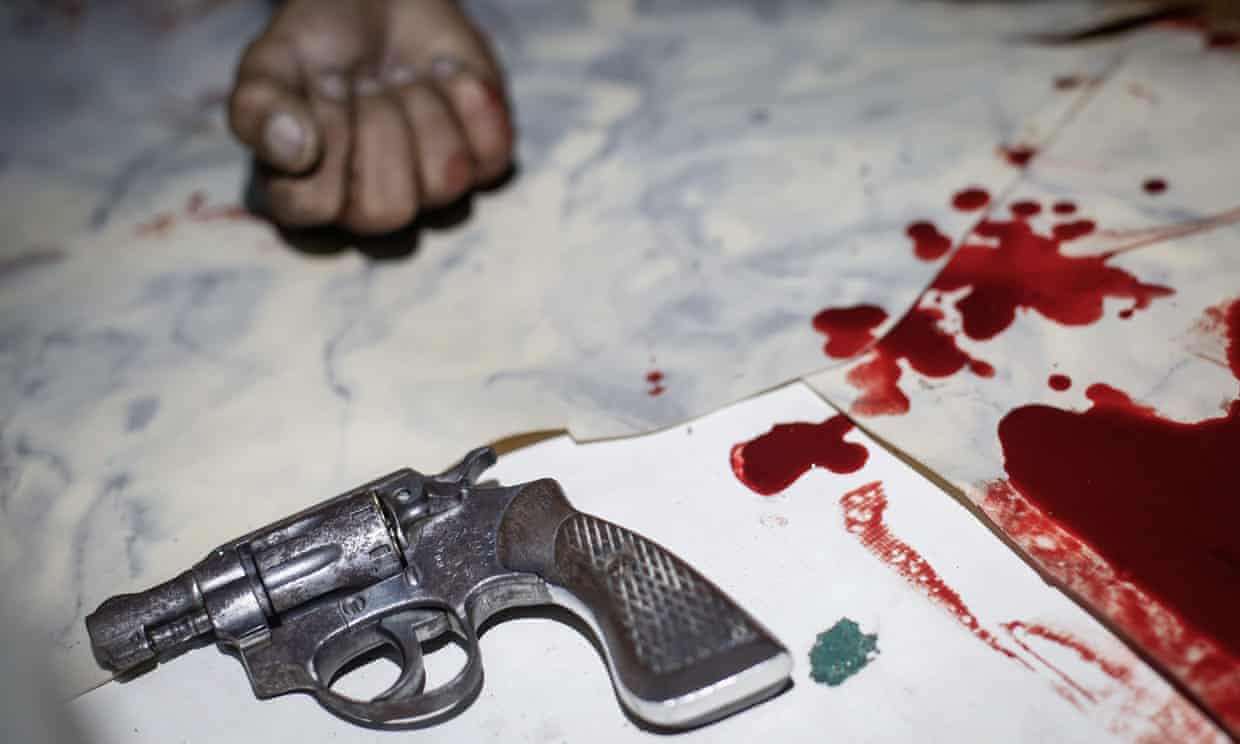
Thousands dead: the Philippine president, the death squad allegations and a brutal drugs war

“Throw them in the ocean or the quarry. Make it clean. Make sure there are no traces of the bodies.”

The words are shocking. That they allegedly came from the man who is now president of the Philippines makes them explosive. It is claimed that Rodrigo Duterte gave the orders to his first death squad in Davao, in the southern island of Mindanao, in 1989 when he was ‘“mayor Rudy”.

Friday, March 25, 2016

Nixon Aide Reportedly Admitted Drug War Was Meant To Target Black People

An eye-opening remark from a former aide to President Richard Nixon pulls back the curtain on the true motivation of the United States’ war on drugs.

John Ehrlichman, who served 18 months in prison for his central role in the Watergate scandal, was Nixon’s chief domestic advisor when the president announced the “war on drugs” in 1971. The administration cited a high death toll and the negative social impacts of drugs to justify expanding federal drug control agencies. Doing so set the scene for decades of socially and economically disastrous policies.

Sunday, February 28, 2016

Human Rights Activists Dispute "Success" of "Plan Colombia"

A group of award-winning human rights activists from Colombia traveled to Washington, DC, from February 15 through 19 to share their perspectives on the armed conflict that has roiled their country for more than half a century, as well as the historic negotiations aimed at ending it.

Their visit comes just two weeks after Colombian President Juan Manuel Santos arrived in Washington for an official visit to celebrate "Plan Colombia," a 15-year long counterinsurgency and counternarcotics campaign backed by billions of dollars in US funding, most of which went to Colombia's military and police.

Thursday, January 28, 2016

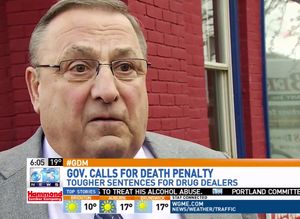
Paul LePage Urges Maine Residents To Shoot Drug Dealers

Maine Gov. Paul LePage (R) wants state residents to start shooting drug dealers on sight in order to help alleviate Maine's heroin crisis.

"Everybody in Maine, we have constitutional carry," LePage said Wednesday.
"Load up and get rid of the drug dealers."

Since October, Maine has allowed legal firearm owners to carry concealed handguns without a permit.

Saturday, June 27, 2015

Portugal’s Approach to Drugs Is Saving Lives; Why Aren’t We Copying It?

In 2001, Portugal tackled drug use with what seemed like a radical plan: It decriminalized all drugs—yes, every last one. Now, drug use is down, deaths caused by overdoses are rare, and HIV hardly occurs among drug users anymore.

Friday, October 17, 2014

What Happens When A City Decides to Offer Addicts Services, Not Prison Sentences?

For decades, the United States has tried to punish and shame people out of drug addiction with courts, jails and criminal records. It has been massively unsuccessful, as the nationwide rise in opiate addiction over the last few years demonstrates, and few people are more aware of its failure than the police officers tasked with arresting addicts.

“We were chasing the same people over and over again,” Santa Fe Police Captain, Jerome Sanchez, told The Nation. “We learned quickly what we were doing wasn’t working.”

Monday, December 30, 2013

A Mission Gone Wrong -- Why are we still fighting the drug war?

One night in May of 2012, a Honduran police inspector received a phone call from an agent of the U.S. Drug Enforcement Administration, a man he knew as Tony. Tony told him to get his men ready. They were about to intercept a large cocaine shipment, one of many such missions that U.S. and Honduran forces collaborate on each year. At 8 P.M., four helicopters flew east from a base near the city of La Ceiba to a smaller refuelling base deep in the wet lowlands of La Moskitia, on the Honduran side of the Mosquito Coast. Along with the inspector, the helicopters carried ten D.E.A. agents, eighteen other members of the Honduran security forces, and eight Guatemalan pilots. Around 11 P.M., they lifted off again. Their target was a small plane heading for a Honduran village called Ahuas.

The U.S. military monitors what it can of the hundreds of tons of cocaine that enter the U.S. by plane, boat, automobile, submarine, tunnel, backpack, and catapult. Its maps show red lines veining South America and North America with such tangled complexity that they are known as “spaghetti slides.” Most of the air routes, however, follow a predictable path. They begin in Venezuela and head north, avoiding Colombian airspace, where authorities can shoot down suspicious aircraft. Then they turn west, toward La Moskitia.

Thursday, August 15, 2013

E. Clay Shaw Jr. On Minimum Drug Sentences: 'We May Have Overreacted'

Former Rep. E. Clay Shaw, Jr. (R-Fla.), an author of the Anti-Drug Abuse Act of 1986 that imposed mandatory minimum penalties for drug crimes, said during an Al Jazeera interview that Congress "may have overreacted" in passing the law.

Shaw, who retired from Congress in 2007, said the bill was drafted at a time when crack cocaine "started popping up like crazy." He admitted he'd never heard of the drug before then, and noted that crack, at the time, was preferred by "the least affluent."

Thursday, May 30, 2013

IRS Targets Medical Marijuana Businesses In Government's Ongoing War On Pot

The tea party has company. For the past several years, the Internal Revenue Service has been systematically targeting medical marijuana establishments, relying on an obscure statute that gives the taxing agency unintended power. The IRS has been functioning as an arm of justice, employing the U.S. tax code as a weapon in the federal government's ongoing war against legal cannabis.

Sunday, April 28, 2013

Drug Czar Defends Funding Punishment Over Prevention

The Obama administration's Office of National Drug Control Policy has promised a "21st century" approach to drug policy, but the White House budget released earlier this month still prioritizes arrest and interdiction programs over treatment and prevention.

White House drug czar Gil Kerlikowske, on a call with reporters Thursday, said the War on Drugs does not define the Obama administration's approach to the U.S. drug problem. "We can't arrest or incarcerate our way out of the nation's drug problem and we must balance law enforcement efforts with drug prevention, treatment and recovery support," he said. "That means treating the root cause of many drug offenses, which all too often is a substance abuse disorder."

Monday, April 22, 2013

Marijuana Prohibition Now Costs The Government $20 Billion A Year: Economist

NEW YORK -- Marijuana prohibition now costs state and federal government as much as $20 billion a year, an economist told The Huffington Post -- and legalization efforts are only just beginning to chip away at that.

That number comes from Jeffrey Miron, a senior lecturer at Harvard University who in 2010 studied the likely impacts of drug legalization, finding that about $8.7 billion would be saved on law enforcement and another $8.7 billion would be generated from taxes on marijuana. Accounting for inflation, that would add up to about $20 billion now, he said.

Wednesday, February 20, 2013

Throwaways: Recruited by Police & Thrown into Danger, Young Informants are Drug War’s Latest Victims

New Yorker staff writer Sarah Stillman has just been awarded a George Polk Award for her article, "The Throwaways," which investigates law enforcement’s unregulated use of young confidential informants in drug cases. Stillman details how police broker deals with young, untrained informants to perform high-risk operations with few legal protections in exchange for leniency — and sometimes fatal results. Stillman joins us to discuss her eight-month investigation, which has spurred calls for reform in several states. We’re also joined by Margie Weiss, the mother of Rachel Hoffman. After police found drugs in her apartment, Hoffman agreed to assist Florida officers in a major undercover deal involving meeting two convicted felons alone to buy two-and-a-half ounces of cocaine, 1,500 ecstasy pills, and a semi-automatic handgun. Within days, her body was found shot five times with the gun that the police had sent her to buy. We also speak with Alexandra Natapoff, professor of law at Loyola Law School and author of "Snitching: Criminal Informants and the Erosion of American Justice."

Video
Source: Democracy Now!
Author: -

Saturday, February 02, 2013

War on drugs draws Canadian military focus in Central America

The Harper government's new focus on the Americas means a dramatic change of effort for the Canadian Forces and an overt participation in the U.S. war on drugs.

The commander of Canada's operational forces, Lt.-Gen. Stuart Beare, says Canada is now focusing new efforts on Central America and the Caribbean.

Saturday, January 26, 2013

Obama's Drug War: After Medical Marijuana Mess, Feds Face Big Decision On Pot

OAKLAND, Calif. -- In the summer of 2007, the owners of Harborside Health Center, then and now the most prominent medical marijuana dispensary in the U.S., were reflecting on their rapid rise. Steve DeAngelo had opened the center with his business partner in October 2006, on a day when federal agents raided three other clubs in the San Francisco Bay Area. "We had to decide in that moment whether or not we were really serious about this and whether we were willing to risk arrest for it," DeAngelo said. "And we decided we were going to open our doors. And we did, and we haven’t looked back since. The only way I’ll stop doing what I’m doing is if they drag me away in chains. And as soon as they let me out, I’ll be back doing it again."

Saturday, December 15, 2012

Outrageous HSBC Settlement Proves the Drug War is a Joke

If you've ever been arrested on a drug charge, if you've ever spent even a day in jail for having a stem of marijuana in your pocket or "drug paraphernalia" in your gym bag, Assistant Attorney General and longtime Bill Clinton pal Lanny Breuer has a message for you: Bite me.

Breuer this week signed off on a settlement deal with the British banking giant HSBC that is the ultimate insult to every ordinary person who's ever had his life altered by a narcotics charge. Despite the fact that HSBC admitted to laundering billions of dollars for Colombian and Mexican drug cartels (among others) and violating a host of important banking laws (from the Bank Secrecy Act to the Trading With the Enemy Act), Breuer and his Justice Department elected not to pursue criminal prosecutions of the bank, opting instead for a "record" financial settlement of $1.9 billion, which as one analyst noted is about five weeks of income for the bank.

Thursday, September 13, 2012

Rights, Wrongs, and the War on Drugs

Former White House Drug Chief Robert DuPont argues that recreational drug use is not a human right.

One of the common arguments for ending the so-called “war on drugs” is that the enforcement of drug prohibition policies has “led to widespread and serious human rights violations” around the world. Dr. Robert DuPont, former White House drug chief, explains why he thinks the aim of protecting human rights actually justifies prohibition policies.

Friday, August 31, 2012

The Throwaways

Police enlist young offenders as confidential informants. But the work is high-risk, largely unregulated, and sometimes fatal.


On the evening of May 7, 2008, a twenty-three-year-old woman named Rachel Hoffman got into her silver Volvo sedan, put on calming jam-band music, and headed north to a public park in Tallahassee, Florida. A recent graduate of Florida State, she was dressed to blend into a crowd—bluejeans, green-and-white patterned T-shirt, black Reef flip-flops. On the passenger seat beside her was a handbag that contained thirteen thousand dollars in marked bills.

Thursday, July 26, 2012

Harper’s anti-drug strategy gets a little less compassionate

When Stephen Harper launched his high-profile National Anti-Drug Strategy in the fall of 2007, he took aim at critics who were already saying his new Conservative government was putting too much emphasis on more drug arrests and longer prison sentences, and not enough on helping addicts. “This approach will be tough on crime and compassionate for victims,” the Prime Minister said in a speech in Winnipeg announcing the policy. “If you’re addicted to drugs, we’ll help you, but if you deal drugs, we’ll punish you.”

Tuesday, July 17, 2012

HSBC laundered billions of dollars for Mexican drug cartels, Senate investigation finds

WASHINGTON—Lax controls at Europe’s largest bank, HSBC, allowed Mexican drug cartels to launder billions of dollars through its U.S. operations, a Senate investigation has found.

The extensive report on London-based HSBC Holdings PLC by the Senate Permanent Subcommittee on Investigations also says U.S. regulators knew the bank had a poor system to detect problems but failed to take action.