Democracy Gone Astray

Democracy, being a human construct, needs to be thought of as directionality rather than an object. As such, to understand it requires not so much a description of existing structures and/or other related phenomena but a declaration of intentionality.
This blog aims at creating labeled lists of published infringements of such intentionality, of points in time where democracy strays from its intended directionality. In addition to outright infringements, this blog also collects important contemporary information and/or discussions that impact our socio-political landscape.

All the posts here were published in the electronic media – main-stream as well as fringe, and maintain links to the original texts.

[NOTE: Due to changes I haven't caught on time in the blogging software, all of the 'Original Article' links were nullified between September 11, 2012 and December 11, 2012. My apologies.]

Showing posts with label Medicaid. Show all posts

Friday, March 10, 2017

The House GOP’s not-so-sneaky plan to destroy Medicaid

About 74 million Americans from the most vulnerable pockets of the country would see their access to doctors and medicines rapidly curtailed under the House GOP’s proposed health insurance overhaul.

Peel back the wonky jargon at the core of the bill’s Medicaid provisions, and you’ll find a straightforward idea: America should spend far, far less than it does to get health insurance coverage for poor people.

Tuesday, March 07, 2017

You're On Your Own: Republicans Plan Attack on Medicaid, Medicare and Social Security

Several years ago, 62-year-old Michael Kaufman, a disabled resident of Bovina, New York, accidently drilled through one of his fingers. He quickly went to the closest Emergency Room where the wound was treated and bandaged. He thought this was all that he needed to do; unfortunately, the next morning, he noticed red streaks traveling up his arm -- a sign of possible blood poisoning -- so he returned to the local ER where medical staff immediately inserted an IV of antibiotics and suggested that he go to a bigger hospital 50 miles away to see a hand specialist, which he did.

Sunday, March 05, 2017

The Shameful Republican Assault on Medicaid

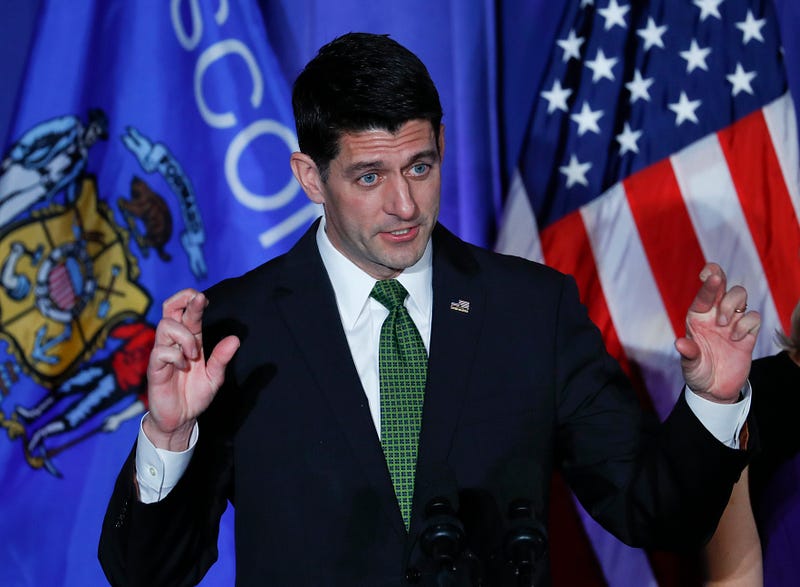
In terms of political theatre, Donald Trump’s press conference on Thursday was the event of the week, or maybe the year. Strictly in policy terms, though, it was less important than the media briefing that Paul Ryan, the House Speaker, and other House Republican leaders held, also on Thursday, about their plans to abolish Obamacare and replace it with some version of what we might call Trumpcare, or maybe Trump/Ryancare.

There are still huge questions about what this new system will look like, and when it might be enacted. In a new seventeen-page paper, “Obamacare Repeal and Replace,” the G.O.P. lawmakers outlined proposals that are familiar from a plan that Ryan put out last year. They included expanded health savings accounts, financial aid for the establishment of high-risk pools at the state level, and the replacement of income-based subsidies to purchase individual insurance with universal tax credits.

Thursday, February 23, 2017

This Governor Is Defying The GOP And Pushing To Expand Medicaid To Over Half A Million People

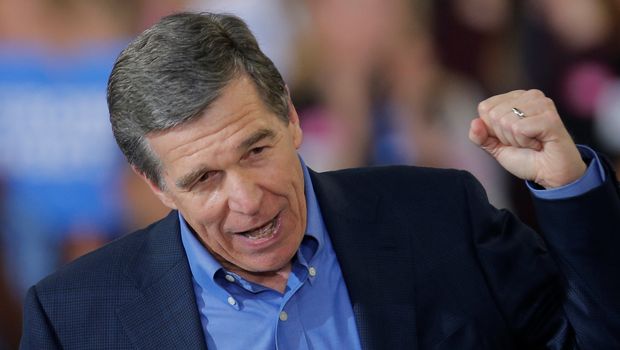
North Carolina Gov. Roy Cooper (D) says he’ll quickly expand Medicaid in his state before President-elect Donald Trump takes office. His vow sets up a confrontation with Republicans in the state who have explicitly passed a law barring him from making such a move.

Cooper said Friday he sent a letter to the Centers for Medicare & Medicaid Services this week requesting the expansion under the Affordable Care Act, which Trump and Republicans in Washington, D.C., have pledged to repeal. The expansion extends Medicaid eligibility to people with incomes up to 138 percent of the federal poverty level. Under the ACA, the federal government would pay for 95 percent of the cost of the expansion and then a little less each year until paying 90 percent in 2020.

Thursday, March 12, 2015

Arizona Governor Calls Plan To Kick 500,000 Low-Income People Off Of Medicaid ‘Responsible’

As states across the country are moving to expand Medicaid coverage to additional low-income people under the Affordable Care Act, lawmakers in Arizona want to take the opposite approach.
On Friday, Gov. Doug Ducey (R) approved a measure that seeks to tighten the state requirements for Medicaid eligibility, ultimately limiting public health insurance to fewer residents. The legislation proposes requiring the program’s recipients to be employed in order to qualify for assistance and kicking them out of the program after they’ve been enrolled for five years.

Sunday, February 23, 2014

Missouri Senate Kills Medicaid Expansion For Roughly 300,000 Lower-Income People

The Republican-controlled Missouri Senate voted 23-9 along party lines Wednesday to kill legislation expanding Medicaid eligibility to roughly 300,000 uninsured, lower-income adults.

Despite Gov. Jay Nixon’s (D) vocal support for expanding Medicaid, the state’s Republican-led legislature repeatedly defeated Democrats’ efforts to advance similar proposals last year.

"It's the easiest and simplest way to improve our health care in our state, improve our economy," state Sen. Paul LeVota (D), who spearheaded the amendment, said on Wednesday, according to the St. Louis Post-Dispatch. "This isn't a crazy idea. This is an idea whose time has come."

Tuesday, June 04, 2013

Medicaid Expansion Denial Will Cost States Billions: Report

States that refuse to expand Medicaid under President Barack Obama's health care reform law not only will deny health coverage to poor residents and lose access to a huge influx of federal dollars, they also will see increased spending on uninsured people's unpaid medical bills, according to a new report by the Rand Corp., a consulting firm.

The Rand Corp. analyzed 14 states with governors who oppose the Medicaid expansion. It found their actions will deprive 3.6 million people of health coverage under Obamacare, forgo $8.4 billion in federal funding, and cost them $1 billion for programs that partially compensate medical providers who care for the indigent, according to the report published in the journal "Health Affairs." Since nearly half of states may not undertake the Medicaid expansion next year, those figures could be even higher. Twenty-two states and the District of Columbia plan to broaden Medicaid in 2014, according to the Henry J. Kaiser Family Foundation.

Tuesday, May 28, 2013

Texas Legislature Passes Measure To Prevent Medicaid Expansion

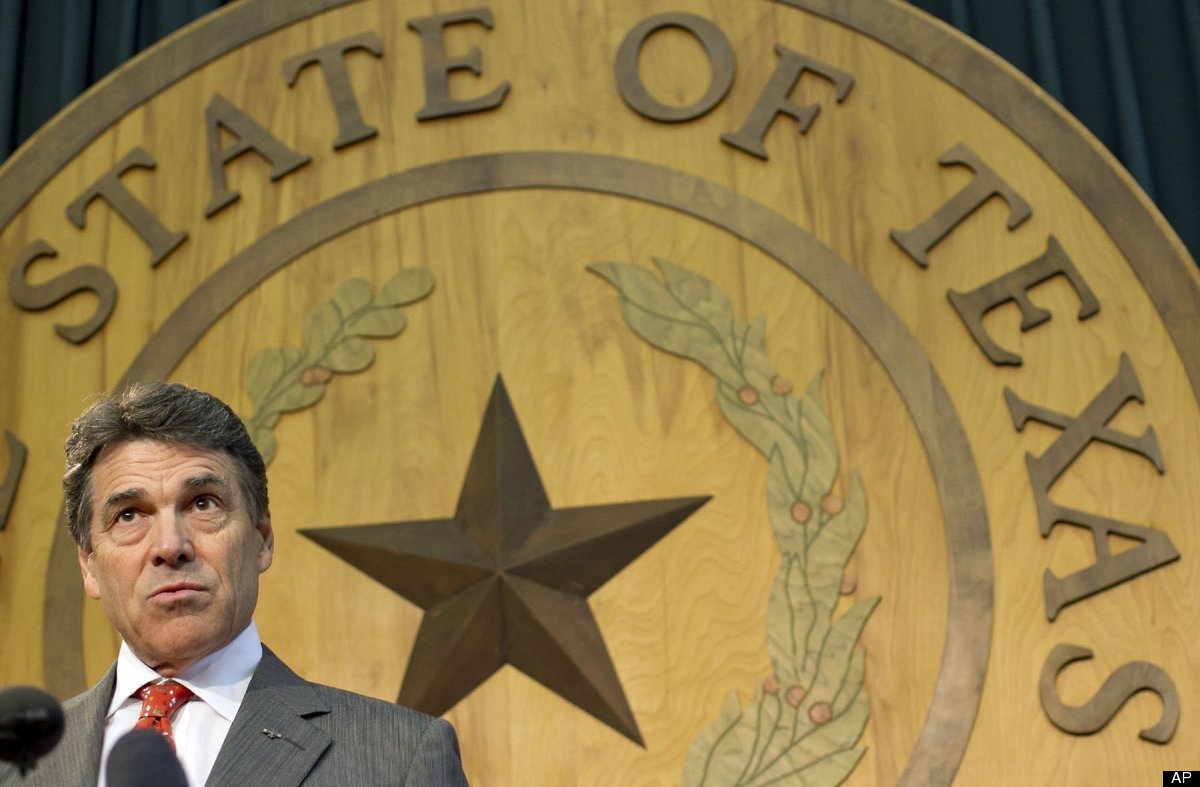
AUSTIN, Texas, May 26 (Reuters) - The Republican-majority Texas House and Senate on Sunday sent Governor Rick Perry a proposal to prevent the state from expanding its Medicaid program as outlined by President Barack Obama's healthcare reform law.

Perry, a Republican, notified the Obama administration last summer his state would not expand Medicaid, which provides healthcare for low-income people. He repeated his opposition in an April news conference at which he called expansion "foolish."

Friday, December 14, 2012

Walmart Workers At Risk In States Rejecting Obamacare Medicaid Expansion

If state governors follow through on plans to oppose the expansion of Medicaid under Obamacare, one substantial group of low-wage workers appears vulnerable to going without medical coverage: people who work at Walmart.

The world’s largest retailer recently outlined a new policy that will exclude from health coverage newly hired employees who work fewer than 30 hours per week, as The Huffington Post reported this month. Experts described that move as an attempt by Walmart to shift the burden of providing health coverage to the government -- specifically, to Medicaid, the insurance program for the poor.

Tuesday, December 11, 2012

Medicaid Expansion: States Must Meet Obamacare Standards To Get Full Federal Funding

States must expand Medicaid all the way if they want to receive full Obamacare funding, federal officials said Monday.

The health care reform law enacted in 2010 calls for Medicaid to be offered to anyone who earns up to 133 percent of the federal poverty level, which is $14,856 this year. Under the law, the federal government would pay the full cost of enrolling newly eligible people from 2014 to 2016, after which the share would gradually shrink until it reached 90 percent starting in 2022.

Thursday, December 06, 2012

Dennis Daugaard, South Dakota Governor, Rejects Obamacare Medicaid Expansion

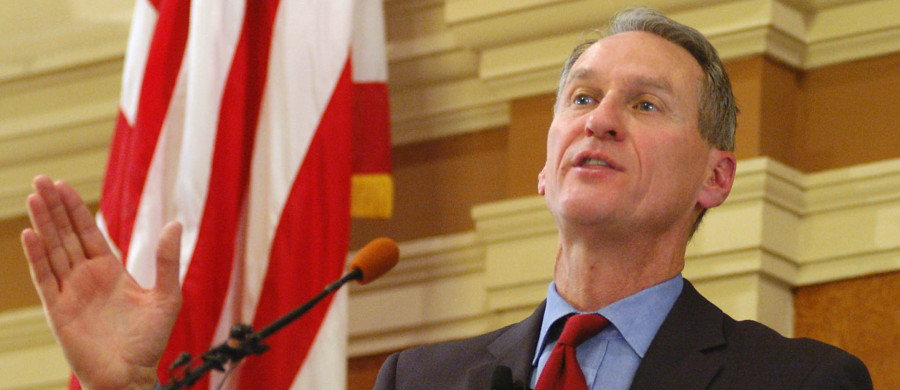
South Dakota Gov. Dennis Daugaard (R) opposes providing health benefits to more than 40,000 "able-bodied" poor people by expanding the state's Medicaid program under President Barack Obama's health care reform law, he told legislators Tuesday.
Obama's health care law seeks to provide health care coverage to as many as 17 million uninsured people who earn up to 133 percent of the federal poverty level, which is $14,856 for a single person this year, by 2022. But when the Supreme Court upheld the law in June, it allowed states to opt out of expanding Medicaid. Including South Dakota, nine states with Republican governors have announced they wouldn't offer health benefits to poor people who would qualify.

Monday, October 29, 2012

Medicaid on the Ballot

There’s a lot we don’t know about what Mitt Romney would do if he won. He refuses to say which tax loopholes he would close to make up for $5 trillion in tax cuts; his economic “plan” is an empty shell.

 But one thing is clear: If he wins, Medicaid — which now covers more than 50 million Americans, and which President Obama would expand further as part of his health reform — will face savage cuts. Estimates suggest that a Romney victory would deny health insurance to about 45 million people who would have coverage if he lost, with two-thirds of that difference due to the assault on Medicaid.

Friday, October 12, 2012

The Romney-Ryan Plan to Obliterate Medicaid

Barrels of ink have been spilled over Medicare during this year's campaign. There's nothing wrong with that: Obama and Romney have fundamentally different approaches to Medicare and they deserve attention. Romney, for example, wants to increase the eligibility age to 67 and convert Medicare into a voucher system that relies primarily on competition between private firms to rein in costs. That's a big change. At the same time, the actual differences in what the two candidates would spend on Medicare is fairly modest. This is more a fight over means than ends.

Wednesday, August 15, 2012

Medicaid Health Care Denied To Needy Due To Red Tape, Costs

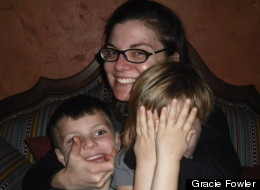
She jumped through hoops, wrangled with bureaucrats and overcame obstacles, but Gracie Fowler finally figured out how to make sure her kids weren't among the more than 500,000 Florida children without health insurance.

Fowler, 35, has struggled since becoming pregnant with her 8-year-old son to get, and hold onto, the Medicaid health benefits to which he and his seven-year-old sister are entitled. They've been dropped by the state, and she's fought with agencies and their private contractors about lost applications, multiple requests for the same documentation and conflicting information about whether her kids were even covered.

Saturday, July 21, 2012

'We Can’t Afford It': The Big Lie About Medicaid Expansion

In his letter to Health and Human Services Secretary Kathleen Sebelius rejecting the expansion of Medicaid under the Affordable Care Act, Texas Governor Rick Perry tells a whopper. Expanding Medicaid, he writes, would “threaten even Texas with financial ruin.”


Texas has the highest rate of uninsured residents in the country (25 percent), and it stands to enroll some 1.8 million new Medicaid recipients through the expansion. These are some of the poorest people in America, making less than 133 percent of the federal poverty level (just $31,000 a year for a family of four). In the first six years of the expansion, from 2014 to 2019, the total cost of insuring these Texans would be about $55 billion—not an inconsiderable sum. But the federal government would pay more than 95 percent of that amount; Texas’s share would be just $2.6 billion. That’s not chump change—but threaten Texas with financial ruin? Not by a long shot.

Sunday, July 15, 2012

This Week in Poverty: Houston Janitors' Strike Goes Citywide

Governor Mitt Romney got all the press at the NAACP convention in Houston on Wednesday, but janitor Alice McAfee got a standing-o. She spoke to a packed auditorium about her plight and that of over 3,000 fellow janitors in the city.

The Houston janitors are currently paid an hourly wage of $8.35 and earn an average of $8,684 annually, despite cleaning the offices of some of the largest and most powerful corporations in the world—Chevron, ExxonMobil, Wells Fargo, Shell Oil, JPMorgan Chase and others in the “City of Millionaires.” They are asking building owners and cleaning contractors for a raise to $10 an hour over the next three years; the counter offer is a $0.50 pay raise phased in over five years, virtually guaranteeing that the janitors continue to live in poverty.

Monday, July 02, 2012

This Week in Poverty: 89,000 Children in Pennsylvania Lose Medicaid

Since August 2011, 89,000 children in Pennsylvania have lost their Medicaid coverage, including many with life-threatening illnesses who were mistakenly deemed ineligible. The state currently hasn’t a clue whether many of these children have any healthcare coverage at all.

How did this happen?

In late summer, the Pennsylvania Department of Welfare (DPW) began notifying hundreds of thousands of families by mail that they had ten days to provide necessary documentation in order to keep their children enrolled in Medicaid. If the family missed the deadline—or even if they met it but DPW failed to process the paperwork within the ten days—they were dropped from Medicaid.

Friday, June 29, 2012

Ruling Could Allow Republicans to Deny Medicaid to Millions of Poor Americans

The Affordable Care Act didn’t survive entirely as passed—somewhat lost amidst the intense focus on the individual mandate was a ruling that part of the law’s Medicaid expansion was unconstitutional. The Supreme Court’s modification of the law probably won’t have a fundamental, long-term impact, but does make it easier for rogue Republican governors to exempt their states from participating in the expansion—and could cost millions of low-income, uninsured Americans a chance at government health care.

First, a brief refresher on what the ACA did to Medicaid: as you may know, the program is run jointly by the states and the federal government to provide health care to (very) low-income Americans. States set up their Medicaid system according to federal regulations and get most of the money from the feds, while funding some of the program themselves. Healthcare reform aimed to expand coverage, in part, by expanding Medicaid to cover people up to 133 percent above the poverty line (as compared to 63 percent now)—that is, at or below income of $30,700 for a family of four. This expansion would extend coverage to 16 million additional people by 2019.

Tuesday, December 06, 2011

Rural Suicides Follow Medicaid Cuts

Suicide is on the increase in rural America--nowhere so much as in western mountain states like Idaho, Wyoming and New Mexico. Mental health professionals attribute it in part to cutbacks in Medicaid funding, to the recession and to the culture of the rural West.

In Idaho, somebody kills himself every 35 hours, according to a 2009 report to Idaho's governor by the state's Council on Suicide Prevention. Their report calls suicide "a major public health issue" having a "devastating effect" on Idaho's families, churches, businesses and even schools: 65 students aged 10 and 18 killed themselves in a recent five-year period.

Recently, a county sheriff in Bonneville told the Idaho Falls Post Register that his department was getting more suicide calls than in 2010—a year in which 290 Idahoans took their own lives. "We're in a spike right now," he says.

Historically the suicide rate in rural states has been higher than in urban ones. According to the most recent national data available, Alaska has the highest rate, at 24.6 suicides per 100,000 people. Next comes Wyoming (23.3), followed by New Mexico (21.1), Montana (21.0) and Nevada (20.2). Idaho ranks 6th, at 16.5. Suicide is the second-leading cause of death for Idahoans aged 15-34. Only accidents rank higher.

Saturday, November 19, 2011

Four Popular Safety-Net Programs Tea Party Republicans Have Turned Against

Imagine how much harder the last three years would have been without the safeguards erected over the past 80 years, in many cases with bipartisan support. Social Security, Medicare, Medicaid, and unemployment insurance are the broadest, but there are also the programs specifically targeted toward low-income Americans: the earned income tax credit, community health centers, school lunch programs, and food stamps, to name a few.

These policies have two things in common. They've historically enjoyed high levels of support, not just from the Democratic Party, but from Republicans as well. And today's GOP plans to dismantle or seriously weaken all of them, setting back almost a century of progress.

This isn't a sudden lurch to the right, but the continuation of a process that has been in motion for decades. After Democratic president Lyndon Johnson signed the landmark Civil Rights laws of the 1960s, conservative southern whites began breaking towards the Republicans. With these energetically reactionary voters added to their base, Republican elites could rely on more consistently hardline support for a platform consisting largely of tax breaks for the wealthy and attacking social programs.

"We have a new breed of Republican that is much more radical," says Peter Edleman, expert on social insurance programs and an assistant secretary of health and human services in the Clinton administration. "Every time the Republicans come to power, they are more conservative. Reagan was very negative about a whole series of programs that helped low-income people, Gingrich was worse than Reagan and now the Tea Party is the worst we've seen."

Below you will find four examples of social programs that used to be supported by Republicans (at least some of them), but have suffered sustained attack over the last thee years.

School Lunch Programs

Ensuring that American students can attend school with full bellies seems like the most uncontroversial public policy of all time. Besides the obvious common decency argument, multiple studies show that children learn better when they aren't hungry.

Free school lunch programs were originally instituted following World War II and the basics of the program are reauthorized every five years. The last time it was up for reauthorization, as the Child Nutrition and WIC Reauthorization Act of 2004, it passed both houses of Congress unanimously. (Only Ron Paul voted against the iteration before that.)

Not so last year, when the Child Nutrition Bill met the Tea Party. Sure, the bill was a little larger this time and it included some additional guidelines to encourage a more nutritious diet. "The bills are very, very similar," says Joel Berg, author of All You Can Eat: How Hungry is America? and who served eight years at the Clinton administration's US Department of Agriculture (which oversees many of the government's anti-hunger programs).

But House Republicans used these changes as an excuse to vote against the bill en masse. Despite the Obama administration's desperate concessions to get more Republicans on board, 157 of the 170 member House Republican caucus voted against the bill. And they've continued their crusade against healthy school meals since gaining a majority in the House.

"The last two times it passed Congress with virtually no controversy," says Berg. "That's a huge change. Lots of people have gone after food stamps. But going after school meals, I don't know if the Grinch would do that. But House Republicans do. If they can't be for healthier school meals for kids what can they be for?"

Food Stamps

As Berg points out, food stamps--now officially known as Supplemental Nutrition Assistance Program (SNAP)--have encountered greater conservative opposition than school lunch programs. But the program has also obtained significant levels of Republican support throughout its history. Which makes sense: food stamps are certainly a more conservative alternative to, say, cash assistance programs, which have long been derided by the GOP.

Indeed, Richard Nixon and his administration advocated for and oversaw a significant expansion of the program and laid the groundwork for the groundbreaking Food Stamp Reform bill 1977, which created the program as we know it today. Powerful conservative senators like Robert Dole and Richard Lugar allied with their Democratic counterparts to strengthen food stamps.

Ronald Reagan initially instituted significant cuts in food stamps, but the program was expanded again in 1985 and 1987. While Newt Gingrich and his ilk were venomous in their opposition, George W. Bush seemed to be a quiet supporter. In 2002, he advocated the restoration of food stamp eligibility to many legal immigrants who had been denied it as a result of a Clinton-era concession to the right. Eric Bost, the Bush administration's Under Secretary for Food, Nutrition, and Consumer Services, said, "I assure you, food stamps is not welfare."

But Eric Bost is long gone. Earlier this year, Paul Ryan proposed, and the House Republican caucus approved, a budget that included a plan to make SNAP a block grant program, similar to Temporary Assistance for Needy Families (TANF, or what remains of welfare). This would be a disaster. Block grants mean that each state will get a set chunk on money for food stamps every year. The amount of money can't rise with need, so if a bunch of new people become eligible for food stamps--because of, say, a massive recession--the states will be unable to add them to the SNAP rolls. To make matters worse, the amount of money granted to the states for SNAP will be at the mercy of inflation and will be worth less every year. If TANF is anything to go by, the lump sum won't be increased, and food stamps will cover fewer and fewer people every year.

This draconian policy proposal was approved by almost every Republican in the House, including former anti-hunger advocates like Frank Wolf (R-VA) and Jo Ann Emerson (R-MO). All but five Senate Republicans voted for Ryan's budget too, including Lugar. The Democratic majority in the upper chamber defeated the Ryan bill, but Lugar, personifying the GOP's hard-right swing on this policy, proposed deep cuts to the program a few months later.

Community Health Centers

Community health centers have existed since the 1960s, introduced as part of the War on Poverty and really taking off in the 1970s. These health centers are meant to provide quality healthcare regardless of income or insurance status (they are generally priced on a sliding scale).

Conservatives have appreciated the fact that community health centers are phenomenally cost-effective. According to the National Association of Community Health Centers, the "Estimated Total Medical Savings Per Person" for center patients in 2009 was $1,262. Another study shows that health centers save $24 billion a year.

No less a conservative than George W. Bush was a big fan, doubling federal spending on community health centers during his presidency. He called them "an integral part of the healthcare system because they provide care for the low-income, for the newly arrived, and they take the pressure off of our hospital emergency rooms."

It wasn't just the president who supported community health centers. The Health Care Safety Net Act, which passed in 2008, was entirely uncontroversial with hardly a hand raised against it.

Fast-forward three years, and GOP attitudes have changed dramatically. In 2011, the House decimated the $2.2 billion in appropriations annually allocated to health center funding, cutting more than one-third of the budget. The Affordable Care Act provided funds to further expand the number of community health centers across the nation, but the money mostly had to fill in the gaps left by Republican marauding instead. If the reduced annual appropriations remain in effect past 2014 the money from the Affordable Care Act will dry up, leaving community health centers with less federal support than they won in 2008. Millions could be left without care.

The Earned Income Tax Credit

Conservatives love shaking their heads in righteous consternation and asking: "Did you know that only 53 percent of Americans pay taxes?" They've even got a Tumblr about it.

This juicy little sound bite ignores several key points. First, those 47 percent of people who "don't pay taxes" actually just don't owe any federal income taxes, largely because they don't have much income. Second, they do pay state, local, sales, payroll, gasoline, and other excise taxes -- federal income taxes made up just 22.7 percent of all taxes paid in this country last year. (Note that rich people get to avoid the vast majority of their payroll taxes, which represent about the same share of the total as federal income taxes.) Third, the reason many of the so-called 47 percent don't pay income taxes is because of the earned income tax credit (EITC), a policy instituted in the 1970s as a more conservative way to boost working-class incomes than the minimum wage.

The EITC essentially rewards parents who work hard for low pay with a break on their incomes taxes and, in many cases, a refund. It was expanded and greatly strengthened under Ronald Reagan's Tax Reform Act of 1986, which indexed it to inflation so the benefit wouldn't stagnate. He declared the tax program "the best anti-poverty, the best pro-family, the best job-creation measure to come out of Congress." To a lesser degree George H.W. Bush and George W. Bush beefed the EITC up too, while the latter also allowed bipartisan moderates to expand access to the child tax credit to low-income people too.

"It's a real blend of conservative and liberal values," says Chuck Marr, director of federal tax policy for the Center on Budget and Policy Priorities. "If you talk to average people, this is one that Americans are generally for: a big catch for [American attitudes towards social programs] is that the person on the receiving end is doing their best and working hard. [By that logic], the earned income tax credit is something conservatives should like."

That's not the way today's GOP sees it. The "We are the 53 Percent" nonsense is an implicit attack on the earned income tax credit. But there have been plenty of explicit attacks as well from Senator John Cornyn, R-Tex., to conservative Fox News anchors who deride it as "a form of welfare income redistribution." More substantively, Republican state politicians are actively attempting to slash the program and Tea Party icon and presidential candidate Michele Bachmann has promised to "do away with EITC," if she is elected.

The Democratic majority in the Senate and President Obama's veto pen have defeated many of the worst of these reactionary excesses. But what happens if, and when, the Republicans have a more powerful position in Washington, D.C.? So much for compassionate conservatism.

Origin
Source: Huff