Democracy Gone Astray

Democracy, being a human construct, needs to be thought of as directionality rather than an object. As such, to understand it requires not so much a description of existing structures and/or other related phenomena but a declaration of intentionality.
This blog aims at creating labeled lists of published infringements of such intentionality, of points in time where democracy strays from its intended directionality. In addition to outright infringements, this blog also collects important contemporary information and/or discussions that impact our socio-political landscape.

All the posts here were published in the electronic media – main-stream as well as fringe, and maintain links to the original texts.

[NOTE: Due to changes I haven't caught on time in the blogging software, all of the 'Original Article' links were nullified between September 11, 2012 and December 11, 2012. My apologies.]

Showing posts with label Mines. Show all posts

Tuesday, September 26, 2023

Ukraine desperate for help clearing mines, says defence minister

Ukraine is now the most heavily mined country on Earth and its army is suffering from a critical shortage of men and equipment able to clear the frontlines, the country’s defence minister has said, as soldiers spoke of heavy casualties in the engineering brigades.

In an urgent appeal to allies, Oleksii Reznikov told the Guardian his soldiers were unearthing five mines for every square metre in places, laid by Russian troops to try to thwart Ukraine’s counteroffensive.

He said the vast minefields could be traversed, but that it was critically important that allies “expand and expedite” the training already being provided by some nations, including Britain.

Thursday, November 27, 2014

29 Coal Miners Died in a 2010 Explosion. Congress Still Hasn't Fixed the Problem.

Last week, a federal grand jury indicted former Massey Energy CEO Don Blankenship for allegedly conspiring to violate mine safety standards in the run-up to the 2010 explosion that killed 29 workers at the Upper Big Branch Mine. The four-count indictment describes a culture of negligence under Blankenship's watch, in which essential safety measures were ignored as the company sought to squeeze every last cent out of the ground. Blankenship, who left Massey in 2010, pleaded not guilty Thursday.

Thursday, September 04, 2014

Mine Disaster: Who Will Investigate Gov't Failings?

The blue ribbon panel team set up by the provincial government to investigate the Mount Polley mine disaster will find out what caused the tailings pond dam to collapse.

The second and critically important question, however, is what, if any, role the government of British Columbia played or should have played. In fact, this is the most important aspect, because B.C. had a longstanding legal, not to mention moral, duty which it appears from all the evidence was not fulfilled -- and which, if fulfilled, may well have stopped the catastrophe from happening in the first place.

Thursday, April 24, 2014

Yellowknife Mine Sits Atop A Lethal Store Of Arsenic

A mine in the Northwest Territories sits atop a lethal store of arsenic that would be enough to kill every man, woman and child in the world, Vice reports.

And a northern regulator wants to know precisely what will be done to keep it it from seeping out.

Proponents of the Giant Mine Remediation Project aim to freeze 237,000 tonnes of arsenic trioxide dust stored in chambers under the mine in Yellowknife, N.W.T. in order to keep it from contaminating nearby water, says Aboriginal Affairs and Northern Development Canada (AANDC).

Thursday, March 21, 2013

$900 Million Lawsuit Filed Against Rio Tinto's IOC

MONTREAL, March 20, 2013 /PRNewswire/ --

    Innu communities of Uashat Mak Mani-Utenam and Matimekush-Lac John defend their aboriginal rights

    On March 18 at the Quebec Superior Court in Montreal, the Innu First Nations of Uashat Mak Mani-Utenam (Uashaunnuat) and Matimekush-Lac John (MLJ), whose traditional territory (Nitassinan) covers much of northeastern Quebec and Labrador, filed a motion to obtain an injunction against Iron Ore Company of Canada's (IOC) mining operations in Quebec and Labrador as well as damages for the harm caused to them by IOC estimated at $900 million. IOC's majority shareholder is Rio Tinto.

Thursday, December 20, 2012

Steelworkers suggest B.C. coal mines controlled by Chinese government

VICTORIA - The United Steelworkers says it has dug up what it calls close ties between the Chinese government and the reportedly privately-run coal mine in northeastern British Columbia embroiled in a foreign-worker controversy.

The union released a report Wednesday that suggests HD Mining International Ltd. — the firm developing the proposed Murray River mine near Tumbler Ridge — has ownership links to the government in China, where workers receive low wages in unsafe conditions.

Saturday, November 03, 2012

Living near a mine can be the pits

Living next to a mine can really be the pits.

Even in established and historic mining areas, local communities are being challenged with new bigger-than-ever projects and mine expansions that threaten their health, quality of life and properties. Three such communities that have been making news lately are Malartic, Quebec; Keno City, Yukon; and Timmins, Ontario.

Monday, October 15, 2012

Temp Miners from China Dig up Trouble for Clark

It seemed like a good idea at the time.

Nearly a year ago, B.C. Premier Christy Clark was clearly having a good day on her trade mission to China. In an exultant press release datelined Beijing, Nov. 11, 2011, the premier announced a substantial infusion of Chinese capital for two new projects in the B.C. coal mining industry, an investment that would, she said, result in thousands of new jobs. The press release opened on a triumphant note:

"Premier Christy Clark today announced financing worth $1.36 billion for two major investments which will eventually create over 6,700 jobs. 'This investment clearly shows how confident China is in British Columbia's world-class mining resources and strong investment climate,' said Premier Christy Clark. 'These two projects support our BC Jobs Plan and according to the companies will create over 6,700 jobs and other economic benefits for British Columbians.'"

Sunday, September 16, 2012

South Africa Mine Strikes: Police Fire Tear Gas, Force People Into Shacks

MARIKANA, South Africa -- Police firing rubber bullets and tear gas sent men, women and children scattering as they herded them into their shacks in a crackdown on striking miners at a platinum mine.

Saturday's show of force follows a South African government vow to halt illegal protests and disarm strikers who have stopped work at one gold and six platinum mines northwest of Johannesburg. The strikes have destabilized South Africa's critical mining sector.

Thursday, September 13, 2012

South African mine strikes spread

Rampaging protesters are wreaking havoc in the world’s leading platinum sector, forcing the closure of another major mining operation as South African workers grow increasingly militant in the aftermath of a deadly police crackdown.

Anglo American Platinum Ltd., the top global producer, decided to shut down four of its shafts on Wednesday when about 1,500 protesting mine workers – many waving machetes and sticks – blockaded roads and marched to the company’s gates near Rustenburg in South Africa’s platinum belt.

Thursday, August 30, 2012

Miners charged with murder of 34 colleagues who were shot and killed by South African police

JOHANNESBURG—South Africa’s National Prosecuting Authority says it is charging 270 arrested miners with the murders of 34 striking colleagues who were shot and killed by police officers.

The strange development — which comes under an arcane Roman-Dutch common law — seems to show that President Jacob Zuma’s government is attempting to shift the blame for the killings from police to the striking miners. The killings shocked the nation and Thursday’s news likely will inflame already angry South Africans.

Prosecuting Authority spokesman Frank Lesenyego says all 270 miners arrested after the shootings were charged Thursday at a court near the Lonmin PLC platinum mine where the fatalities occurred.

On Aug. 16, striking miners armed with clubs, machetes and at least one gun allegedly charged at police, who opened fire.

Original Article
Source: the star
Author: AP

Thursday, August 23, 2012

Harper leaves room for mining near North's new national park

Canadians have a new national park to hike, paddle and play in, Prime Minister Stephen Harper announced today, but some are saying his government favoured mining interests over the environment when drawing its boundaries.

Harper announced the official establishment of the Naats'ihch'oh National Park Reserve while in Norman Wells in the Northwest Territories as part of his tour of the North.

Sunday, August 19, 2012

South Africa Police Say They Killed 34 Miners

MARIKANA, South Africa — President Jacob Zuma rushed home from a regional summit Friday and announced an official inquiry into a police shooting of striking miners that left 34 dead and 78 wounded, an incident that police claimed was self-defense despite video recordings suggesting the protesters were not attacking them but running from clouds of tear gas.

Wives of miners at the Lonmin platinum mine northwest of Johannesburg searched for loved ones missing from Thursday's shooting and staged a protest, demanding to know why officers fired automatic rifles, pistols and shotguns at the strikers, many of whom had been armed with spears, machetes and clubs.

Wednesday, July 04, 2012

Canada: Land of mines and banks

Just in time for Canada Day, the Globe and Mail's Report on Business issued its annual Top 1000 rankings of the thousand largest publicly traded companies (by assets) in Canada (ranked by profit). I blogged about this last year as well. It's such an interesting snapshot of Canadian business it's worth perusing.

Once again, this listing reveals the extent to which Canada's economic base is being steadily narrowed in the face of globalization and financialization.

Tuesday, June 19, 2012

Charles Scott Howard, Kentucky Miner, Wins Reinstatement In Whistleblower Case

Kentucky miner Charles Scott Howard lost his job at Cumberland River Coal Co. last May, after years of butting heads with management over safety issues at the mine. Now, more than 13 months later, Howard may suit up and head back into the mine, whether his employer likes it or not.

A federal judge ordered Friday that Howard's company immediately reinstate him at the mine and pay a $30,000 fine for discriminating against a whistleblower. The sharply worded decision said managers at Cumberland River, as well as its parent company, coal giant Arch Coal, went to great lengths to find a reason to fire Howard after he brought his mine to the attention of federal safety officials.

Wednesday, June 06, 2012

Fish Lake mine offers test case for Tory environmental rules

The proposal for a copper mine near Fish Lake, B.C., is back on the front burner. Once again environmentalists and first nations are pitted against non-native residents and the provincial government, with Ottawa acting as referee.

A panel has been at work on the file for a month. A decision is due in November. Opponents of the mine can take comfort in knowing that the new assessment will take place under existing, stricter, rules.

Proponents can take comfort in knowing that, if this decision goes against them, a third try might well go their way.

Monday, May 21, 2012

"I Always Knew Somebody Would Get Killed Inside That Place"

Early on the morning of September 3, 2009, Nicholas Adrian Revetta left the Pittsburgh, Pennsylvania, suburb of Pleasant Hills and drove 15 minutes to a job at US Steel's Clairton Plant, a soot-blackened industrial complex on the Monongahela River. He never returned home.

Revetta was working as a laborer for a US Steel contractor that had employed his father, at the same plant that employed his brother. Shortly before 11:30 a.m., gas leaking from a line in the plant's Chemicals and Energy Division found an ignition source and exploded, propelling him backward into a steel column and inflicting a fatal blow to his head. Thirty-two years old, he left behind a wife and two young children.

Nick Revetta's death did not make national headlines. No hearings were held into the accident that killed him. No one was fired or sent to jail.

Thursday, April 05, 2012

Two Years After Upper Big Branch, Why Does Regulation Remain Weak?

Today marks two years since an explosion at the Upper Big Branch Mine in West Virginia killed twenty-nine of the thirty-one workers inside. The blast occurred, investigators later said, because mine operator Massey Energy flouted even basic federal safeguards. “A company that was a towering presence in the Appalachian coal fields operated its mines in a profoundly reckless manner, and 29 coal miners paid with their lives for the corporate risk taking,” read a report last year from the Mine Safety and Health Administration.

The MSHA report faulted the agency itself, as well, for continually allowing Massey to ignore a wide array of crucial safety rules. Regulators found an astonishing 515 violations in the years leading up to the explosion, yet refused to issue a flagrant violation citation which might have forced the company to change its practices—a failure that report described as “disturbing.” The MHSA also failed to notify miners they were working in mines that didn’t meet minimum safety standards.

Most gallingly, despite three methane-related explosions at Upper Big Branch since 1997—the same cause as the final catastrophic explosion—federal regulators “did not compel (or to our knowledge even ask) UBB management to implement” safety measures.

Massey has since reached a large settlement with the Department of Justice, and was bought by a competitor. But unfortunately, there have been no large scale changes at MSHA. Democrats introduced a bill in 2010 that would increase penalties for violations, expand whistleblower protection for miners and give federal regulators more power to enter mines and issue subpoenas—but Republicans killed it.

Monday, February 27, 2012

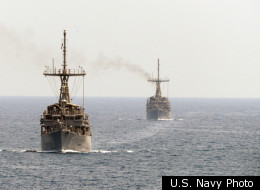
U.S., Iran Poised For Mine Warfare In The Persian Gulf

If the tense confrontation with Iran ignites into war, strategists say they expect Iran will strike with thousands of deadly sea mines to try to halt oil tanker traffic and take out American warships.

In the shallow, crowded waters of the Persian Gulf, mines pose a sobering challenge. When the U.S. Navy has faced a massive mine threat there in the past, it has failed to protect even its own ships.

Now, both Iran and the United States seem poised to fight it out again. Iran has acquired a stockpile of 2,000 to 3,000 mines, including "smart'' Chinese-built mines that could track and target U.S. warships, according to a report by Anthony Cordesman of the Center for Strategic and International Studies, a nonpartisan think tank in Washington.The 660-pound warhead carried by one such mine could puncture the hull of a U.S. aircraft carrier, the report says.

But the Navy says this time it's prepared for a mine war, with a four-ship fleet of high-tech counter-mine vessels patrolling the Gulf, along with airborne sensors, robot submarines, a squadron of mine-hunting dolphins and sea lions on standby -- and two decades worth of operational experience off the coast of Iran.