Democracy Gone Astray

Democracy, being a human construct, needs to be thought of as directionality rather than an object. As such, to understand it requires not so much a description of existing structures and/or other related phenomena but a declaration of intentionality.
This blog aims at creating labeled lists of published infringements of such intentionality, of points in time where democracy strays from its intended directionality. In addition to outright infringements, this blog also collects important contemporary information and/or discussions that impact our socio-political landscape.

All the posts here were published in the electronic media – main-stream as well as fringe, and maintain links to the original texts.

[NOTE: Due to changes I haven't caught on time in the blogging software, all of the 'Original Article' links were nullified between September 11, 2012 and December 11, 2012. My apologies.]

Showing posts with label Oil wars. Show all posts

Tuesday, June 04, 2013

China Benefits From Bush's Folly

Imperialism doesn’t pay. Of course, it never did for the common folk recruited to invade another country, or the natives they conquered. But still, the thought persists that occupying foreign lands—particularly as in the case of Iraq, soaked in oil as well as blood—is a winner.

True, Saddam Hussein’s Iraq, with its nonexistent WMDs and virulent hostility to the religious fanatics that attacked us on 9/11, was a false target for a war on terror. And yes, a Shiite-run Iraq is now closely allied with co-religionists in Iran and Lebanon, whereas Hussein had once been our ally in containing the power of the ayatollahs. But “we” now control Iraq’s vast oil reserves, some hawks will still argue in the manner of the idiot savant Paul Wolfowitz, who as then-deputy defense secretary promised that the oil would pay for the war. Only they, like he, have once again been proved wrong.

Monday, March 18, 2013

Arundhati Roy on Iraq War’s 10th: Bush May Be Gone, But "Psychosis" of U.S. Foreign Policy Prevails

On the eve of the 10th anniversary of the U.S. invasion of Iraq, the global justice activist and author Arundhati Roy joins us to discuss the war’s legacy. Roy is the author of many books, including "The God of Small Things," "Walking with the Comrades," and "Field Notes on Democracy: Listening to Grasshoppers." Roy argues the imperial mentality that enabled the United States to invade Iraq continues today unabated across the world. "We are being given lessons in morality [by world leaders] while tens of thousands are being killed, while whole countries are shattered, while whole civilizations are driven back decades, if not centuries," Roy says. "And everything continues as normal."

Original Article
Source: Democracy Now!
Author: -

Monday, January 21, 2013

Foreign military intervention wrong response to Mali crisis

France is knocking on Canada's door seeking assistance for its intervention in Mali, and Canada's door seems to be open a crack. Besides providing the French military, a military transport plane, at least temporarily, Foreign Affairs Minister John Baird says Canada wants to offer both humanitarian aid and "support for the restoration of democracy." This will come as a pleasant surprise to many Malians.

Those who care deeply about the plight of Mali, including Canada's role there, should read Joan Baxter's revelatory book Dust From Our Eyes: An unblinkered look at Africa. Ms. Baxter, a Canadian journalist who lived in Africa for two decades, witnessed first-hand the contempt, cynicism and implicit racism that characterizes the way so many western governments and corporations regard Africa.

War against al-Qaeda in Africa could last decades

The Prime Minister said that countering the rise of al-Qaeda-affiliated groups in the Sahel region will require an “iron resolve” and greater military, diplomatic and economic engagement with the region.

He spoke as it was confirmed that six British citizens had died after extremists took scores of hostages at a gas plant in eastern Algeria.

France on Sunday night called the hostage-taking “an act of war”.

Monday, July 16, 2012

"Fuel on the Fire": Author Greg Muttit on Oil and Politics in Occupied Iraq, Arab Spring

A new U.S. government report has found that much of the U.S. taxpayer money used for Iraq’s reconstruction has likely been squandered. In what has been called their final audit report, the Office of the Special Inspector General for Iraq Reconstruction Funds pinpointed a number of accounting weaknesses that put "billions of American taxpayer dollars at risk of waste and misappropriation" in the largest reconstruction project of its kind in U.S. history. The report concluded the precise amount lost to fraud and waste can never be known. While much of Iraq is still struggling to recover from the 2003 invasion and occupation, the country’s oil sector is quickly expanding with the help of foreign investors including Exxon Mobil and BP. We’re joined by Greg Muttitt, whose new book, "Fuel on the Fire: Oil and Politics in Occupied Iraq," takes a close look at how energy interests played a crucial role in the U.S. invasion. "They created a disaster because there were constantly U.S. interests behind it," Muttitt says.

Video
Source: Democracy Now!
Author: --

Saturday, March 03, 2012

What Israel’s supporters should ask Netanyahu before any attack on Iran

As the drums of war against Iran get ominously louder, what have the friends of Israel — the true friends of Israel — been privately telling Israeli Prime Minister Benjamin Netanyahu during his visits to Ottawa and Washington?

Are they bellicose and uncritical, urging Netanyahu to indulge his base instincts and challenge President Barack Obama before confronting the Iranians? Or are they restrained and reproachful, reminding him the stakes are enormous — for Israel, Iran and for the rest of the world — if he blows it?

If they are the latter, here are five hard questions they should ask Netanyahu to answer before Israel even contemplates an attack on Iran:


1. “Why now? The growing pressure on Iran is having a damaging impact. What is the urgency for war?”
The Iranian economy is suffering mightily from sanctions imposed by the U.S. and Europe. In a cover story this week headlined “Why an attack on Iran will not eradicate the nuclear threat,” The Economist put it starkly: “Iran’s economy is now at risk of great damage. The regime in Tehran is divided and has lost the faith of its people.”

Friday, March 02, 2012

Netanyahu seeks Harper’s approval for military strike against Iran

hereIsraeli Prime Minister Benjamin Netanyahu arrives in Ottawa today and is expected to raise the issue of military action against Iran with Prime Minister Stephen Harper.

Netanyahu is keen on openly threatening Iran with an attack if it insists on developing its nuclear program, even as his own country’s military elite has warned him of the dire consequences an attack could have in the whole region.

Sarah Boesveld, writing for the National Post, suggests Netanyahu expects Harper to endorse his hawkish vision before heading south to meet President Barack Obama on Monday. But an analyst quoted in the article believes Harper’s show of support for his Israeli counterpart might not carry much weight:
“Clearly Netanyahu would like to put pressure on the Obama administration to support a more muscular, meaning possibly military, response to Iran’s nuclear program. He knows full well that there’s zero enthusiasm for that in the United States,” said Rex Brynen, a McGill University political science professor and Middle East analyst.
“He’s trying to create more pressure on the President and to do that I think it makes some sense to talk to Prime Minister [Stephen] Harper whom he knows is kind of his ideological soulmate on this issue and is likely to support him, just in the sense of creating momentum. Whether it has any impact on Washington I think is negligible.”
Meanwhile, Obama has his own plans for Monday’s meeting. He said this week he will try to persuade Israel to postpone any military action until after economic sanctions have taken full effect. In this excellent in-depth interview with The Atlantic, Obama goes over the arguments he will use to reassure Netanyahu that the United States “has Israel’s back.”

Original Article
Source: maclean's
Author: Gabriela Perdomo

Iran a 'grave threat,' Netanyahu tells Harper

Israel has the right to defend itself against a country that wants to destroy it, Israeli Prime Minister Benjamin Netanyahu said today as he began a meeting with Prime Minister Stephen Harper that is expected to focus heavily on Iran.

After arriving on Parliament Hill and being greeted by a military honour guard, Netanyahu said he wanted to talk to Harper about the "remarkable turbulence that is shaking the Middle East" and about Iran's "relentless pursuit of nuclear weapons."

"I know from many conversations that we've had that you share my view that this is a grave threat to the peace and security of the world and I think it is important that the international community not allow this threat to materialize," Netanyahu said to Harper as they held a photo opportunity in Harper's office. "As for Israel, like any sovereign country, we reserve the right to defend ourselves against a country that calls and works for our destruction.

"On that note, I can say that it is particularly gratifying to be among such good friends here in Ottawa on a cold day with warm friendship."

Thursday, March 01, 2012

In Ottawa visit, Netanyahu will seek backing for strike on Iran

Stephen Harper is caught between two allies. As Prime Minister Benjamin Netanyahu travels to North America in a high-stakes gambit to find political support for a strike on Iran, Mr. Harper wants to back his Israeli ally without ticking off a bigger one in Washington.

The two prime ministers are planning to stand side by side at a press conference on Friday, where Mr. Netanyahu’s case for war to prevent Iran from developing nuclear weapons is likely to be the hot topic. Mr. Harper faces a decision about whether to endorse it, or urge restraint.

For the Israeli Prime Minister, it’s a stop on the way to a far more charged meeting with U.S. President Barack Obama, whose administration has urged Mr. Netanyahu to cool the rush to strike Iran. The Israeli leader will look to Mr. Harper, a staunch supporter, for signals of sympathy.

Mr. Netanyahu made the purpose of his trip clear on Monday when he said that in both meetings with Mr. Obama and Mr. Harper, Iran’s nuclear program “will be at the centre of our talks.” Israel’s Haaretz newspaper, citing a senior official, said Mr. Netanyahu will push Mr. Obama to go beyond his line that an attack is “not off the table” and threaten to strike Iran if its nuclear program crosses “red lines.”

Monday, February 27, 2012

U.S., Iran Poised For Mine Warfare In The Persian Gulf

If the tense confrontation with Iran ignites into war, strategists say they expect Iran will strike with thousands of deadly sea mines to try to halt oil tanker traffic and take out American warships.

In the shallow, crowded waters of the Persian Gulf, mines pose a sobering challenge. When the U.S. Navy has faced a massive mine threat there in the past, it has failed to protect even its own ships.

Now, both Iran and the United States seem poised to fight it out again. Iran has acquired a stockpile of 2,000 to 3,000 mines, including "smart'' Chinese-built mines that could track and target U.S. warships, according to a report by Anthony Cordesman of the Center for Strategic and International Studies, a nonpartisan think tank in Washington.The 660-pound warhead carried by one such mine could puncture the hull of a U.S. aircraft carrier, the report says.

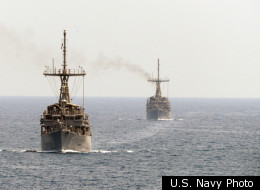
But the Navy says this time it's prepared for a mine war, with a four-ship fleet of high-tech counter-mine vessels patrolling the Gulf, along with airborne sensors, robot submarines, a squadron of mine-hunting dolphins and sea lions on standby -- and two decades worth of operational experience off the coast of Iran.

The Coalition Against Iranian Oil: Winners and Losers

On January 23, the E.U. enacted new sanctions targeting Iran, including an oil embargo, with the aim of pressuring Iran's economy in order to spur changes in the government's stance over its nuclear program. The current E.U. ban on Iranian oil is actually the third attempt by outside powers to use oil as a tool of economic pressure on Iran in the last 50 years.

The first instance occurred in 1951, following the nationalization of Iranian, when the Anglo-Iranian Oil Company (known today as British Petroleum) imposed sanctions against Iranian oil and sought to prevent other countries from purchasing. However, this attempt failed to dissuade other foreign purchasers.

The second attempt took place, after the Islamic Revolution in Iran, when the U.S. implemented an oil embargo against Iran and stopped importing Iranian oil. Prior to this action, the U.S had been a major consumer of Iranian oil, importing about 500 thousand barrels of oil per day. However, the U.S. embargo had a negligible effect on Iranian output, as Iran succeeded in redirecting its oil to other markets after a few months.

Now in early 2012, the effectiveness of using an oil embargo as a tool of economic pressure is being questioned once again: will the current E.U. ban on Iranian oil force Iran to change its attitude regarding its nuclear program? If the oil ban leads to a dangerous oil price rise in the midst of fragile global economy, how many countries are actually willing to stop buying oil from Iran? And how long can such an embargo be maintained?

Sunday, February 26, 2012

Oil prices could hit $150 a barrel if Israel attacks Iran

A jump in energy prices is jamming the slow-turning cogs of an economic recovery in the West, but that may be nothing compared to the economic shock an Israeli attack on Iran would cause.

Oil (CL-FT109.41-0.36-0.33%) rose to a 10-month high above $125 a barrel on Friday, prompting responses from policymakers around the world including U.S. President Barack Obama, watching U.S. gasoline prices follow crude to push towards $4 a gallon in an election year.

Europe may have more to fear as its fragile economic growth falters and Greece, Italy and Spain look for alternative sources to the crude they currently import from Iran, where an EU oil embargo, intended to make Iran abandon what the West fears are efforts to develop nuclear weapons, comes into force in June.

In euro terms, Brent crude rose to an all-time high of €93.60 this week, topping its 2008 record.

“The West’s determination to prevent Iran acquiring nuclear weapons is coming at a price – a price that might include a second global recession triggered by an oil shock,” said David Hufton from the oil brokerage PVM.

Iran War Watch: New Senate Resolution a Step Toward War?

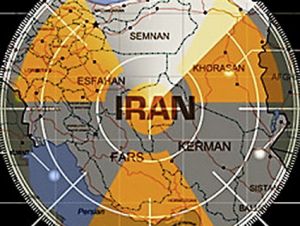
Are the United States and Iran on a collision course over the Middle Eastern country's controversial nuclear program? We'll be regularly posting the latest news on Iran-war fever—the intel, the media frenzy, and the rhetoric. 


Last week, Sens. Joseph Lieberman (I-CT), Robert Casey (D-PA), and Lindsey Graham (R-S.C.) introduced Senate Resolution 380, which emphatically rejects a containment policy towards Iran and promotes a more hardline stance on preventing the Islamic Republic from acquiring "nuclear weapons capability." The proposal also encourages increased diplomatic and economic pressure on Iran, and "urges the President to reaffirm the unacceptability of an Iran with nuclear-weapons capability..." If adopted, the bill could make military conflict more likely.

The non-binding resolution—which has been shopped around in the Senate since early February—has yet to win anything close to wide support. It does, however, have the backing of AIPAC, the American Israel Public Affairs Committee, which calls itself "America's Pro-Israel Lobby." (The group plans to make the resolution an "ask" in two weeks during its annual Capitol Hill-lobbying conference.)

Critics charge that the proposal's vague language—particularly the tricky definition of "nuclear weapons capability"—crosses the line between condemnation and straight-up warmongering.

Saturday, February 25, 2012

Wadah Khanfar: Iran Strike Would Be A 'Disaster' For Fragile Arab Spring

A strike on Iran would be a "disaster" for the Middle East's burgeoning democracies, said Wadah Khanfar, the former director general of Al Jazeera, in an interview with The Huffington Post this week.

"What will happen is a disaster," Khanfar said. "An attack against Iran at this moment in time is first of all going to create new priorities, new alliances, new fears in the region and new complexities. No one can expect what the result will be."

Khanfar, who traveled to Washington, D.C., to discuss the ongoing transformations in the Arab world and his new project, the Sharq Forum, said he worried the fragile Arab Spring could become an unintended casualty of a war because the new, unstable political alignments could find themselves drifting back to old patterns should foreign intervention came into play, especially if Israel became involved.

"It will change a lot of what we see as a success story in the Arab world and in the Middle East," Khanfar said. "For the last few years the Arab world is transforming itself from within ... No one accepts foreign intervention as a tool of change. Then priorities change immediately."

Thursday, February 23, 2012

Iran, the U.S., and the Nuclear Threshold


A strategy based purely on coercion risks convincing Tehran that it has no choice but to weaponize.

The on-again, off-again talks between Iran and the United States are back on, after a few months of sabre-rattling, assignations, and computer viruses. The latest word from Washington is one of guarded optimism, but few observers are holding out much hope, the level of mistrust seems too high, and both sides seem determined to force the other to back down. Nevertheless, the West needs to remain committed to a negotiated solution in its standoff with Iran. The costs of a direct confrontation are too high, and, despite the way intelligence reports have been portrayed in the media, there still appears to be some room for compromise.

Wednesday, February 22, 2012

Iran says it will pre-emptively strike anyone who threatens it


As pressure mounts over Iran's nuclear program, a top Iranian general warned Tuesday that the nation will pre-emptively strike anyone who threatens it.

The statement by General Mohammed Hejazi continues the defiant tone Tehran has taken in its confrontation with Western countries that claim it is developing nuclear weapons. Iran says its nuclear program is for peaceful purposes.

“We do not wait for enemies to take action against us,” said Gen. Hejazi, according to the semi-official Fars news agency. “We will use all our means to protect our national interests.”

Gen. Hejazi heads the military's logistical wing.

The U.S. and Israel have not ruled out strikes against Iranian nuclear facilities.

Iran also said Tuesday that a visiting UN team did not plan to inspect the country's nuclear facilities and will only hold talks with officials in Tehran.

Monday, February 20, 2012

U.S., Britain warn Israel against attacking Iran


 Tensions in the Middle East rose Sunday as Tehran said it has stopped oil shipments to Britain and France and reportedly docked a warship at a Syrian port, while American and British officials warned Israel against attacking Iran.

In their warnings, both the chairman of the U.S. joint chiefs of staff, General Martin Dempsey, and British Foreign Secretary William Hague said an Israeli attack on Iran would have grave consequences for the entire region and urged Israel to give international sanctions against Tehran more time to work.

 “I’m confident that they [Israel] understand our concerns, that a strike at this time would be destabilizing and wouldn’t achieve their long-term objectives,” Gen. Dempsey told CNN.

His concerns were echoed by Mr. Hague, who stressed it was “not a wise thing at this moment” for Israel to attack Iran.

“I think Israel, like everybody else in the world, should be giving a real chance to the approach that we have adopted, of very serious economic sanctions and diplomatic pressure, and the readiness to negotiate with Iran,” Mr. Hague told BBC.

Sunday, February 19, 2012

Israeli Strike On Iran 'Not Prudent,' Gen. Martin Dempsey Says


WASHINGTON -- A military strike against Iran's nuclear facilities is "not prudent" at the present moment, America's top military official, Gen. Martin E. Dempsey, told "CNN's Fareed Zakaria GPS" in an interview set to air Sunday morning.

“It’s not prudent at this point to decide to attack Iran,” said Dempsey, the chairman of the Joint Chiefs of Staff, in the interview.

"I think it would be premature to exclusively decide that the time for a military option was upon us," Dempsey added, according to early reports of the interview, noting that he sensed that increased sanctions were beginning to have an effect.

Dempsey's remarks come amid a rising tide of threats and speculation -- some of it media driven -- about the possibility that Israel might launch a military strike against Iran in an attempt to forestall that country's development of a nuclear weapon.

American intelligence assessments say that Iran would have the capability to build a nuclear bomb in the coming years, but it has not yet decided whether to do so.

Iran stops oil exports to Britain, France


Iran has halted oil shipments to Britain and France, the Iranian oil ministry announced on its website Sunday, a move seen as retaliation for the European Union's decision last month to ramp up sanctions designed to pressure Tehran into resuming talks on its nuclear program.

A statement posted the website shana.ir gave no other details, but it appears to be part of a backlash against the EU for imposing a boycott on Iranian oil beginning in July. The 27-nation EU accounts for about 18 per cent of Iran's oil exports.

The announcement comes the same day that a team of inspectors from the International Atomic Energy Agency went to Tehran for the second time in three weeks. Their visit is another attempt to break more than three years of Iranian stonewalling about allegations that Tehran has — or is — secretly working on nuclear weapons.

At the same time, Iran's Revolutionary Guard began two days of land military exercises to upgrade its capabilities to defend the country against possible external threats.


Commander of the Guard's ground forces Mohammad Pakpour said on comments posted on the force's website sepahnews.com that the manoeuvres dubbed Valfajr, or Dawn, began Sunday outside the city of Yazd in central Iran.

Wednesday, February 15, 2012

Iran Nuclear Threat Brings No U.S. Enthusiasm For A Military Strike

WASHINGTON -- The threat of punishing U.S. military strikes underlies Washington's campaign to halt Iran's nuclear weapons program. But there is no enthusiasm evident within the U.S. military for a war many believe would be messy, bloody, unpredictable and ultimately inconclusive.

Seeking to prevent Iran from building nuclear weapons, President Barack Obama has focused on coordinating international economic pressure against Iran and moved to strengthen economic sanctions just last week. But he warned in the Jan. 24 State of the Union address, "Let there be no doubt: American is determined to prevent Iran from getting a nuclear weapon, and I will take no options off the table to achieve that goal."

It's a truism of diplomacy to never to make a threat that you're not prepared to carry out. There is no doubt that if ordered, the U.S. military would launch devastating attacks against Iran. Whether such strikes would come along with or instead of Israeli attacks, tactical planning is already under way, as is done routinely for a variety of potential military operations the Pentagon might be ordered to carry out, senior officers said.

"If called upon, I have no doubt that the armed forces of the United States will deal with whatever contingencies might unfold there," Air Force Chief of Staff Gen. Norton Schwartz said last week when asked about a possible military confrontation with Iran.