
Showing posts with label National Security. Show all posts
Showing posts with label National Security. Show all posts
Monday, February 08, 2016
The Truth About Israel's National Security
Saturday, September 12, 2015
Security Threat No Reason To Block Syrian Refugees, Says Former Minister
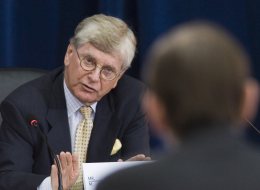
Atkey, who served under Prime Minister Joe Clark in 1979 and 1980, says the Progressive Conservative government then managed to help 60,000 refugees from Indochina come to Canada after the end of the Vietnam War.
Wednesday, November 05, 2014
The Real Danger to Israel's Security Is Netanyahu

He uses his political skills to deceive and mislead in order to "protect himself from political defeat" while disregarding what is best for the future of the state. He surrounds himself with cronies blinded by their skewed ideological zeal with no morals or scruples to support his sinister political agenda.
Wednesday, October 29, 2014
Tories Reject Call For All-Party National Security Oversight Committee
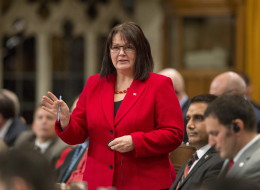
Roxanne James, the parliamentary secretary to the minister of public safety and emergency preparedness, told MPs in the Commons Friday that Canada already has "independent robust oversight that actually includes a former member of provincial Parliament from the NDP."
Wednesday, October 15, 2014
Tories quietly shut down security advisers

The advisory council on national security was shut down during the summer - just two years into the three-year terms of its current members.
The council was established in 2005 by the Liberal government of the day to provide confidential views on security issues in the post-9/11 era.
NDP public safety critic Randall Garrison called the council's demise "another one of the reckless Conservative cuts."
Friday, March 21, 2014
Obama Administration Cites 'National Security' More Than Ever To Censor, Deny Records
WASHINGTON (AP) — The Obama administration more often than ever censored government files or outright denied access to them last year under the U.S. Freedom of Information Act, according to a new analysis of federal data by The Associated Press.
The administration cited more legal exceptions it said justified withholding materials and refused a record number of times to turn over files quickly that might be especially newsworthy. Most agencies also took longer to answer records requests, the analysis found.
The administration cited more legal exceptions it said justified withholding materials and refused a record number of times to turn over files quickly that might be especially newsworthy. Most agencies also took longer to answer records requests, the analysis found.
Friday, September 13, 2013
Nanos Number: Fewer Canadians Want Closer Security With U.S.
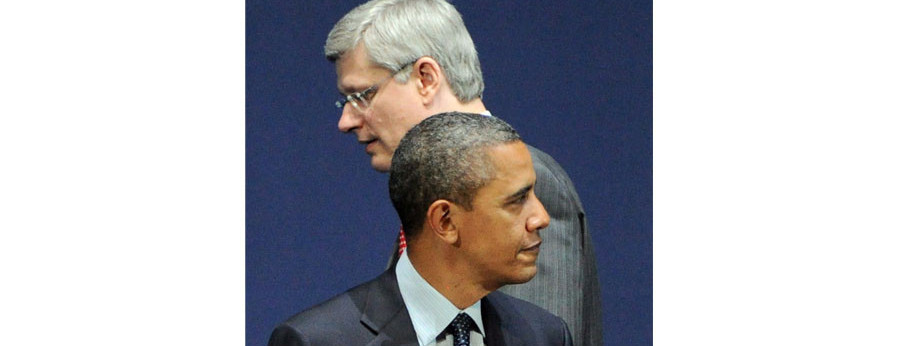
A survey by Nanos Research and the State University of New York at Buffalo, conducted as the United States looks to its allies for support for a military strike against Syria, found support among Canadians for closer cooperation on national security with the U.S. was down significantly from just one year ago.
Thursday, September 12, 2013
After 9/11, Americans Undermined National Security

It's what happened after that day that we need to recall with import, how we used 9/11 as a jumping off point to one of the most wasteful, pointless and destructive dozen years in American history, embarking on foreign military misadventures abroad while shredding civil liberties at home -- all in the name of strengthening the very national security we undermined.
Monday, May 20, 2013
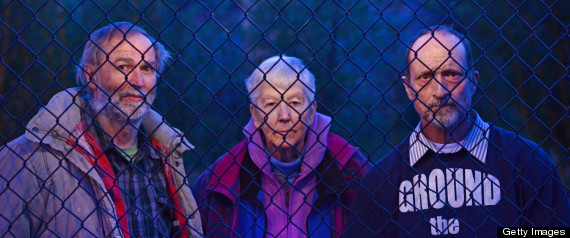
Feds Say Peace Activists Who Trespassed Onto Nuclear Facility Are A National Security Threat
Friday, May 03, 2013
Senator pushes for greater parliamentarian oversight of national security spending

Dallaire, a retired lieutenant-general, will present a motion next week asking the Senate Anti-Terrorism Committee to study how to create a “national security committee of parliamentarians,” and look at the role women play in “deradicalization in Canada and abroad.”
Wednesday, February 13, 2013
Obama's Empty Promises of Transparency on National Security

This time, Obama spoke of past accomplishments as well as future commitments, and responded, perhaps for the first time, to critics of the administration's largely opaque targeted killing program:
[M]y Administration has worked tirelessly to forge a durable legal and policy framework to guide our counterterrorism operations. Throughout, we have kept Congress fully informed of our efforts. I recognize that in our democracy, no one should just take my word that we’re doing things the right way. So, in the months ahead, I will continue to engage with Congress to ensure not only that our targeting, detention, and prosecution of terrorists remains consistent with our laws and system of checks and balances, but that our efforts are even more transparent to the American people and to the world.
Wednesday, November 28, 2012
Halifax International Security Forum: The new international normal

I'm standing in the lobby of the Westin Nova Scotian in Halifax talking with CTV Atlantic bureau chief Todd Battis. I'm in the belly of the beast. This is the Halifax International Security Forum: what The Atlantic magazine has called "The Davos of international security." This gathering is the nucleus of some of the world's most established establishment. Peter MacKay is the host. United States Senator and former Republican presidential nominee, John McCain, leads the American delegation. As delegates file through the lobby, with RCMP, police, and security people everywhere, I suddenly notice that the muzak playing in hotel is Leonard Cohen's "The Future".
Friday, October 12, 2012
Former Nortel exec warns against working with Huawei

Brian Shields, who was the senior systems security adviser at failed Canadian telecommunications company Nortel, says working with Huawei is too big a risk. Shields alleges Huawei spent years hacking into Nortel's system and stealing information so it could compete with Nortel on world markets.
Wednesday, November 16, 2011
This muddled terror law limits free speech and wrecks innocent lives
A student downloads an al-Qaida document from a US government website and is held in custody for six days. A shop assistant writes poems about cutting people's heads off and is tried for being a terrorist. An opera composer is accused of promoting terrorism, objects, and is bankrupted by a national newspaper.
What do these cases have in common? First, none of these people was successfully convicted of any crime. Second, none of them faced charges under the glorification clause of the Terrorism Act 2006. Third, they would not have been arrested and/or tried and/or bankrupted had it not been a climate of opinion created by that clause.
During the long battle between the Lords and Commons over its wording, ministers pooh-poohed critics' concerns that works of fact or fiction might be vulnerable to prosecution, assuring them that the good sense of British juries would prevent prosecutions of histories of the Stern gang, biographies of Nelson Mandela or novels, plays or poems about terrorists today.
Those of us who expressed such concerns pointed out that we had been here before. No one was prosecuted under the Conservative government's criminalisation of the promotion of homosexuality by local authorities. But that kneejerk legislation undoubtedly had results: it contributed to growing homophobia, it created a climate in which teachers were nervous about combating it, and it made local authorities jumpy about (for example) allowing theatre shows with gay themes or characters into schools .
What do these cases have in common? First, none of these people was successfully convicted of any crime. Second, none of them faced charges under the glorification clause of the Terrorism Act 2006. Third, they would not have been arrested and/or tried and/or bankrupted had it not been a climate of opinion created by that clause.
During the long battle between the Lords and Commons over its wording, ministers pooh-poohed critics' concerns that works of fact or fiction might be vulnerable to prosecution, assuring them that the good sense of British juries would prevent prosecutions of histories of the Stern gang, biographies of Nelson Mandela or novels, plays or poems about terrorists today.
Those of us who expressed such concerns pointed out that we had been here before. No one was prosecuted under the Conservative government's criminalisation of the promotion of homosexuality by local authorities. But that kneejerk legislation undoubtedly had results: it contributed to growing homophobia, it created a climate in which teachers were nervous about combating it, and it made local authorities jumpy about (for example) allowing theatre shows with gay themes or characters into schools .
Monday, October 24, 2011
Taking liberties: When elite representatives define 'national security'
 This is the first in a new column series on "national security" and civil liberties in Canada and abroad that seeks to focus on specific cases as well as the overall framework in which serious human rights abuses have been justified in the name of security.
Just after Thanksgiving, Montreal's Westin Hotel played host to a gathering of high-powered Federal Court judges, NGO heads, lawyers, academics, and members of Canada's torture-complicit spy service, CSIS. Coming together under the predictably dry title "Terrorism, Law and Democracy: 10 years after 9/11," the conference sought to determine "whether Canadian law has successfully preserved fundamental rights and values of substantive and procedural justice while at the same time contributing to anti-terrorism."
This collegial-sounding gathering -- entry to which was restricted to those who could shell out the $895 entrance fee -- appears to have been one of those periodic gabfests where elite representatives determine the responsible manner in which the rest of us will perceive terms like "terrorism" and "national security". Importantly, attendees were safely insulated from the most compelling voices of the past 10 years: those who have been victimized by numerous conference participants. The latter included judges who have presided over secret hearings, spies whose organization falsely labels individuals security threats, and academics who produce papers defending arbitrary detention.
Indeed, Canadians Abdullah Almalki, Ahmad El Maati, and Muayyed Nureddin, who three years ago this month were found by a secretive federal inquiry to have been tortured with the complicity of Canadian government agencies, including CSIS, were not on any of the panels. Nor were Abousfian Abdelrazik and Omar Khadr, both tortured with CSIS complicity. Benamar Benatta, an Algerian refugee rendered to torture by Canadian hands on Sept. 12, 2001, wasn't there to talk about how his Charter rights had been violated either, nor were Adil Charkaoui and Hassan Almrei, whose bogus secret trial security certificates were finally quashed after a decade-long struggle. Mohammad Mahjoub, Mahmoud Jaballah, and Mohamed Harkat, who are still facing deportation to torture without being able to see the secret "case" against them, were similarly absent.
Thursday, September 08, 2011
Security trumps trade at the U.S. border
 On the morning of Sept. 11, 2001, then-foreign minister John Manley was relaxing on an Air Canada flight from Germany when a pair of flight attendants asked him to come up to the cockpit. The pilots wanted to know what to tell the passengers about the extraordinary events on the ground. They gave Manley headphones for listening to radio updates. Airports in Toronto, Montreal, and Ottawa were closing. “It was chaos,” he recalled. “No one knew if it was four planes or a dozen.”
Canada’s then-ambassador to the United States, David Kergin, had just arrived at his office near the Capitol to see black smoke rising from the Pentagon building across the Potomac River. “We very quickly concluded maybe we were best to stay in the embassy because it was secure,” he recalls. As rumours abounded of bombs in the U.S. capital, the ambassador had a call from prime minister Jean Chrétien. “You know, the world will never be the same again,” Chrétien told him. It wasn’t—and neither was Canada’s relationship with the U.S.
Ottawa’s relations with Washington had generally focused on trade disputes such as softwood lumber and agriculture. Since then, the focus of time, energy, and spending has been the border. No longer is the U.S. Trade Representative’s Office the most important for Ottawa. Now the Department of Homeland Security (DHS), created in the aftermath of the attacks, eclipses all else. The job of DHS is not to ensure trade and prosperity, but help to prevent another attack. And Canadians have felt the difference.
Security spending after 9/11 tops $92B
 An additional $92 billion has been spent on national security in Canada in the wake of the Sept. 11 attacks, according to a report released Wednesday.
The study by the Ottawa-based Rideau Institute tracked the budgets for what it calls the "new national security establishment," that it says was built in response to the terrorist attacks a decade ago and includes the departments of National Defence, Foreign Affairs, Public Safety, Justice, the RCMP, the Canadian Security Intelligence Service, and the Canada Border Services Agency.
The study found that since 2000-01, Canada has dedicated $92 billion more to national security spending than it would have if budgets had remained in line with spending levels before the attacks in 2001, $69 billion when adjusted for inflation.
Thursday, July 28, 2011
How Default Threatens National Security
 Last August, the chairman of the Joint Chiefs of Staff, Admiral Mike Mullen, shocked plenty of people when he declared that "the single biggest threat to national security is the debt." As zero hour approaches for the government to default on its debt, experts from both sides of the aisle are echoing Mullen's warning that fiscal matters pose a more immediate threat to national security than terrorism, rogue nations, or foreign wars.
By refusing to raise the debt ceiling, argues Bruce Bartlett, an economist who worked in George H.W. Bush's White House, conservative members of the House are undermining the country's ability to defend itself. In a post in a post titled "The Constitution and National Security Trump the Debt Limit," he writes, "Republicans are playing not just with fire, but the financial equivalent of nuclear weapons." That's not an idle metaphor. Politicians and economists can debate the effects a debt default would have on credit and stock markets, but there's little doubt that any default would make a mess of military operations. Something similar already happened in 1995, when the federal government shut down during Bill Clinton's budget battle with then-House Speaker Newt Gingrich.
Subscribe to:
Posts (Atom)