North Dakota lawmakers are considering a bill to restrict the release of records related to security operations involving “critical infrastructure” — a category that includes fossil fuel pipelines. The bill comes after The Intercept and other media outlets published stories documenting law enforcement surveillance and coordination with private security during the Dakota Access pipeline protests, many of which were based on records released under the North Dakota Open Records Act.
Democracy Gone Astray
Democracy, being a human construct, needs to be thought of as directionality rather than an object. As such, to understand it requires not so much a description of existing structures and/or other related phenomena but a declaration of intentionality.
This blog aims at creating labeled lists of published infringements of such intentionality, of points in time where democracy strays from its intended directionality. In addition to outright infringements, this blog also collects important contemporary information and/or discussions that impact our socio-political landscape.
All the posts here were published in the electronic media – main-stream as well as fringe, and maintain links to the original texts.
[NOTE: Due to changes I haven't caught on time in the blogging software, all of the 'Original Article' links were nullified between September 11, 2012 and December 11, 2012. My apologies.]
Showing posts with label North Dakota. Show all posts
Tuesday, September 19, 2023
Monday, December 26, 2016
On Thanksgiving Week, Native Americans Are Being Tear-Gassed in North Dakota
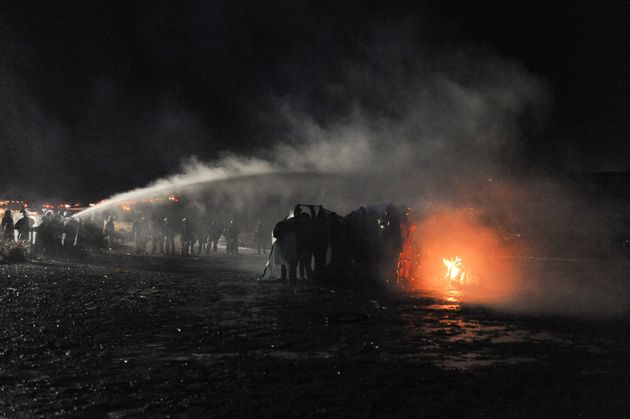
WASHINGTON ― Thanksgiving began in the fall of 1621 when a group of Native Americans joined with newly arrived English settlers to create a harvest feast together and protect each other from violence.
This year, as Americans pick out their turkeys and count their blessings, members of the Sioux Nation in Standing Rock, North Dakota, reported being attacked with tear gas, rubber bullets and water cannons in subfreezing temperatures as they protested an oil pipeline that threatens to contaminate their water and disrupt their sacred sites. Approximately 300 Native American and non-native protesters were injured in one 10-hour clash with law enforcement on Sunday evening, according to the Standing Rock Medic & Healer Council, and 26 were taken to hospitals with severe head and limb wounds, eye trauma, internal bleeding and hypothermia from being doused with water in 22-degree weather.
Tuesday, May 03, 2016
Lakota Lead the Fight Against the Dakota Access Pipeline
As the start of 2016 shatters last year's record as the hottest year in history, the Oceti Sakowin (Seven Council Fires of the Great Sioux Nation) once again find themselves on the front lines of the battle against the fossil fuel industry.
Members of the Standing Rock Sioux Tribe have established a Spirit Camp at the mouth of the Cannonball River in North Dakota as a means of bringing attention and awareness to a proposed pipeline and act as an enduring symbol of resistance against its construction.
Friday, April 10, 2015
Fracking Town's Laid-off Workers: 'They Don't Tell You It's All a Lie'
WILLISTON, N.D. -- From the looks of it, America's boomtown is still booming. Big rigs, cement mixers and oil tankers still clog streets built for lighter loads. The air still smells like diesel fuel and looks like a dust bowl -- all that traffic -- and natural gas flares, wasted byproducts of the oil wells, still glare out at the night sky like bonfires.
Not to mention that Walmart, still the main game in town, can't seem to get a handle on its very long lines and half empty shelves.
Tuesday, March 10, 2015
Crime In North Dakota’s Oil Boom Towns Is So Bad That The FBI Is Stepping In
High levels of crime in North Dakota’s oil fields have prompted the FBI to set up shop in the region.
The FBI is opening an office in Williston, North Dakota and plans to have it fully staffed by later this year, The Hill reported Thursday. The FBI office — which will be North Dakota’s fifth — comes in response to North Dakota lawmakers’ and local officials’ calls for the FBI to step up its presence in North Dakota’s oil fields, which have seen a surge in criminal activity since the state’s oil boom began.
Thursday, January 22, 2015
North Dakota Pipeline Leaked 3 Million Gallons Of Brine In Oil Drilling
Cleanup is underway after nearly 3 million gallons of brine, a salty, toxic byproduct of oil and natural gas production, leaked from a pipeline in western North Dakota, the largest spill of its kind in the state since the current energy boom began.
The full environmental impact of the spill, which contaminated two creeks, might not be clear for months. Some previous saltwater spills have taken years to clean up. A contractor hired by the pipeline operator will be on site Thursday, assessing the damage.
Operator Summit Midstream Partners LLC detected the pipeline spill on Jan. 6, about 15 miles north of Williston and informed North Dakota officials then. State health officials on Wednesday said they weren't given a full account of the size until Tuesday.
The full environmental impact of the spill, which contaminated two creeks, might not be clear for months. Some previous saltwater spills have taken years to clean up. A contractor hired by the pipeline operator will be on site Thursday, assessing the damage.
Operator Summit Midstream Partners LLC detected the pipeline spill on Jan. 6, about 15 miles north of Williston and informed North Dakota officials then. State health officials on Wednesday said they weren't given a full account of the size until Tuesday.
Thursday, May 16, 2013
Kevin Cramer, North Dakota Congressman, Ties School Shootings To Abortion Legalization

WASHINGTON -- Since mass shootings in places like Aurora and Newtown, lawmakers have been searching for answers for how to stop future massacres, examining issues like gun control and mental health. But in a speech this month, Rep. Kevin Cramer (R-N.D.) pointed to different culprits: the legalization of abortion and a demise in religious values.
Cramer made his remarks during a commencement address at the University of Mary on May 4. He decried a local TV anchor who was fired after accidentally swearing on air and then became an Internet sensation, as well as the Supreme Court's Roe v. Wade decision.
Wednesday, April 17, 2013
North Dakota 'Fetal Pain' Measure Signed By Jack Dalrymple

BISMARCK, N.D. -- Republican Gov. Jack Dalrymple signed into law a measure that outlaws abortions after 20 weeks of pregnancy based on the disputed premise that at that point a fetus can feel pain.
The law signed Tuesday is the latest among a raft of measures passed in North Dakota this session that are meant to challenge the U.S. Supreme Court's 1973 Roe v. Wade ruling that legalized abortion up until viability, usually at 22 to 24 weeks.
Monday, April 15, 2013
Medical Progress, Social Progress, and Legal Regression
The abortion laws passed last week in North Dakota are troubling first and foremost because they restrict women’s freedom to control their own bodies. More insidiously, they criminalize selective abortion, which means that a woman cannot choose to terminate a pregnancy because she knows the fetus has a genetic abnormality, or to select for other characteristics, such as gender. The very use of the world “selective” here indicates how right the pro-choice movement has been to emphasize “choice.” All abortion is selective, and whether a woman has selected not to have a baby at all or has selected not to have a particular baby is not a matter the state should parse. No one should be forced to have a child she doesn’t wish to have.Wednesday, April 03, 2013
Why Is North Dakota Torturing Women?
According to a recent United Nations report, North Dakota is torturing women. Seriously. Juan Méndez, the United Nation’s special rapporteur on torture, has included lack of access to abortion in his yearly report on torture and other cruel, inhuman or degrading treatment or punishment. Considering North Dakota’s new law which bans abortion after six weeks, it stands to reason that the state is torturing its female citizens.
Tuesday, April 02, 2013
Abortion Laws In Arkansas, North Dakota Set Stage For Legal Battle

Rival legal teams, well-financed and highly motivated, are girding for court battles over the coming months on laws enacted in Arkansas and North Dakota that would impose the nation's toughest bans on abortion.
For all their differences, attorneys for the two states and the abortion-rights supporters opposing them agree on this: The laws represent an unprecedented frontal assault on the Supreme Court's 1973 Roe v. Wade decision that established a nationwide right to abortion.
Saturday, March 23, 2013
Enbridge North Dakota Pipeline Plan Rejected By U.S. Energy Regulator
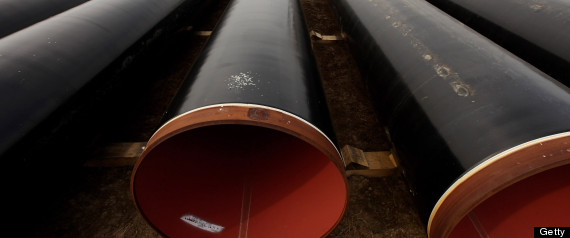
CALGARY - Enbridge Inc.'s plans to pipe more oil out of North Dakota were handed a setback Friday, as the U.S. energy regulator rejected its plan to recover the costs of a proposed $2.5 billion project from customers.
Enbridge (TSX:ENB) had argued to the Federal Energy Regulatory Commission that the petition would give the company the certainty it needed to allow the Sandpiper project to go forward.
Saturday, March 16, 2013
North Dakota Senate Passes Two Unprecedented Abortion Bans

The North Dakota State Senate passed two anti-abortion bills on Friday that would be the first laws of their kind in the United States and would ban most abortions in the state. One bill would prevent women from having abortions as soon as the fetal heartbeat can be detected, as early as six weeks into the pregnancy, and the other bans abortions in cases of fetal abnormalities such as Down Syndrome.
House Bill 1456, the heartbeat ban, passed the North Dakota House of Representatives earlier this year and now heads to Gov. Jack Dalrymple's (R) desk to be signed. The law would subject doctors to a $5,000 fine and up to five years in prison if they perform an abortion after the fetal heartbeat can be detected, surpassing Arkansas' new 12-week abortion ban to become the strictest abortion law in the country. The Republican-controlled Senate voted to pass it on Friday without any discussion.
Subscribe to:
Posts (Atom)
