Democracy Gone Astray
Democracy, being a human construct, needs to be thought of as directionality rather than an object. As such, to understand it requires not so much a description of existing structures and/or other related phenomena but a declaration of intentionality.
This blog aims at creating labeled lists of published infringements of such intentionality, of points in time where democracy strays from its intended directionality. In addition to outright infringements, this blog also collects important contemporary information and/or discussions that impact our socio-political landscape.
All the posts here were published in the electronic media – main-stream as well as fringe, and maintain links to the original texts.
[NOTE: Due to changes I haven't caught on time in the blogging software, all of the 'Original Article' links were nullified between September 11, 2012 and December 11, 2012. My apologies.]
Showing posts with label Referendums. Show all posts
Wednesday, June 28, 2017
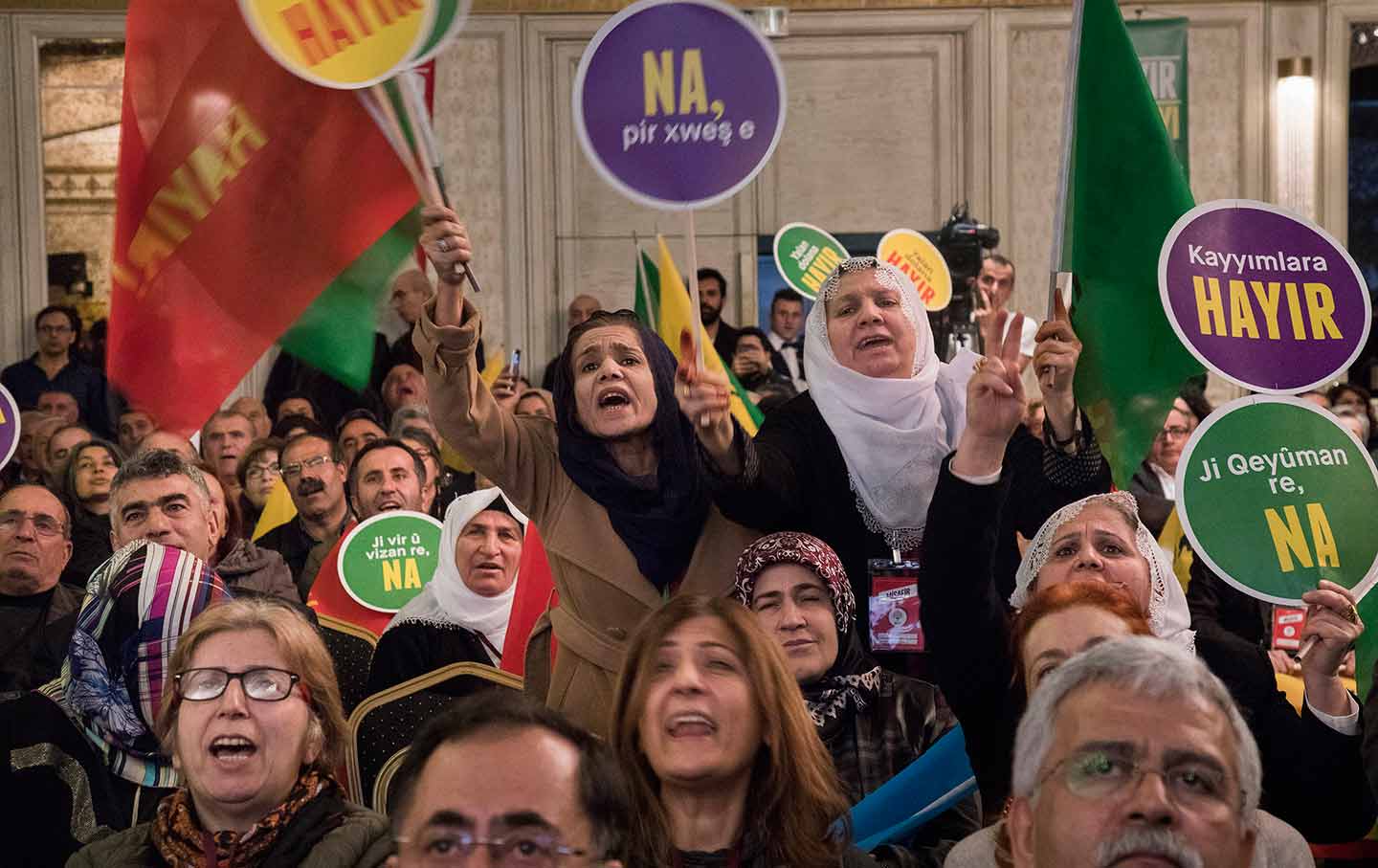
Turkey’s Fateful Referendum: The Road to Dictatorship?
Istanbul—Cups of tea and trays of sugar cubes are passed around in a crowded meeting in Istanbul’s Sisli district on a damp and cold winter night. Dozens of activists are gathered around a conference table littered with buttons and stickers, some with a simple “Hayir,” or “No,” on them, others with the slogan “No to a One-Man Regime.” The fliers are rainbow-colored, a homage to the 1988 campaign to remove Chilean dictator Augusto Pinochet from power in that year’s plebiscite.
Brexit Referendum Was A ‘Bluff’ The Government Must Never Repeat, MPs Warn
The Government must never again “bluff” with a referendum and fail to plan for a shock result like Brexit, MPs have warned.
Instead, it must prepare for the outcome it opposes - such as Britain voting to leave the EU - and avoid being unready to act, the cross-party parliamentary report said.
Better planning could have helped David Cameron survive his Brexit defeat, the Public Administration and Constitutional Affairs Committee suggested, but instead his “credibility and authority were undermined”.
Instead, it must prepare for the outcome it opposes - such as Britain voting to leave the EU - and avoid being unready to act, the cross-party parliamentary report said.
Better planning could have helped David Cameron survive his Brexit defeat, the Public Administration and Constitutional Affairs Committee suggested, but instead his “credibility and authority were undermined”.
Brexit: foreign states may have interfered in vote, report says
Foreign governments such as Russia and China may have been involved in the collapse of a voter registration website in the run-up to the EU referendum, a committee of MPs has claimed.
A report by the Commons public administration and constitutional affairs committee (PACAC) said MPs were deeply concerned about the allegations of foreign interference in last year’s Brexit vote.
Tuesday, June 20, 2017
Scottish parliament votes for second independence referendum
Nicola Sturgeon has won a key Holyrood vote on her plans for a second independence referendum, triggering accusations from UK ministers that her demands are premature.
Sturgeon won by a 10-vote majority after the Scottish Greens backed her proposals to formally request from the UK government the powers to stage a fresh independence vote at around the time Britain leaves the EU, in spring 2019.
Monday, April 17, 2017
Turkey’s Vote Makes Erdoğan Effectively a Dictator
Fifteen years ago, Turkish President Recep Tayyip Erdoğan was the hope of the Islamic world. He was an Islamist, of course, but that was part of his appeal. As the mayor of Istanbul, one of the world’s great cities, Erdoğan had governed as a charismatic and smart technocrat. He’d served time in prison, in 1999—for reading a poem that seemed to celebrate militant Islam—but his jailers had been the country’s rigid, military-backed secular leaders who, by then, seemed as suited to the present day as dinosaurs. When Erdoğan became Prime Minister, in 2003, every leader in the West wanted him to succeed. In a world still trying to make sense of the 9/11 attacks, he seemed like a bridge between cultures.

Tuesday, January 26, 2016
Why a Referendum on Electoral Reform Would Be Undemocratic
"When you change the rules of democracy, everyone gets a say," interim Conservative Leader Rona Ambrose stated recently in demanding that Prime Minister Trudeau commit to holding a referendum prior to introducing any changes to our voting system, and fellow MPs Scott Reid and Blake Richards added that not to do so would be "stubbornly and profoundly undemocratic."
Fair Voting B.C. strongly disagrees. These crocodile tears supposedly in defence of democracy reflect a profound misunderstanding of why voting reform is needed. Quite simply, we need voting reform to correct the longstanding injustice that half of us are denied our Charter rights to effective representation and equal treatment. And when our civil rights are violated, those who stand to benefit from the current system's discriminatory effects should not be allowed to block redress.
Saturday, July 25, 2015
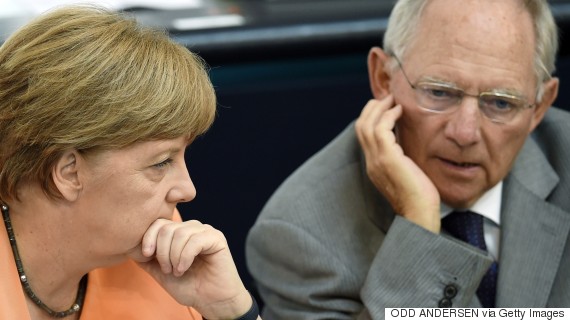
German Line Hardens After Greeks Vote 'No' In Referendum
BERLIN, July 6 (Reuters) - The German government signaled a tough line towards Greece on Monday, saying it saw no basis for new bailout negotiations and insisting it was up to Athens to move swiftly if it wanted to preserve its place in the euro zone.
With opinion towards Greece hardening in Germany's ruling coalition following the landslide rejection of European bailout terms in a Sunday referendum, the government indirectly raised the prospect of a Greek exit from the currency bloc.
Greece's rejection of austerity is just the beginning
Even with a historic political victory in his pocket after seeing his nation vote overwhelmingly against the imposition of further austerity in exchange for a new loan package from foreign creditors on Sunday, Yanis Varoufakis, the outspoken finance minister of Greece's Syriza-led government, announced his resignation on Monday morning.
In a statement posted to his personal blog, Varoufakis said he "shall wear the creditors' loathing with pride" after it was made clear to him that his "absence" from future talks was urged by negotiating members of the so-called Troika -- the European Commission, European Central Bank, and International Monetary Fund.
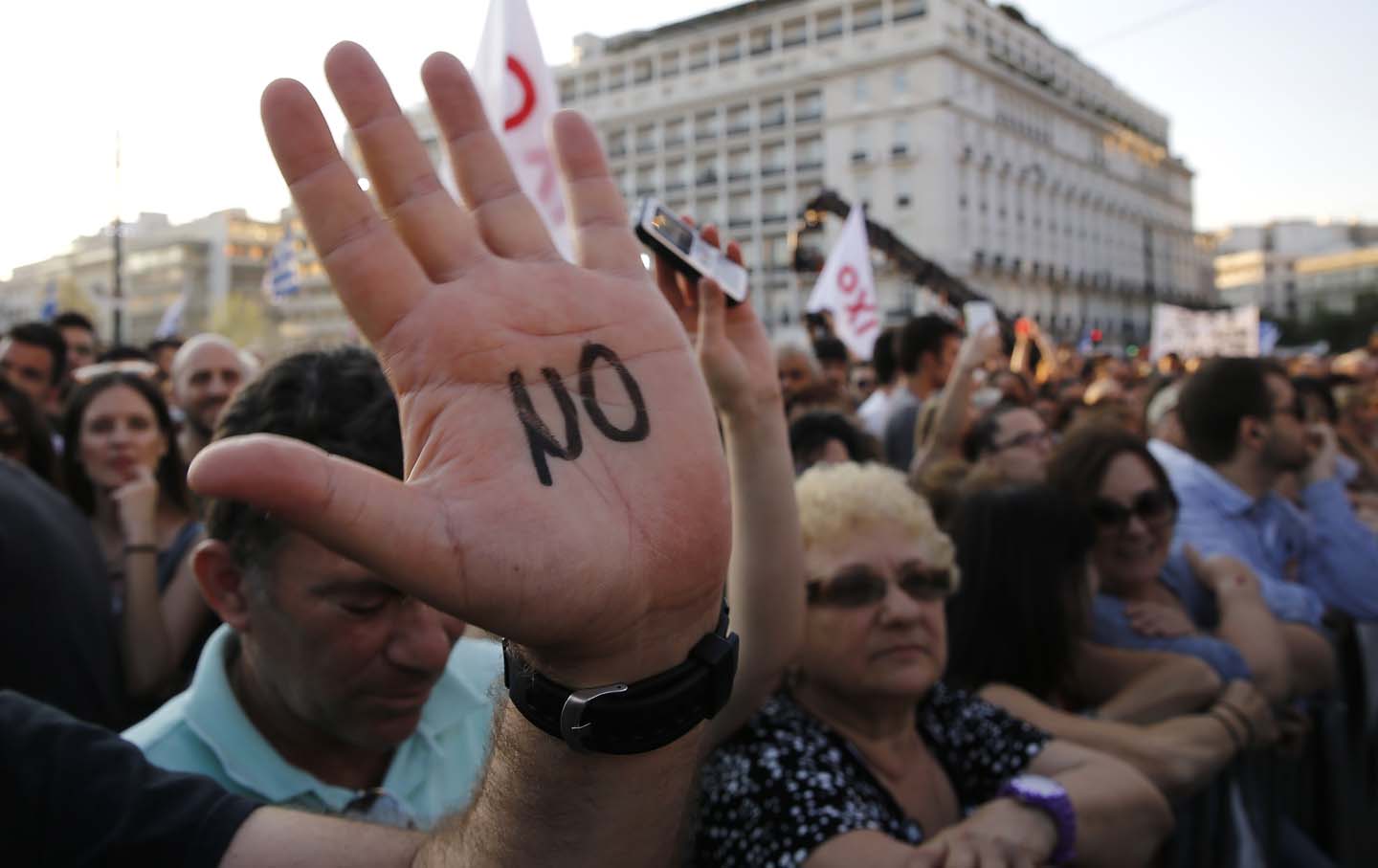
Greek Voters to Eurozone: We Can’t and Won’t Do This Anymore
Athens—Making history means not knowing what comes next. I knew that in theory, but I hadn’t known what it feels like until these last two days in Greece. Nor had I understood how an unimaginably complex and confusing landscape can crystallize, through a formal (if flawed) democratic process, into something that looks like an expression of national will—and in that shape become a player on the world stage.
Sunday, June 28, 2015
EU ministers refuse bailout extension for Greece as referendum looms
Europe’s single currency entered the stage of rupture for the first time in its 16-year life on Saturday night when 18 governments told Greece its bailout package would be terminated within days. The country plunged towards financial collapse after its leftwing prime minister, Alexis Tsipras, abandoned negotiations and called a referendum on his lenders’ terms for continuing the lifeline.
An emergency meeting of eurozone finance ministers took place in Brussels on Saturday evening without Greece for the first time since the crisis began in 2010. It turned into a crisis planning session devoted to quarantining Greece and insulating the rest of the eurozone from the impact of anticipated financial mayhem.
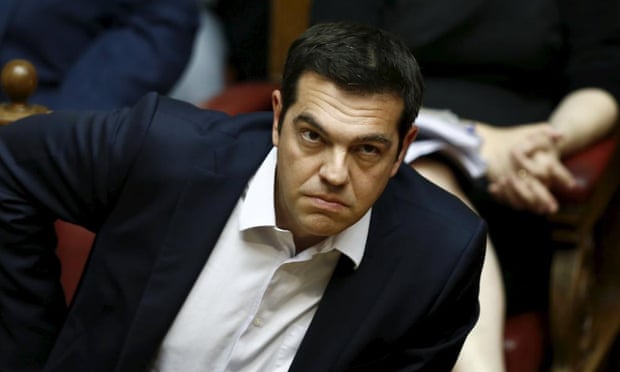
Greek PM Alexis Tsipras calls referendum on bailout terms
In a dramatic move that will put Europe on tenterhooks, the Greek prime minister Alexis Tsipras told his fellow citizens last night he would call a referendum on the bailout accord that international creditors have proposed to keep the debt-stricken country afloat.
Following an emergency meeting of his cabinet, Tsipras said his leftist-led government had decided a package of austerity measures proposed by the country’s creditors – made in a last-ditch effort to avert default – would be put to popular vote. The referendum will take place on Sunday 5 July.
Thursday, March 12, 2015
Vancouver transit referendum could put plug in pipeline expansion
In the U.S., transit funding referendums have become a fact of life. But on March 16, the first ballots will be mailed out in the Metro Vancouver transit referendum, apparently the first ever in Canada.
This could either be the start of a downward spiral for transit in Canada or the spark for a sustainable transportation movement -- one that changes our communities for the better and greatly reduces our dependence on oil from the tar sands and fracking fields.
Monday, September 29, 2014
Catalonia president orders independence referendum on Nov. 9
The president of Catalonia, Artur Mas, has signed a decree calling an independence referendum for Nov. 9. The secessionist drive of the Spanish region has been rebuked by Madrid, which vowed to block the vote.
Spanish Prime Minister Mariano Rajoy has called a government meeting Monday that is expected to provide a legal response to Barcelona’s announcement. Madrid plans to challenge the vote in the constitutional court.
Wednesday, September 24, 2014
10 lessons for Canadians from the Scottish referendum
The Scottish independence referendum offered Canadians lessons on democracy and nation.
1. Fully 87 per cent of eligible voters exercised their democratic franchise. Most impressively, 97 per cent of Scots registered to vote. Canadians turnout rates for federal elections have declined from the 80 per cent range to about 60 per cent. The Canadian permanent voter list inspires little confidence. Lower turnout rates equate with less democracy.
Friday, September 19, 2014
Can Great Britain Survive a Scottish “No” Vote?
The obvious question about the referendum on Scottish independence is: Will the secessionists win? The answer looks likely to be no. Of all the opinion polls carried out in the run-up to the vote, only one has shown the pro-independence side in the lead, and that survey was taken almost two weeks ago. The vast majority of the polls show the “no” side narrowly ahead; two published on Wednesday gave the unionists fifty-two per cent and the “yes” side forty-eight per cent, though both found a fair number of undecideds.
I wouldn’t rule out a last-minute swing toward independence. Some of the scare tactics employed by the British government and its allies over the past couple of weeks have been crude and clumsy: it’s always possible that the Scots, a proud and obstinate people, will react against them. But, assuming that the polls are accurate, the United Kingdom of Great Britain and Northern Ireland will escape intact.
But for how long?
I wouldn’t rule out a last-minute swing toward independence. Some of the scare tactics employed by the British government and its allies over the past couple of weeks have been crude and clumsy: it’s always possible that the Scots, a proud and obstinate people, will react against them. But, assuming that the polls are accurate, the United Kingdom of Great Britain and Northern Ireland will escape intact.
But for how long?
Scotland’s Referendum on Austerity
Glasgow, Scotland—Thursday’s Scottish referendum vote is often framed in terms of the politics of nationalism—and the desire of a people for self-determination. And of course there have always been, and there still are, impassioned Scottish nationalists.
But the reality that becomes overwhelmingly clear in the last hours before the referendum vote—which polls suggest will see an exceptionally high turnout and a close finish—is that this process is being shaped by the politics of austerity.
Wednesday, October 30, 2013
Give Us a Referendum on Northern Gateway
Aux Barricades!
We are witnesses to the greatest acts of political cynicism I have seen. Two of them, in fact, made all the more cynical by the amazing timing of their commission.
Last month the provincial Liberals let us in on a document -- you might call it a peace treaty turned into an alliance -- from Premier Clark and Premier Redford of Alberta concerning pipelines and tanker traffic. The "pith and substance," as we lawyers say, is that the pipelines (plural) and tanker traffic will go ahead based on the "certainty" that no pipelines will burst and no tankers will spill. And on the remote chance that an accident does occur, we'll have "world class" cleanup all ready to make things right.
We are witnesses to the greatest acts of political cynicism I have seen. Two of them, in fact, made all the more cynical by the amazing timing of their commission.
Last month the provincial Liberals let us in on a document -- you might call it a peace treaty turned into an alliance -- from Premier Clark and Premier Redford of Alberta concerning pipelines and tanker traffic. The "pith and substance," as we lawyers say, is that the pipelines (plural) and tanker traffic will go ahead based on the "certainty" that no pipelines will burst and no tankers will spill. And on the remote chance that an accident does occur, we'll have "world class" cleanup all ready to make things right.
Sunday, December 23, 2012
Early results show Egypt’s disputed charter receives ‘yes’ majority in referendum
The results, posted on the Brotherhood’s website, show that 71.4 per cent of those who voted Saturday said “yes” after 95.5 per cent of the ballots were counted. Only about eight million of the 25-million Egyptians eligible to vote — a turnout of about 30 per cent — cast their ballots.
Monday, December 17, 2012
Egypt’s Referendum Clears 1st Round, But Critics Seek Re-Vote After Charges of Rigged Polls
Video
Source: Democracy Now!
Author: --
Subscribe to:
Posts (Atom)