Democracy Gone Astray

Democracy, being a human construct, needs to be thought of as directionality rather than an object. As such, to understand it requires not so much a description of existing structures and/or other related phenomena but a declaration of intentionality.
This blog aims at creating labeled lists of published infringements of such intentionality, of points in time where democracy strays from its intended directionality. In addition to outright infringements, this blog also collects important contemporary information and/or discussions that impact our socio-political landscape.

All the posts here were published in the electronic media – main-stream as well as fringe, and maintain links to the original texts.

[NOTE: Due to changes I haven't caught on time in the blogging software, all of the 'Original Article' links were nullified between September 11, 2012 and December 11, 2012. My apologies.]

Showing posts with label Reform. Show all posts

Friday, September 06, 2024

Democrats Propose 18-Year Term Limit for Supreme Court Justices in Most Cases

A group of Democratic senators has introduced legislation that would drastically alter how often Supreme Court justices are chosen, and limit the cases justices can hear after a certain time on the bench.

The new legislation, sponsored by Senators Sheldon Whitehouse (D-Rhode Island), Cory Booker (D-New Jersey), Richard Blumenthal (D-Connecticut), and Alex Padilla (D-California), is called the Supreme Court Biennial Appointments and Term Limits Act. A number of Democratic senators have signed on as co-sponsors of the bill. It has not yet been endorsed by any Republicans.

Tuesday, January 26, 2016

Why a Referendum on Electoral Reform Would Be Undemocratic

"When you change the rules of democracy, everyone gets a say," interim Conservative Leader Rona Ambrose stated recently in demanding that Prime Minister Trudeau commit to holding a referendum prior to introducing any changes to our voting system, and fellow MPs Scott Reid and Blake Richards added that not to do so would be "stubbornly and profoundly undemocratic."

Fair Voting B.C. strongly disagrees. These crocodile tears supposedly in defence of democracy reflect a profound misunderstanding of why voting reform is needed. Quite simply, we need voting reform to correct the longstanding injustice that half of us are denied our Charter rights to effective representation and equal treatment. And when our civil rights are violated, those who stand to benefit from the current system's discriminatory effects should not be allowed to block redress.

Friday, March 06, 2015

Obama’s Police Reforms Ignore the Most Important Cause of Police Misconduct

President Obama’s Task Force on 21st Century Policing has released a long list of reforms to American policing, some of which, including independent police prosecutions and dramatically scaling back the role of police in schools, are true advancements. However, there are also major pitfalls in the report’s reliance on procedural rather than substantive justice.

Liberal police reforms of the 1960s, including the Katzenback Commission on Law Enforcement and the Administration of Justice and Johnson’s Safe Streets Act, were intended to achieve similar ends of improving police community relations and reducing police brutality through police professionalization and a host of procedural reforms. The result of this process, however, was the massive expansion of policing in the form of SWAT teams, the War on Drugs and, ultimately, mass incarceration.


Friday, February 06, 2015

Police Reform Is Impossible in America

In recent weeks, the White House has reaffirmed its commitment to strengthening "community policing" around the country. The U.S. Conference of Mayors has coalesced around the same theme, releasing a report days ago with recommendations for community policing measures to be adopted nationally. The suggestions for building better "relationships" and boosting "trust" are comprehensive but, for a national crisis brought on by the killing of unarmed black people, there's one thing conspicuously absent from the public policy solutions: the acknowledgement of racism.

The New Testament says that faith is "the substance of things hoped for, the evidence of things not seen." Well, in the absence of data to support excessive policing and police brutality in communities of color, it appears that America has just stepped out on faith.

Thursday, December 11, 2014

The System That Failed Eric Garner and Michael Brown Cannot Be Reformed

That a grand jury decided not to indict NYPD Officer Daniel Pantaleo for killing 43-year-old Eric Garner the same week that President Obama proposed spending $75 million in federal money to outfit 50,000 police officers across the country with body cameras would seem to be hack Hollywood writing with neatly applied plot points. Garner’s death was caught on video—video that the police were aware was being taken—and it still was not enough to indict anyone, least of all the man responsible for choking Garner to death, for any type of wrongdoing. It’s as if this decision was handed to us at this time in order to get us to say, “Now what?”

Friday, September 26, 2014

Our Public Education System Needs Transformation, Not ‘Reform’

Charter-school advocates and others who claim the mantle of education reform have now seen their ideas put into practice in a number of areas—from high-stakes testing to digital learning to the takeover of struggling public schools. The results are in. How are they doing? Suffice it to say, if this were a high-stakes test, they’d fail.

As the articles in this issue illustrate, the strategies pursued by education reformers frequently dovetail with those of austerity hawks. The latter burnish their conservative credentials by cutting budgets and defunding schools. The reformers sweep in to capitalize on the situation, introducing charter chains like Rocketship and K12, which produce real no benefits for students. The chains do, however, generate cash for investors, as a new trove of public money is directed to private coffers. Far too many poor kids, meanwhile, are consigned to schools like Philadelphia’s Bartram High: buffeted by violence, wracked by relentless budget cuts and choked by the “white noose” of wealthy suburbs (in the evocative phrase of former Mayor Richardson Dilworth) that soak up a disproportionate share of resources.

Tuesday, August 19, 2014

Here's Why Wall Street Reform Is Still in Limbo

Four years ago today, with a who's who of congressional Democrats standing over his shoulder, President Barack Obama signed into law the Dodd–Frank Wall Street Reform and Consumer Protection Act, hailing it as the answer to preventing future financial meltdowns. "For years," the president said at the signing ceremony, "our financial sector was governed by antiquated and poorly enforced rules that allowed some to game the system and take risks that endangered the entire economy."

Thursday, February 27, 2014

Why the Federal Reserve Needs an Overhaul

The Federal Reserve is celebrating its 100th birthday with due modesty, given the Fed’s complicity in generating the recent financial crisis and its inability to adequately resuscitate the still-troubled economy. Woodrow Wilson signed the original Federal Reserve Act on December 23, 1913. Eleven months later, the Federal Reserve System’s twelve regional banks opened for business. But in a sense the central bank was born in the autumn of 1907, when another devastating financial crisis swept the nation, destroying banks, businesses and farmers on a frightening scale.

J.P. Morgan and his fraternity of New York bankers intervened with brutal decisiveness in the efforts to halt the Panic of 1907, choosing which banks would fail and which would survive. Afterward, Morgan was hailed in elite circles as a heroic figure who had saved the country and free-market capitalism. The nostalgia for Morgan was misplaced, however: as insiders knew, the real story of 1907 was that Washington intervened to save Wall Street—the twentieth century’s own inaugural bailout.

Thursday, February 06, 2014

Fair Elections Act Unfairly Favours Tories, Opposition Parties Claim

OTTAWA - Canada's former elections watchdog is panning the Harper government's electoral reform bill for giving political parties both a front and back door route to significantly increase spending during campaigns.

And opposition parties say it's no accident that will benefit the party with the deepest pockets — which happens to be Prime Minister Stephen Harper's Conservatives.

Indeed, NDP Leader Tom Mulcair charged Wednesday that the bill is mostly about "loading the dice" in favour of the Conservatives, whom he called "serial cheaters."

Election bill reveals Conservatives’ view on voter turnout

It is not only because the long-awaited Conservative electoral reform bill came in at almost 250 pages of legal jargon and a minimum of background information on Tuesday that reaction to its content was initially tentative.
Over the past eight years Stephen Harper’s government has woven more than one piece of legislative tapestry that has featured major threads that did not jump out at observers.

Harper's election reform menu has too many poison pills

Democratic Reform Minister Pierre Poilievre's new, self-styled "Fair Elections Act" does contain at least a few positive changes.
Even Opposition Critics such as the NDP's Craig Scott recognize that.
The Act would create a registry of "voter contact" calls, for instance, although records will only be maintained for a year, and it would put those "contact" activities under the supervision of the CRTC.
The Act also introduces prison terms for impersonating an Elections Canada official, and increased penalties for the use of deception to prevent people from voting.

Wednesday, February 05, 2014

Stephen Harper’s overhaul of election laws needs close scrutiny

There’s a lot to like in Prime Minister Stephen Harper’s sweeping overhaul of Canada’s elections laws. There’s quite a bit to be suspicious of, as well. This is one package of proposed legislation that shouldn’t be rushed into law. It needs careful scrutiny.
Given the sulphurous mistrust between the Conservative government and opposition parties, and the Tories’ history of, well, creativity, toward the electoral rules, Democratic Reform Minister Pierre Poilievre can’t expect to be taken at his word when he says the Fair Elections Act will put “everyday citizens in charge of democracy.” New Democrat critic Craig Scott fears it is stacked to give the Tories an edge in the next federal election. In truth, it may be a little of both.

Election reforms would bring big changes to campaign spending

Some fundraising would be exempt from campaign spending limits under changes proposed by Canada's Conservative government in the election reform bill tabled today.

The change would essentially increase the amount parties can spend during federal elections, aside from a separate measure that would increase the cap for national and local campaigns by five per cent.

Thursday, January 30, 2014

Tech Industry Finds Obama's NSA Reforms 'Insufficient'

SAN FRANCISCO (AP) — Technology companies and industry groups took President Barack Obama's speech on U.S. surveillance as a step in the right direction, but chided him for not embracing more dramatic reforms to protect people's privacy and the economic interests of American companies that generate most of their revenue overseas.

"The president's speech was empathetic, balanced and thoughtful, but insufficient to meet the real needs of our globally connected world and a free Internet," said Ed Black, president of the Computer & Communications Industry Association, a group that represents Google, Microsoft, Facebook and other technology companies upset about the NSA's broad surveillance of online communications.

Friday, December 13, 2013

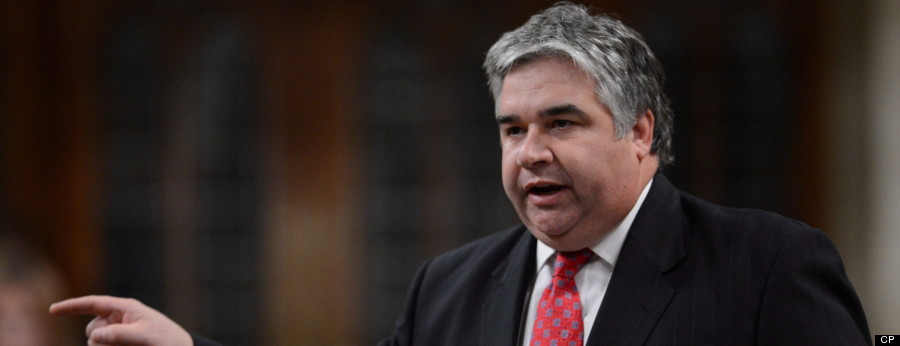
Reform Act Not Needed, Says Tory House Leader Peter Van Loan

OTTAWA — Opposition parties and some Conservative members may decry the government’s methods of curtailing debate and whipping votes, but the party is simply offering stable government and fulfilling its electoral promises, the Tory House Leader says.

Peter Van Loan sat down with The Huffington Post Canada this week to reflect on 2013, a year marked by the Senate scandal and an insurrection of the Conservative backbench.

Wednesday, December 04, 2013

Usual naysaying, hysterics greet MP Michael Chong’s bid to reform Parliament

Can’t be done. Too risky. Goes too far. Doesn’t go far enough. Whenever and wherever someone actually makes some concrete proposal to repair our damaged democracy, the forces of inertia almost instantly gather to ensure it never happens. Of course, everyone agrees that something should be done. Just not, you know, this.

So it is with the Reform Act, on which Conservative MP Michael Chong has been toiling for most of the past 15 years. Before the bill was unveiled Tuesday, a flourish of pundits had written its epitaph — even as they complained of others “rushing to judgment” in advance of a final text.

Thursday, November 07, 2013

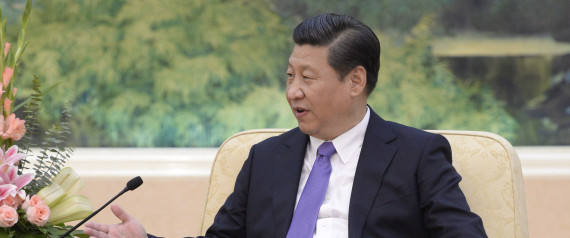
China's President Charts Path For 'Comprehensive Reform' Amid Economic, Environmental Problems

BEIJING -- China has a situation.

For three decades, the ruling Communist Party has pressed an effective formula in engineering an extraordinary economic transformation. The party lifted key state controls, enabling private businesses to take root. It invested heavily in highways, ports and other industrial infrastructure while courting foreign investment and handing out land for manufacturing operations. Chinese-made products landed on shelves around the globe, and inland farmers flocked to the coasts to take up new factory jobs, sending home wages that have sent children to school and purchased modern conveniences. In this fashion, some 600 million Chinese have been lifted from poverty.

Monday, April 15, 2013

Feds promise ‘comprehensive elections reform’ to stop fraudulent robocalls, but still won’t say when

There is still time for a legislative response to prevent the use of deceptive phone calls, like those used in the 2011 federal election, to be fully implemented before the 2015 election, say experts. But questions are being raised about the scope of the anticipated government legislation which Democratic Reform Minister Tim Uppal says will be a “comprehensive elections reform proposal.”

Friday, March 15, 2013

We need to change our approach to banking reform

In the painful aftermath of the worst financial crisis in 80 years our approach to urgently needed banking reform has been dreadfully wrong-headed. Which means we can be certain of yet another global credit crisis sooner rather than later.

To date, the reforms under consideration by various governments including the U.S. do not address the core issue, which is that banks have too little skin in the game. It’s “other people’s money” with which bankers make their loopiest bets: to wit, federally insured depositors’ money, funds borrowed in global bond markets and $2 trillion-plus of taxpayer funds injected into banks to rescue them at the onset of a Great Recession triggered by the banks themselves.

Monday, February 18, 2013

Parliamentary reform idea: Get out of the House

Here's the big dilemma: Whatever reforms are made to Parliamentary practice and conduct, the simple truth is that, for now, citizens have lost faith in politicians. However, they trust their fellow citizens, and just as they do with juries, are prepared to delegate important decisions to them.

One solution then is to more frequently take the need to deliberate on key issues outside Parliament. Trust the people. Put major policy questions to citizen assemblies, or some other large-scale public engagement process. We need more opportunities to have big and thoughtful conversations on fundamental matters.