Democracy Gone Astray

Democracy, being a human construct, needs to be thought of as directionality rather than an object. As such, to understand it requires not so much a description of existing structures and/or other related phenomena but a declaration of intentionality.
This blog aims at creating labeled lists of published infringements of such intentionality, of points in time where democracy strays from its intended directionality. In addition to outright infringements, this blog also collects important contemporary information and/or discussions that impact our socio-political landscape.

All the posts here were published in the electronic media – main-stream as well as fringe, and maintain links to the original texts.

[NOTE: Due to changes I haven't caught on time in the blogging software, all of the 'Original Article' links were nullified between September 11, 2012 and December 11, 2012. My apologies.]

Showing posts with label Science. Show all posts

Tuesday, August 07, 2018

China increasingly challenges American dominance of science

Like many ambitious young scientists, José Pastor-Pareja came to the United States to supercharge his career. At Yale University, he worked in cutting-edge laboratories, collaborated with experts in his field and published in prestigious journals.

But the allure of America soon began to wear off. The Spanish geneticist struggled to renew his visa and was even detained for two hours of questioning at a New York City airport after he returned from a trip abroad. In 2012, he made the surprising decision to leave his Ivy League research position and move to China.

Tuesday, March 15, 2016

Unmuzzled Scientists Ask Trudeau To Not Reuse 'Draconian' Rules

An advocacy group representing Canadian scientists is urging Prime Minister Justin Trudeau to not reuse “draconian” rules of the former government during his term as prime minister.

Ottawa-based non-profit Evidence for Democracy released an open letter Wednesday praising Trudeau for reinstating the mandatory long-form census as well as giving the go-ahead to Environment Canada and Fisheries and Oceans Canada researchers to speak with the media and public as they please.

Thursday, June 25, 2015

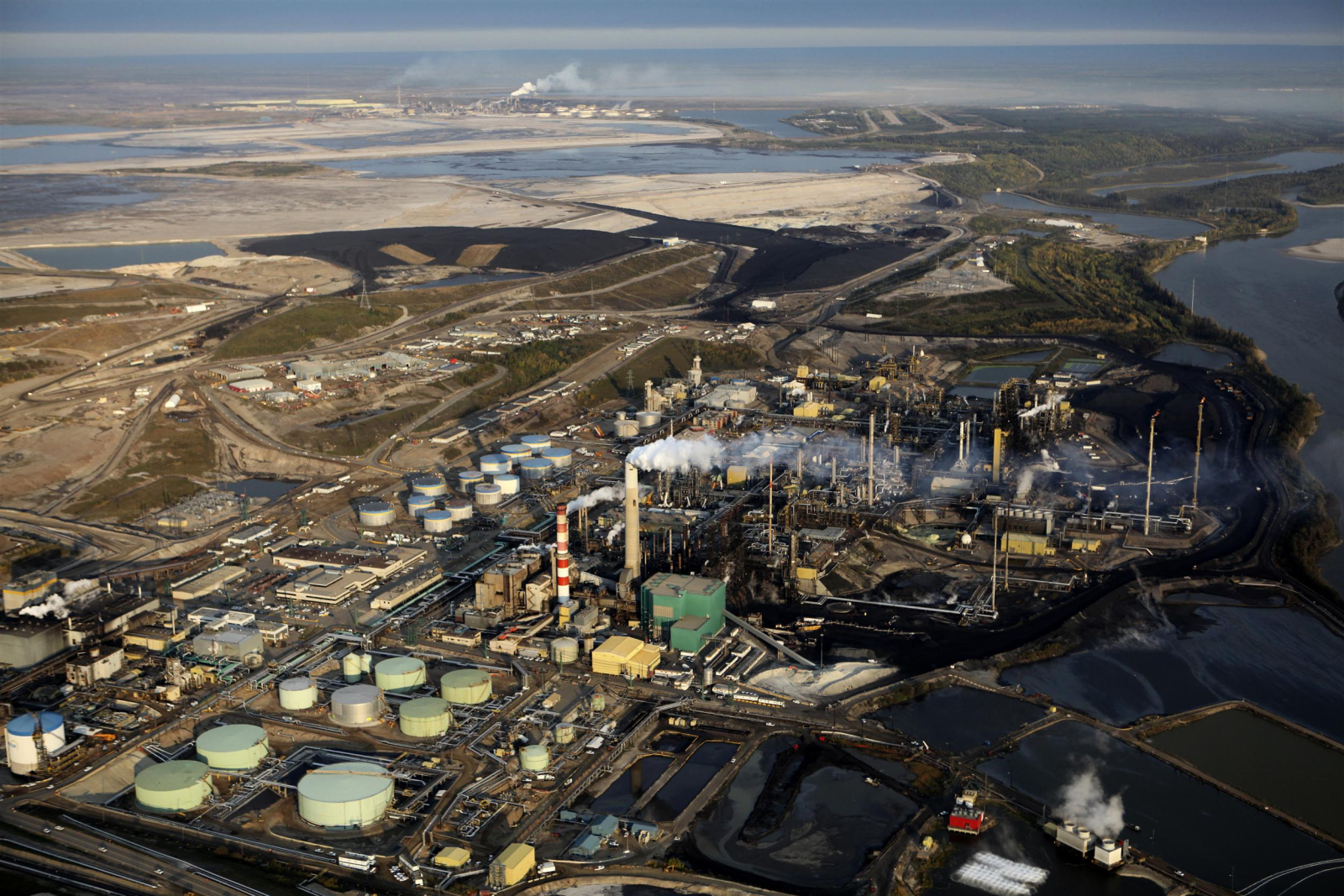
Over 100 scientists call for oil sands moratorium

A group of more than 100 leading scientists from both Canada and the United States called for a moratorium on new oil sands development at a June 10 telephone press conference.

The scientists laid out 10 reasons why continued expansion of the oil sands is incompatible with keeping climate change at a level that does not cause widespread harm. These include: a lack of adequate protections and baseline data; contamination of the Canadian boreal zone; a lack of land reclamation; oil sands development and transport undermining First Nations land rights; developments in North America setting a precedent for combating climate change elsewhere; controlling carbon pollution not being an economic threat; cumulative impacts of oil sands development being ignored by current policies; and a majority of both Canadians and Americans wanting their leaders to address climate change.

Friday, November 14, 2014

Pope Francis and the G.O.P.’s Bad Science

It’s a shame that there is no provision in the Constitution of the United States that would permit Pope Francis to serve as the chairman of the Senate Environment and Public Works Committee. Or, for that matter, that there’s no way for him to lead the Committee on Commerce, Science, and Transportation. Instead, it looks like we are going to have Republicans James Imhofe, of Oklahoma, and Ted Cruz, of Texas in those jobs.

That’s too bad, because the Pope believes that science, rational thought, and data all play powerful and positive roles in human life. The senators seem as if they do not. Last month, Francis made a lot of news when, in an address to the Pontifical Academy of Sciences, he said, essentially, that the Catholic Church had no problem with evolution or with the Big Bang theory of the origins of the universe. “When we read the account of Creation in Genesis, we risk imagining that God was a magician, complete with an all-powerful magic wand. But that was not so. … Evolution in nature does not conflict with the notion of Creation,’’ Francis said.

Wednesday, October 29, 2014

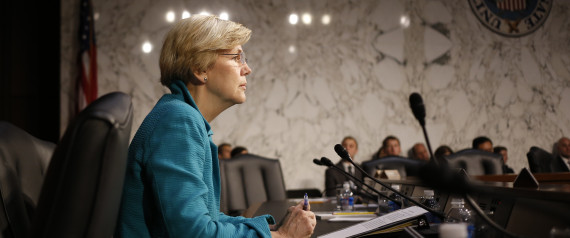
Elizabeth Warren Teams Up With Orrin Hatch To Push Huge Science Research Fund

WASHINGTON -- A bipartisan duo of Senate heavyweights is set to unveil an unusual bill that would give lawmakers an incentive to fund biomedical research and, potentially, add billions to that mission.

Sens. Elizabeth Warren (D-Mass.) and Orrin Hatch (R-Utah) have been quietly working for the past year on the Invest for a Healthy Future Act, a bill that may end up increasing money for government agencies that fund research by more than $21.5 billion over the next dozen years.

Thursday, September 18, 2014

Scientists Find ‘Direct Link’ Between Earthquakes And Process Used For Oil And Gas Drilling

A team of scientists with the U.S. Geological Survey have found evidence “directly linking” the uptick in Colorado and New Mexico earthquakes since 2001 to wastewater injection, a process widely used in the controversial technique of hydraulic fracturing, or fracking, and conventional drilling.
In a study to be published in the Bulletin of the Seismological Society of America on Tuesday, the scientists presented “several lines of evidence [that] suggest the earthquakes in the area are directly related to the disposal of wastewater” deep underground, according to a BSSA press release. Fracking and conventional natural gas companies routinely dispose of large amounts of wastewater underground after drilling. During fracking, the water is mixed with chemicals and sand, to “fracture” underground shale rock formations and make gas easier to extract.

Friday, September 05, 2014

Study: Science and Religion Really Are Enemies After All

Are science and religion doomed to eternal "warfare," or can they just get along? Philosophers, theologians, scientists, and atheists debate this subject endlessly (and often, angrily). We hear a lot less from economists on the matter, however. But in a recent paper, Princeton economist Roland Bénabou and two colleagues unveiled a surprising finding that would at least appear to bolster the "conflict" camp: Both across countries and also across US states, higher levels of religiosity are related to lower levels of scientific innovation.

Wednesday, December 04, 2013

Scientists: Current International Warming Target Is "Disastrous"

Ever since the 2009 climate talks in Copenhagen, world leaders have agreed on 2 degrees Celsius (3.6 degrees F) as the maximum acceptable global warming above preindustrial levels to avert the worst impacts of climate change (today we're at about 0.8 degrees C). But a new study, led by climatologist James Hansen of Columbia University, argues that pollution plans aimed at that target would still result in "disastrous consequences," from rampant sea level rise to widespread extinction.

A major goal of climate scientists since Copenhagen has been to convert the 2 degree limit into something useful for policymakers, namely, a specific total amount of carbon we can "afford" to dump into the atmosphere, mostly from burning fossil fuels in power plants (this is known as a carbon budget). This fall, the UN's Intergovernmental Panel on Climate Change pegged the number at 1 trillion metric tons of carbon, or about twice what we've emitted since the late 19th Century; if greenhouse gas emissions continue as they have for the last few decades, we're on track to burn through the remaining budget by the mid-2040s, meaning immediately thereafter we'd have to cease emissions forever to meet the warming target.

Friday, May 10, 2013

Fisheries Department reaches deal with think tank to save freshwater research facility

OTTAWA — Some federal scientists working at the Department of Fisheries and Oceans may soon gain new freedom to control their research and speak in public, under a tentative deal announced Thursday to transfer management of a world-renowned freshwater research facility that opened in 1968.

The arrangement would transfer the management of the Experimental Lakes Area (ELA), a research site made up of dozens of lakes near Kenora in northwestern Ontario, to a Manitoba-based think tank, the International Institute for Sustainable Development.

Friday, September 07, 2012

1984 in 2012 – The Assault on Reason

“Those who can make you believe absurdities can make you commit atrocities” – Voltaire

In his novel 1984, George Orwell paints a portrait of a nightmarish future where rights that we now take for granted – the freedom of assembly, speech and to trial – have all been suspended. Acceptance of this totalitarian state is justified by the interests of stability and order, and by the needs a perpetual war. But what makes 1984 endure where other dystopian novels have been forgotten is that Orwell removed one more right that is even more unimaginable in a modern context – the right to think.

Wednesday, August 15, 2012

Merkel’s visit to climate scientists heightens contrast with PM on environment policy

Angela Merkel will make a special visit to Halifax this week to highlight the work of climate scientists, a stop that underscores the German Chancellor’s focus on science and the environment in a summer when those same issues are dogging Canada’s Prime Minister.

After two days in the national capital region for meetings with Stephen Harper, Ms. Merkel will visit Dalhousie University in Halifax Thursday on her way home.

Saturday, July 21, 2012

Bureaucrats found flaws in oilsands study for European Parliament: Memos

OTTAWA — Energy policy advisers at Natural Resources Canada who worked closely with an oil and gas lobby group advised the federal government that there were "numerous flaws" in a scientific study used by the European Union to justify climate change policies that would single out fossil fuels from Alberta's oilpatch, internal government memos obtained by Postmedia News have revealed.

The critique of the study by Stanford University Engineering professor Adam Brandt questioned his use of Canadian government methodology to estimate the global warming footprint of heavy oil from Alberta's oilsands region, while he used what they believed were less stringent criteria to evaluate other fossil fuels.

Wednesday, June 27, 2012

The End of the Evolution Debate

The physical evidence is so overwhelming that the theory of evolution can no longer be denied.

Ever since Darwin first floated the theory of evolution in the mid-19th century, creationists and scientists have argued – often bitterly – over the true origin of the species on Earth. In the next 15-30 years, that debate will cease. The evidence, at that point, will be irrefutable.

It used to be that a few fossils on a card table were enough evidence to convince scientists that humans had evolved. But today, there are hundreds of fossils spanning four million years in Africa. And the consistency of the story in terms of the anatomical evidence that shows change through time is such that to dispute it is simply silly.

Wednesday, May 16, 2012

Statistical Analysis Projects Future Temperatures in North America

ScienceDaily (May 15, 2012) — For the first time, researchers have been able to combine different climate models using spatial statistics -- to project future seasonal temperature changes in regions across North America.

They performed advanced statistical analysis on two different North American regional climate models and were able to estimate projections of temperature changes for the years 2041 to 2070, as well as the certainty of those projections.

The analysis, developed by statisticians at Ohio State University, examines groups of regional climate models, finds the commonalities between them, and determines how much weight each individual climate projection should get in a consensus climate estimate.

Through maps on the statisticians' website (http://www.stat.osu.edu/~sses/collab_warming.html), people can see how their own region's temperature will likely change by 2070 -- overall, and for individual seasons of the year.

Monday, July 18, 2011

Can Science Survive the 'Age of Austerity'?

With budgets across the developed world in mortal danger, Nature's Joerg Heber asks a key question: how can science survive the age of austerity? In the long-term, everyone agrees you need science and technology R&D, but when budgets get tight, research into quantum dots or the fundamental forces that cause earthquakes has a hard time holding the line against health care or tax cuts for the richest Americans.

So, what's a science program to do? Heber suggests that different countries are taking different approaches. Japan is focusing on its most elite researchers, giving up to $50 million to 30 different people. Other countries are just giving up on some areas of research to focus on others; for example, take U.S. particle physicists, who will spend their careers trying to drive from the backseat as our European counterparts run the Large Hadron Collider.