
Showing posts with label Surveillance. Show all posts
Showing posts with label Surveillance. Show all posts
Thursday, February 18, 2016
“I Feel Like a Despised Insect”: Coming of Age Under Surveillance in New York
Monday, February 01, 2016
New Technologies Give Government Ample Means to Track Suspects, Study Finds

Now, a study in which current and former intelligence officials participated concludes that the warning is wildly overblown, and that a raft of new technologies — like television sets with microphones and web-connected cars — are creating ample opportunities for the government to track suspects, many of them worrying.
Monday, July 27, 2015
Cybersecurity, Encryption and the Golden Age of Surveillance
 The Internet, the electronic nervous system of the planet, has changed human society, profoundly altering the way we conduct our lives. It has been a great leveler, allowing people to connect, publish and share on a global scale. You can write, shop and bank online, or organize a demonstration that could overthrow a dictatorship. But the Internet also opens us to intense monitoring, exposing our most personal, private communications to the prying eyes of corporations and government spies, not to mention criminals. One way we can protect ourselves is with encryption, which provides security for our data, allowing us to send and store digital information safely, essentially scrambling the information. In order to unscramble it, you need a key, a password. The ability of regular people to access encryption tools has prompted the governments of both the United States and the United Kingdom to propose special access to all communications. They want a master key to everyone’s digital life.
Thursday, September 12, 2013
Opinion A Surveillance State Born in Ground Zero's Rubble

Forty years ago on Sept. 11, 1973, General Augusto Pinochet led a U.S.-backed coup that overthrew the democratically-elected government of Salvador Allende.
Twenty-eight years later, the al-Qaida attacks on New York and Washington induced the democratically-elected government of the United States to overthrow itself.
Each attack took about the same number of lives, around 3,000 -- all at once in New York and Washington, over weeks and months in Chile. The Chilean junta also arrested, imprisoned and tortured some 28,000 people in the next few years, including the young Michelle Bachelet, who is currently running to be re-elected as president of Chile.
Thursday, August 29, 2013
NSA surveillance program violates the constitution, ACLU says
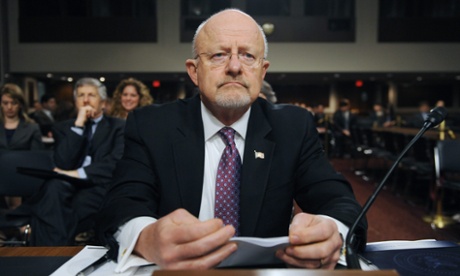
In a detailed, legal critique of the NSA programme, the ACLU warned that such long-term surveillance "permits the government to assemble a richly detailed profile of every person living in the United States and to draw a comprehensive map of their associations with one another."
Sunday, August 25, 2013
Edward Snowden Covered Electronic Tracks, Government Officials Suspect

The government's forensic investigation is wrestling with Snowden's apparent ability to defeat safeguards established to monitor and deter people looking at information without proper permission, said the officials, who spoke on condition of anonymity because they weren't authorized to discuss the sensitive developments publicly.
Tuesday, August 06, 2013
NATO Surveillance Cancellations Costs Canadian Firms Millions

National Defence was hoping to save as much as $90 million per year by withdrawing from the jointly owned and operated Airborne Warning and Control System (AWACS) and the Alliance Ground Surveillance (AGS), a fairly new program meant to utilize drones to monitor the battlefield.
Friday, June 28, 2013
America's Surveillance Net

Increasingly, the American people are like this school of fish in the moments before the net is pulled up. The net in question is of course the Internet and associated instruments of data collection, and the fishermen are corporations and the government. That is, to use the more common metaphor, we have come to live alongside the machinery of a turnkey tyranny. As we now know, thanks to the courageous whistleblower Edward Snowden, the National Security Agency has been secretly ordering Verizon to sweep up and hand over all the metadata from the phone calls of millions of its customers: phone numbers, duration of calls, routing information and sometimes the location of the callers. Thanks to Snowden, we also know that unknown volumes of like information are being extracted from Internet and computer companies, including Microsoft, Yahoo, Google, Facebook, PalTalk, AOL, Skype, YouTube and Apple.
Tuesday, May 21, 2013
Why the Government Surveillance of Fox's James Rosen Is Troubling

Big Data is watching you, and you, and you
 Fact
or fiction? Scene from the 1955 British movie of George Orwell's 1984
resonates today, though many sophisticated systems of government
snooping are invisible to the ordinary citizen.
Fact
or fiction? Scene from the 1955 British movie of George Orwell's 1984
resonates today, though many sophisticated systems of government
snooping are invisible to the ordinary citizen.There’s an elephant in your room – and it never, never forgets.
It’s Big Data, and, says Viktor Mayer-Schoenberger, co-author of a book by the same name, it is “A Revolution That Will Transform How We Live, Work and Think.”
From cradle to grave (and even before birth) we’re tracked, trailed, photographed, videoed, scrutinized, biometrized, analysed and….you can see where this is going.
Monday, May 13, 2013
Preventive Measures

The enormous anti-terror establishment that the United States has created in the years since 9/11 has a similar purpose. Its vast, sprawling, expensive array of governmental, quasi-governmental, and nominally private institutions and their tools—high tech, like ubiquitous surveillance cameras, satellites, wiretaps, computer algorithms, facial-recognition software, drones, and data collection and analysis on a global scale; lower tech, like networks of agents, bags of cash, and airport security checkpoints—are designed primarily to stop acts of terrorism before they happen. That turns out to be a good deal more difficult than investigating such an act once it occurs.
Thursday, April 25, 2013
Nick Clegg takes on the Tories over 'snoopers' charter'
 Mr Clegg, the Deputy Prime Minister, appeared to put a stop to the Tory proposals during his weekly Call Clegg programme on LBC Radio, saying they are “not going to happen”.
Mr Cameron’s official spokesman insisted that discussions about the plans are still “ongoing”, however senior Lib Dems said that Mr Clegg had “killed” the proposals.
Saturday, January 05, 2013
FBI Surveillance Of Occupy Wall Street Detailed
 WASHINGTON -- Was Tim Franzen stockpiling weapons? What was Tim Franzen's philosophy? What was his political affiliation? Did Tim Franzen ever talk about violent revolution?
The Federal Bureau of Investigation wanted to know. In late 2011, an agent or agents -- Franzen still isn't quite sure -- began trying to find out. It was during this time that Franzen became a well-known and central presence in Occupy Atlanta. He helped start the Occupy Wall Street offshoot, and had been arrested when police razed their encampment in a downtown Atlanta park.
Friday, August 17, 2012
The US Government Can Track Your Location at Any Time Without a Warrant
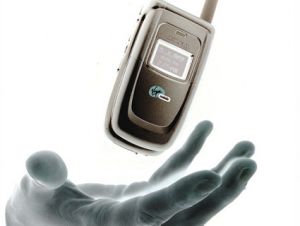
The case involves a marijuana courier, Melvin Skinner, whose disposable cell phone was being tracked by the Drug Enforcement Agency as he moved his cargo from Arizona to Tennessee. The DEA got a court order (not a warrant) compelling Skinner's cell phone company to share his GPS information—the release of which led to Skinner's capture and arrest.
Thursday, July 26, 2012
Communications Security Establishment Canada: Super-Secretive $400M Eavesdropping Agency Gets A Little Quieter
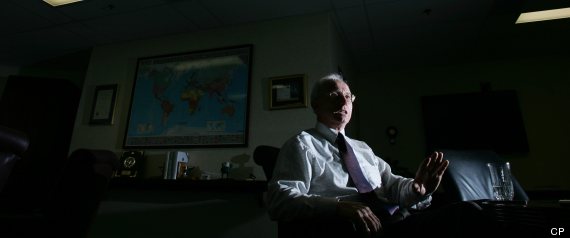
The government has quietly stopped telling Canadians about the annual priorities of the national electronic eavesdropping agency, meaning scant details of its mission that were once made public are now classified.
Friday, July 20, 2012
Government Leaks: Leon Panetta Orders Pentagon Officials To Monitor Major Media Outlets

The announcement came hours after Panetta and other senior defense officials appeared before a closed-door hearing of the House of Representatives Armed Services Committee to discuss recent disclosures of classified security information.
Sunday, July 15, 2012
Vast F.D.A. Effort Tracked E-Mails of Its Scientists
WASHINGTON — A wide-ranging surveillance operation by the Food and Drug Administration against a group of its own scientists used an enemies list of sorts as it secretly captured thousands of e-mails that the disgruntled scientists sent privately to members of Congress, lawyers, labor officials, journalists and even President Obama, previously undisclosed records show.
What began as a narrow investigation into the possible leaking of confidential agency information by five scientists quickly grew in mid-2010 into a much broader campaign to counter outside critics of the agency’s medical review process, according to the cache of more than 80,000 pages of computer documents generated by the surveillance effort.
What began as a narrow investigation into the possible leaking of confidential agency information by five scientists quickly grew in mid-2010 into a much broader campaign to counter outside critics of the agency’s medical review process, according to the cache of more than 80,000 pages of computer documents generated by the surveillance effort.
Saturday, June 23, 2012
Border Agency Policy Spells Out Surveillance Rules

The explanation is contained in a 15-page document, entitled Policy on the Overt Use of Audio-Video Monitoring and Recording Technology, which spells out CBSA’s surveillance policy in detail.
Saturday, April 14, 2012
Wiretap ruling may undermine security bill
The Supreme Court of Canada's landmark ruling that emergency wiretapping without a warrant is "unconstitutional" - which could pave the way for a new federal law that better safeguards privacy rights - is being used by critics to revive their attacks on the Harper government's controversial Internet surveillance bill.
"It's a huge blow to the Conservative's Internet snooping bill," NDP justice critic Jack Harris told Postmedia News.
"I think we can expect that their legislation will face similar challenges if they put it in place. We can go after criminals aggressively without treating ordinary citizens like criminals."
Bill C-30 would require telecommunications companies to hand over customers' personal information to police without a court order. A spokeswoman for Justice Minister Rob Nicholson said the government will be reviewing the court's decision "carefully to determine next steps," but declined to comment further.
In a unanimous ruling, the country's top court said police have an obligation to "give notice to intercepted parties" in the form of a court-issued warrant; that notice can be issued after the investigation.
"It's a huge blow to the Conservative's Internet snooping bill," NDP justice critic Jack Harris told Postmedia News.
"I think we can expect that their legislation will face similar challenges if they put it in place. We can go after criminals aggressively without treating ordinary citizens like criminals."
Bill C-30 would require telecommunications companies to hand over customers' personal information to police without a court order. A spokeswoman for Justice Minister Rob Nicholson said the government will be reviewing the court's decision "carefully to determine next steps," but declined to comment further.
In a unanimous ruling, the country's top court said police have an obligation to "give notice to intercepted parties" in the form of a court-issued warrant; that notice can be issued after the investigation.
Friday, April 13, 2012
Canada’s top court strikes down police powers to wiretap without warrants
OTTAWA—The Supreme Court of Canada struck down a law that gives police warrantless wiretap powers to prevent an emergency, saying it provides no accountability or oversight mechanism.
The unanimous judgment issued Friday gave Parliament 12 months to re-write the law. In the meantime, the 1993 Criminal Code (Section 184.4) — the only wiretap provision that does not require after-the-fact notification either to the person wiretapped or some kind of report to Parliament — remains in force.
The decision doesn’t pose a risk to public safety while Parliament rewrites the notice provision, said lawyer Joe Wilkinson, counsel to the Criminal Lawyers Association of Ontario, which intervened in the case.
It is still open to police to intercept private communications to prevent emergency situations but “they would do well to give some kind of notice to whomever it is ended up getting intercepted,” he said.
Wilkinson said there have only been a few superior court rulings on the power, and police were working “very much in the dark” as to its proper use.
Now, he said, “the police still have the bulk of the section and they’ve got it with some really good guidance from the top court in the land.”
The unanimous judgment issued Friday gave Parliament 12 months to re-write the law. In the meantime, the 1993 Criminal Code (Section 184.4) — the only wiretap provision that does not require after-the-fact notification either to the person wiretapped or some kind of report to Parliament — remains in force.
The decision doesn’t pose a risk to public safety while Parliament rewrites the notice provision, said lawyer Joe Wilkinson, counsel to the Criminal Lawyers Association of Ontario, which intervened in the case.
It is still open to police to intercept private communications to prevent emergency situations but “they would do well to give some kind of notice to whomever it is ended up getting intercepted,” he said.
Wilkinson said there have only been a few superior court rulings on the power, and police were working “very much in the dark” as to its proper use.
Now, he said, “the police still have the bulk of the section and they’ve got it with some really good guidance from the top court in the land.”
Subscribe to:
Posts (Atom)