Democracy Gone Astray

Democracy, being a human construct, needs to be thought of as directionality rather than an object. As such, to understand it requires not so much a description of existing structures and/or other related phenomena but a declaration of intentionality.
This blog aims at creating labeled lists of published infringements of such intentionality, of points in time where democracy strays from its intended directionality. In addition to outright infringements, this blog also collects important contemporary information and/or discussions that impact our socio-political landscape.

All the posts here were published in the electronic media – main-stream as well as fringe, and maintain links to the original texts.

[NOTE: Due to changes I haven't caught on time in the blogging software, all of the 'Original Article' links were nullified between September 11, 2012 and December 11, 2012. My apologies.]

Showing posts with label Tankers. Show all posts

Friday, January 08, 2016

Trudeau orders oil tanker ban that could kill Northern Gateway

Prime Minister Justin Trudeau issued a set of fossil fuel directives to his cabinet ministers Friday that included instructions to end oil tankers transits on B.C.’s northern coast — a move that observers say could finally kill the long embattled Enbridge Northern Gateway pipeline proposal.

“This ban ends the dangerous Northern Gateway pipeline,” said ForestEthics campaigner Karen Mahon in Vancouver.

Monday, December 08, 2014

First Nations: NEB Kinder Morgan process unconstitutional

Constitutional challenges seem likely if the federal government approves Kinder Morgan’s Trans Mountain pipeline.

On Friday, Squamish Chief Ian Campbell presented a letter to the Harper government outlining the process’ defects. That letter, signed by twelve First Nation leaders, stated they are “wholly dissatisfied” with the Crown’s approach to consultation and called on the Crown to develop a meaningful consultation process.

The allegations of unconstitutionality include: failure to consult about the NEB process; use of written information requests rather than live cross examination of witnesses; insufficient capacity funding; and no guidance regarding how consultation will occur following the NEB’s recommendation.

Brenda Gaertner, counsel for the Tsawout First Nation (part of the Saanich First Nation), which testified on Friday, told the NEB panel that consultation must occur on a government to government basis and not through a technical regulatory process. In addition, she said, consent is required by Section 35 of the constitution, the Douglas Treaty and international law.

Original Article
Source: vancouverobserver.com/
Author: Carrie Saxifrage

National Energy Board panel’s assurances to Tsawout First Nation ring false

Tsawout First Nation elders testified to the NEB panel that tanker traffic from the twinning of the Trans Mountain pipeline will violate their right to “fish as formerly” under by the Douglas Treaty. It would also violate Section 35 of the constitution, and international law and destroy the First Nation’s ongoing project to revitalize traditional fishing methods.

The Tsawout were known as “the salt water people,” in part due to their unique practice of reef net fishing. They set up nets anchored to the bottom and fixed to canoes in special sites that had the right combination of underwater topography, tidal currents and salmon runs. The method of fishing was taught to them by a young man, a salmon incarnate, who married a Tsawout princess and lived in their village until the couple returned to the sea. Nick Claxton, who holds a Master’s degree in Indigenous Governance, is working a doctoral dissertation on revitalizing reef net fishing at University of Victoria.  All of the traditional reef net sites are adjacent to the tanker route.

Tuesday, April 29, 2014

Ottawa removing North Pacific humpback whales from list of ‘threatened’ species

OTTAWA — The Harper government is downgrading the protection of the North Pacific humpback whale despite objections from a clear majority of groups that were consulted.

Critics say the whales could face greater danger if two major oilsands pipeline projects get the go-ahead, since both would result in a sharp increase in movement of large vessels on the West Coast that occasionally collide with, and kill, whales like the humpback.

Wednesday, December 04, 2013

Oil spill risk addressed by West Coast tanker safety report

Potential polluters should be prepared for a worst-case scenario and face unlimited liability in the case of an oil spill from one of their tanker ships, a government-appointed panel recommends.

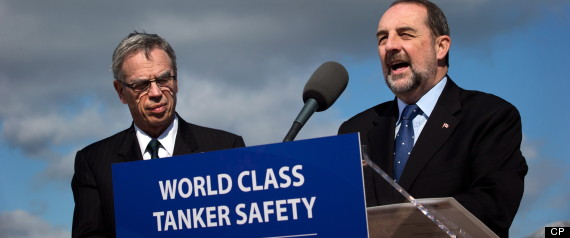
Federal Minister of Transport Lisa Raitt and Minister of Natural Resources Joe Oliver were in Vancouver Tuesday afternoon to release a report about oil tanker safety on the West Coast.

“No project will proceed unless it is safe for Canadians and safe for the environment,” said Oliver.

Monday, May 06, 2013

Adrian Dix: Christy Clark Must Clarify Position On Oil Projects

VANCOUVER - Controversy surrounding increased oil tanker traffic British Columbia's coastal waters is an issue that isn't going away with just over a week to go in the provincial election campaign.

NDP leader Adrian Dix called on Premier Christy Clark to clarify her position on proposed projects that would see more tankers transporting heavy oil to Asia.

Thursday, March 28, 2013

Exxon Valdez anniversary sparks renewed pipeline debate in B.C.

OTTAWA—It was 24 years ago this past Sunday that the Exxon Valdez ran aground in Prince William Sound off the coast of Alaska.

But from the northwest coast of British Columbia to the House of Commons, the tanker spill is being debated anew.

Could it happen here?

Not a chance, says the country’s natural resources minister, Joe Oliver.

Monday, March 25, 2013

Northern Gateway Attack Ads Recall Exxon Valdez Spill

VANCOUVER - The date March 24, 1989 remains a black mark in the minds of environmentalists and coastal communities as they witnessed a massive oil slick unfurl in the waters of Alaska's Prince William Sound.

The Exxon Valdez disaster was one of history's worst oil spills, and twenty-four years later, a B.C. First Nations group is pointing to the tragedy as proof the proposed Northern Gateway pipeline project should not go forward.

Thursday, March 21, 2013

Oil spill clean-up ship hit sandbar en route to government news conference in Vancouver

VANCOUVER - British Columbia’s largest oil spill response vessel got stuck on a sandbar en route to a federal news conference about strengthening Canada’s oil spill defences.

The shipping-industry-funded company in charge of the vessel confirmed it ran aground briefly on an uncharted sandbar off Sand Heads at the mouth of the Fraser River en route from its Esquimalt base to the Coal Harbour news conference. But it denied the ship had a “close quarters situation” with a B.C. ferry near Active Pass earlier Monday – as claimed by the Coast Guard’s marine communications union.

Tuesday, March 19, 2013

Oil Tanker Safety Changes Unveiled By Harper Government

VANCOUVER - The federal government announced changes Monday to improve oil tanker safety off Canadian coasts, and shore up support for several controversial projects that would increase oil exports from British Columbia.

The changes include some new measures — administrative penalties for polluters and mandatory marine response plans for oil terminal operators — and increased frequency for measures already in place, such as annual inspections for all tankers and offshore aerial surveillance.

Saturday, January 12, 2013

Tankers too risky on B.C.’s north coast, oil-spill expert says

A marine consultant involved in B.C. oil-spill issues for a quarter century says the risks of a tanker oil spill associated with Enbridge Northern Gateway are simply too great for the project to proceed.

Gerald Graham of Victoria-based Worldocean Consulting Ltd. said that calculations based on Enbridge’s own research show there is a 8.7-to-14.1-per-cent chance of at least one tanker spill greater than 31,500 barrels over a 50-year period, depending on whether the pipeline has a 525,000 or 850,000 barrel per day capacity.

Sunday, September 30, 2012

No Tankers motion passed by B.C. local governments

Yesterday at the Union of B.C. Municipalities meeting in Victoria, B.C.’s local government leaders passed the strongest ever provincial motion opposing the expansion of oil tanker traffic through B.C.’s coast.

The motion, dubbed “A8” read as follows:

WHEREAS a crude oil spill would have devastating and long lasting effects on British Columbia’s unique and diverse coast, which provides critical marine habitat and marine resources that sustain the social, cultural, environmental and economic health of coastal and First Nations communities;

AND WHEREAS citizens of British Columbia, particularly those living in coastal communities, and First Nations communities and environmental groups have expressed well-founded concerns over the expansion of oil pipelines and oil tankers:

Friday, August 31, 2012

Save the Salish Sea: Respecting Indigenous rights means stopping tar sands tankers

I am, like most of you, a strong supporter of First Nations land and title rights. Increasingly, the international community is waking up to the rights of Indigenous people and their justified desire for sovereignty and self-determination.

This struggle is playing itself out very publicly as First Nations on the west coast of Canada have drawn a line in the sand regarding dangerous pipeline projects. That is the context for the canoe gathering this weekend in the Vancouver harbour, organized by the Tsleil-Waututh Nation and the the Squamish Nation.

Protecting the waters is a sacred trust

Wednesday, August 08, 2012

Enbridge Northern Gateway Pipeline: What Will 500 Extra Tankers Off B.C. Coast Mean?

VANCOUVER - If Enbridge (TSX:ENB) and the Alberta government get their way, an additional 500 tankers could be coming in and out of northern B.C. each year, with each departing ship carrying millions of litres of oil destined for foreign markets.

As each double-hulled tanker makes it way through the Douglas Channel near Kitimat, a tethered tug boat would help keep the massive ship on course. A marine pilot trained on local waters would make sure the vessel navigates safely through the water.

Saturday, August 04, 2012

Trans Mountain: The other Pacific pipeline

It is a sunny Sunday and Vancouver is doing what it does best: looking pretty and post-industrial. Morning lights up the downtown’s glass horizon. A half-dozen scooters rip down the road in a platoon. Cyclists swish past Zipcar lots, kayakers and stand-up paddle surfers ply the waters.

But just a few kilometres away, an oil tanker is preparing to raise anchor and slide into port. Soon, it will open its holds, with a total capacity of 650,000-barrels, to a flush of Alberta oil. After 30 hours of pumping, it will slip away to Long Beach, Calif. Oil tankers are, for now, relatively rare here. A tanker sails into the Vancouver harbour about once a week, docking at the Kinder Morgan-owned Westridge Terminal to accept Alberta crude flowing across the Rockies in the Trans Mountain pipeline.

Monday, April 09, 2012

Oil tankers hottest button on West Coast

Last week's federal budget is raising a lot of eyebrows in B.C. -- especially the vow to speed up the review of Enbridge's proposed Northern Gateway pipeline and tanker project.

Two polls released this past week indicated this is going to be a hot-potato issue for B.C. politicians, and the announcements out of Ottawa only increase the urgency for the province to take a stand one way or another

A Mustel poll commissioned by NDP MP Kennedy Stewart found growing opposition to the Enbridge proposal (although, due to differing methodologies, this is actually hard to back up).

Mustel tracked a question based on a project description designed by Ipsos-Reid on behalf of Enbridge and last asked in December. Here's the wording they used:

"As you may know, Enbridge is the company leading the Northern Gateway Pipelines Project, which is a proposal to build an underground pipeline system between near Edmonton, Alta., and Kitimat, in northern B.C. One pipeline will transport oil to Kitimat for export by tanker to China and other Asian markets. A second pipeline will be used to import condensate (a product used to thin oil products for pipeline transport) to Alberta.

"Based on what you know to date, would you say that you generally support or oppose the Northern Gateway Pipelines Project? Is that strongly or somewhat?"

Thursday, February 23, 2012

Transport Canada OK's Northern Gateway Supertankers

Transport Canada has "no regulatory concerns" with Enbridge's proposed marine operations for the Northern Gateway pipeline, clearing the way for supertankers to carry Canadian crude across the Pacific.

In a statement issued Thursday, Transport Canada said it has finished its review of the proposed tanker traffic that would sail through waters off B.C.'s North Coast, taking crude from the Alberta oilsands to overseas markets in China.

"While there will always be residual risk in any project, after reviewing the proponent's studies and taking into account the proponent's commitments, no regulatory concerns have been identified for the vessels, vessel operations, the proposed routes, navigability, other waterway users and the marine terminal operations associated with vessels supporting the Northern Gateway Project," said Transport Canada.

The $6.6-billion project would see an additional 250 oil tankers arriving at Kitimat each year, which means Transport Canada would have to step up its monitoring, the report said.

Northern Gateway has attracted fierce opposition from First Nations, environmental and other groups who fear an oil spill from the pipeline itself or from tankers sailing through narrow coastal channels could cause grave ecological harm.
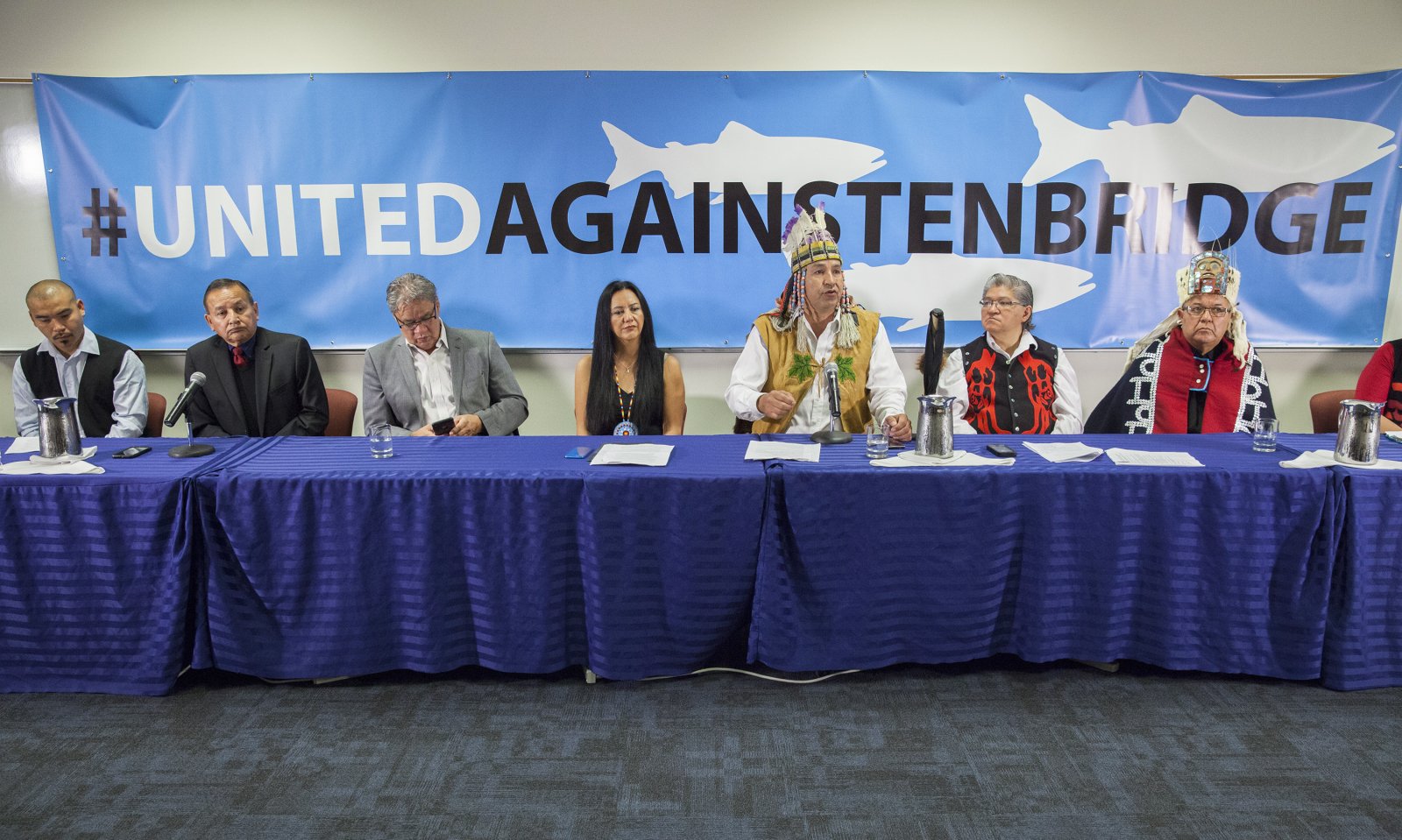
Enbridge gets supertanker nod for Northern Gateway exports


Supertankers can safely carry huge volumes of oil sands crude through the winding waterways that connect Kitimat, B.C., to the open Pacific, a federal review has concluded, giving a boost to efforts to build a new pipeline to the West Coast.

The review by Transport Canada examined the marine passages that would allow the proposed Enbridge Inc. (ENB-T38.900.300.78%) Northern Gateway pipeline to export Alberta oil to buyers in China and California. That $6.6-billion project has become one of the country’s most important industrial initiatives, backed by major energy producers and opposed by a raft of first nations and environmental groups.

Much of the opposition stems from concern over spills in the waters off Kitimat, which is connected to the Pacific through a series of channels and sounds that will take between 10 and 16 hours for a supertanker to navigate. These concerns have been heightened by the memory of the Exxon Valdez disaster, which devastated a similar coastal environment, and by several recent accidents in the region, including the 2006 sinking of the Queen of the North ferry.