Democracy Gone Astray

Democracy, being a human construct, needs to be thought of as directionality rather than an object. As such, to understand it requires not so much a description of existing structures and/or other related phenomena but a declaration of intentionality.
This blog aims at creating labeled lists of published infringements of such intentionality, of points in time where democracy strays from its intended directionality. In addition to outright infringements, this blog also collects important contemporary information and/or discussions that impact our socio-political landscape.

All the posts here were published in the electronic media – main-stream as well as fringe, and maintain links to the original texts.

[NOTE: Due to changes I haven't caught on time in the blogging software, all of the 'Original Article' links were nullified between September 11, 2012 and December 11, 2012. My apologies.]

Showing posts with label Fishing. Show all posts

Saturday, July 28, 2018

For Ukraine’s fishermen, ‘war changed everything’

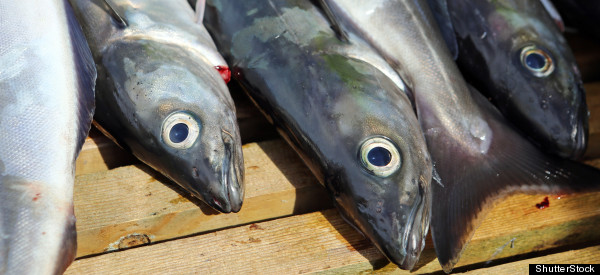
PRYMORSKE, Ukraine — In the idle heat, a hundred eyes stare out from the tangle of fishing nets, the fish drying like tiny slivers of tinfoil under a stifling sun. Plastic buckets, battered hulls and lengths of knotted rope litter an otherwise empty beach. A few wooden dinghies bob on the sea’s flat, mercury surface; white light glares in the haze.

It’s peak fishing season and today’s catch is nothing special: Another hot day on a frozen frontline.

Friday, July 31, 2015

Mass Die-Off of Fish Underscores Dangers of Palm Oil Industry in Guatemala

Crossing the River Pasión today, nothing would appear out of the ordinary: Boats ferry people across the river while a woman washes clothing in the murky brown water. But a little over a month ago, the scene was different. On May 30, residents of the municipality of Sayaxché, in the Guatemalan department of Petén, awoke to find tens of thousands of fish floating in the river. For residents, it was clear who was responsible for the die-off: the local palm company, Reforestadora de Palma del Petén (REPSA), a member of the powerful Olmeca Group.

Sunday, March 22, 2015

Lack of Nation-to-Nation relationship between Canada and Indigenous fishermen causes conflict

On Monday March 9, 2015, a fishing trial began outside a Vancouver Court House.
With the lack of Nation-to-Nation relationships between the First Nation and the Canadian Government, disputes -- in this case fishing disputes -- must be handled by the provincial courts.
The Nuu-chah-nulth Nations are back at the B.C. Supreme Court of Canada in order to secure their Aboriginal rights to fish and sell that fish from their territories on the west coast of Vancouver Island, a deal implemented by the federal government in 2009. That was the plan, anyway.
But for over the past five years, there has been nothing but frustrating discussions and countless meetings with Fisheries and Oceans Canada (DFO) -- meetings that have amounted to nothing but have forced the five Nations to return to Court in early March.

Monday, December 08, 2014

National Energy Board panel’s assurances to Tsawout First Nation ring false

Tsawout First Nation elders testified to the NEB panel that tanker traffic from the twinning of the Trans Mountain pipeline will violate their right to “fish as formerly” under by the Douglas Treaty. It would also violate Section 35 of the constitution, and international law and destroy the First Nation’s ongoing project to revitalize traditional fishing methods.

The Tsawout were known as “the salt water people,” in part due to their unique practice of reef net fishing. They set up nets anchored to the bottom and fixed to canoes in special sites that had the right combination of underwater topography, tidal currents and salmon runs. The method of fishing was taught to them by a young man, a salmon incarnate, who married a Tsawout princess and lived in their village until the couple returned to the sea. Nick Claxton, who holds a Master’s degree in Indigenous Governance, is working a doctoral dissertation on revitalizing reef net fishing at University of Victoria.  All of the traditional reef net sites are adjacent to the tanker route.

Friday, October 24, 2014

Kinder Morgan's Qs on Aboriginal food provokes avalanche of fish photos

Hundreds of aboriginal people -- who apparently really love fish -- took the bait of an impromptu viral social media campaign to submit their favourite fishing pictures, following a Vancouver Observer story last week that reported that pipeline-giant Kinder Morgan had questioned how much a B.C. band still eats fish.

The fish tale began Friday when Kinder Morgan's lawyer had grilled a Kwantlen First Nation band councillor at a National Energy Board hearing in Chilliwack.  The forum is gathering Aboriginal views on the proposed $5.4-billion Trans Mountain expansion pipeline.

“Do you have an estimate in terms of what proportion of Kwantlen members’ diet comes from sources in the Fraser River?” asked Kinder Morgan lawyer Terri-Lee Oleniuk.

Monday, October 01, 2012

Climate Change To Shrink Fish By 2050 As Oceans Warm

OSLO, Sept 30 (Reuters) - Fish are likely to get smaller on average by 2050 because global warming will cut the amount of oxygen in the oceans in a shift that may also mean dwindling catches, according to a study on Sunday.

Average maximum body weights for 600 types of marine fish, such as cod, plaice, halibut and flounder, would contract by 14-24 percent by 2050 from 2000 under a scenario of a quick rise in greenhouse gas emissions, it said.

Saturday, April 14, 2012

Atlantic fishermen fear Ottawa plans to take away their livelihood

Fishermen in Atlantic Canada fear a federal government initiative to “modernize” the multimillion-dollar industry – the region’s single largest private-sector employer – will push them out of their boats and livelihoods for the benefit of big corporations.

Seafood processers, however, say reforms are long overdue, characterizing the Atlantic fishery as an “EI fishery” designed to maximize employment insurance returns and not market returns.

Even the Conservative government in Newfoundland and Labrador, in its Throne Speech this week, called for a “firm resolve to move forward” with reforms.

In January, the Harper government launched a consultation process and released a discussion paper, The Future of Canada’s Commercial Fisheries, which talks about “modernizing fisheries management” but gives no clue as to what it plans to do.

This has Atlantic fishermen on edge.

“It’s what they are not saying,” said Norma Richardson, president of the Eastern Shore Fishermen’s Protective Association, about the government’s initiative.

Thursday, March 29, 2012

Canada Tuna Fishing Blocked From U.S. Waters: Industry Groups

VANCOUVER - The U.S. government has suspended a 31-year-old agreement that allowed Canadian vessels to fish for tuna in American waters, two British Columbia industry groups confirmed Wednesday, with one warning the decision could have a domino effect across the entire West Coast fishery.

Both countries signed a treaty in 1981 that allowed cross-border fishing for albacore tuna, but it expired in 2011. Negotiations to renew the treaty have been overshadowed by concerns from American fishermen, who have complained they were being outfished by Canadians.

American negotiators flew to Ottawa last week and surprised Canadian officials by announcing there will be no reciprocal fishery for 2012 while talks for a revised treaty continue, according to the Canadian Highly Migratory Species Foundation and the B.C. Tuna Fishermen's Association. Both groups say they were informed about the decision earlier this week.

"We got a phone call Monday from Ottawa saying the U.S. delegation visited and said there would not be an agreement for this year," the foundation's Lorne Clayton told The Canadian Press.