Democracy Gone Astray

Democracy, being a human construct, needs to be thought of as directionality rather than an object. As such, to understand it requires not so much a description of existing structures and/or other related phenomena but a declaration of intentionality.
This blog aims at creating labeled lists of published infringements of such intentionality, of points in time where democracy strays from its intended directionality. In addition to outright infringements, this blog also collects important contemporary information and/or discussions that impact our socio-political landscape.

All the posts here were published in the electronic media – main-stream as well as fringe, and maintain links to the original texts.

[NOTE: Due to changes I haven't caught on time in the blogging software, all of the 'Original Article' links were nullified between September 11, 2012 and December 11, 2012. My apologies.]

Showing posts with label Provinces. Show all posts

Monday, March 30, 2015

BMO: Provinces Will Take Back Three-Quarters Of Tories' Tax Cuts

Prime Minister Stephen Harper is undoubtedly hoping that this year’s round of tax cuts and expanded family benefits will make Canadians feel richer as the country heads towards a fall election, but a new report from the Bank of Montreal suggests that may not pan out as hoped.

The Harper government’s tax cuts and expanded family benefits will put some $4.5 billion in Canadians’ pockets this year, but provincial austerity budgets will eat up about three-quarters of that, BMO economist Robert Kavcic estimates.

Tuesday, November 19, 2013

Ottawa digging in for Canada Job Grant fight with premiers

Stephen Harper's government is well down the road to redefining its relationship with the provinces, an approach that jettisons co-operative for confrontational federalism.

Premiers meeting Friday in Toronto would do well to take note.

The latest flashpoint is the proposed skills training program introduced in the federal budget that's supposed to equip Canadians for thousands of highly-skilled jobs that now go unfilled.

Wednesday, October 09, 2013

New Health Minister Ambrose seen as a ‘fixer’ 


Rona Ambrose has a reputation as a fixer within Prime Minister Stephen Harper’s Cabinet and the medical community is hoping she’ll continue to play that role now that she’s been appointed federal Health minister.

Ms. Ambrose (Edmonton-Spruce Grove) has made only a few public appearances and announcements as Minister of Health since being appointed to the file in Mr. Harper’s (Calgary Southwest, Alta.) July Cabinet shuffle. Last week she met with her provincial and territorial counterparts in Toronto for the annual Health ministers conference, where she announced an end to the use of illicit drugs in treating drug addictions under Health Canada’s Special Access Program.

Friday, October 04, 2013

Canada Job Grant Doomed Unless Ottawa Makes Changes, Premiers Say

TORONTO - Unless the federal Conservatives make substantial changes to the Canada Job Grant, the jobs training fund is doomed to failure, provincial leaders said Wednesday.

Ottawa has to be open to changing the program because a "one-size-fits-all" approach to helping more people find jobs isn't going to work, said British Columbia Premier Christy Clark and New Brunswick Premier David Alward.

Thursday, September 26, 2013

Changes to Federal Programs Ice Vulnerable Workers: Provinces

Provincial and territorial labour market ministers expressed concern yesterday that the federal government's proposed changes to nationally-funded job programs could harm the workers most in need of help.

But with little evidence available to the public about how well the current programs are working, it's unclear which level of government is right.

Monday, September 16, 2013

Prime Minister Harper accelerating trend away from provincial consultation

By rarely meeting with the provinces, Prime Minister Stephen Harper is accelerating a trend started by former Liberal prime minister Jean Chrétien in the 1990s of having less consultation between the two levels of government, says former Saskatchewan deputy minister and University of Regina professor Greg Marchildon, one of six authors of the recently-released book, Governance And Public Policy In Canada: A View From The Provinces, published by the University of Toronto Press.
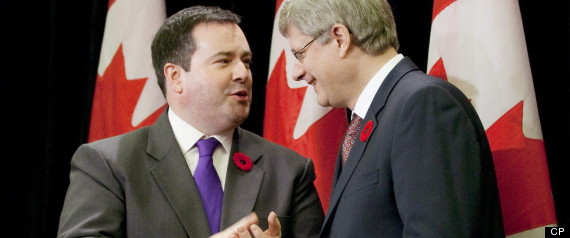
“This is not new, Jean Chrétien limited the number of first ministers’ meetings, although not on the scale of Stephen Harper. Before Jean Chrétien, there were many more meetings, and during the Trudeau period, there were many, many, meetings, partly because of the Constitution,” said Prof. Marchildon.

Tuesday, August 06, 2013

Provinces insist consent required

Provincial governments are taking a dim view of the federal government's latest argument that it can reform the Senate without provincial consent.

After the Harper government filed a legal brief to the Supreme Court of Canada this week, a spokeswoman for Ontario Premier Kathleen Wynne said Ontario's position "is that provincial consent is required" to reform the upper chamber, a sentiment echoed by the government of British Columbia Premier Christy Clark. A spokesman for Clark said "British Columbians should have a say" in what happens to the upper chamber.

Friday, July 26, 2013

Canada Job Grant: Harper Government To Move Forward With Plan Slammed By Provinces

OTTAWA - An internal document suggests Ottawa is preparing to push ahead with key features of its controversial skills-training initiative, despite provincial opposition and calls for flexibility.

The nine-page federal document — entitled "An Offer to Provinces and Territories to Transform and Renew the Labour Market Agreements, and Implement the Canada Job Grant" — was sent to at least one province recently. It appears to retain all the elements of the proposal set out in the March budget.

Friday, April 12, 2013

The CBC rates our hospitals — and the provinces panic

When the country’s public broadcaster starts ranking hospitals, you know something’s changed in Canadian political culture. This week, the CBC launched Rate My Hospital, an interactive tool which allows patients to rate 239 health institutions. The online tool is part of a special report on hospital care by the Fifth Estate, which will be broadcast this Friday, April 12.

The CBC may come late to this party, but its contribution is more than welcome. For decades, the Fraser Institute has released provincial annual rankings of medical wait times; this year the think tank also published a provincial cost-benefit comparison of health care.

Thursday, April 11, 2013

Provinces team up to block CBC's hospital data request

Provincial and territorial health department officials held cross-country meetings and agreed to a "national decision" to deny a CBC request for information about individual hospitals, CBC News has learned.

Documents obtained by CBC's the fifth estate via freedom-of-information requests show that health ministries across Canada kept in regular contact with each other over the course of a month to craft similar responses.

Wednesday, March 27, 2013

Harper: the end of classical federalism?

Although last week’s budget commentary had lots to say about job training, the most important angle to the story barely got aired. Something big is shifting below the new Job Grants Program and it sounds a lot like federal-provincial fault lines. Is this the beginning of the end for the Harper government’s commitment to “classical” federalism?

Prime Minister Stephen Harper’s view of classical federalism can be summed up simply: Good fences make for good neighbours. For example, last year, as Prime Minister Paul Martin’s health accord was reaching its term, everyone expected a round of tough intergovernmental negotiations.

Tuesday, March 26, 2013

The Tories make it clear that they don’t think the provinces can be trusted with job training

When Jim Flaherty threw a wad of cash on the table and walked out of that meeting with his provincial counterparts a year ago December, everyone said it was the end of an era. The provinces complained there had been no negotiations, but that was simply to say the feds had made no demands. Federal transfers would increase in line with the economy, without conditions.

It’s tempting to see the new Canada Job Grant, announced in last week’s budget, in the same, “take it or take it” spirit. There are promises of negotiations, but as before, the feds seem already to have decided what their outcome will be. Only instead of giving the provinces more money, they would be giving them less.

Friday, March 22, 2013

Trudeau predicts federal-provincial friction over Budget 2013

Justin Trudeau, the prohibitive favourite to win the leadership of the federal Liberal party next month, says the new federal budget’s plan for training sets the stage for a friction between the Conservative government and the provinces over job training.

A centrepiece of Finance Minister Jim Flaherty’s budget is a plan he says will “transform” the way Canadians are trained, by establishing a new “Canada Jobs Grant.” Under the plan, Ottawa would provide up to $5,000 for an employee being trained on the job, as long as the employer and the province each put up an equal amount.

Sunday, October 28, 2012

Don’t look to provincial politics for a change from Harper’s vision

VANCOUVER—Connect the dots between the defeated Jean Charest, the departing Dalton McGuinty and the embattled Christy Clark and what you get are three parties whose political capital has been severely depleted by a decade in power.

The symptoms may be specific to each province but the illness that is plaguing the governance of Ontario and British Columbia this fall is not fundamentally different from that which recently claimed the life of Quebec’s three-term Liberal government. And the prognosis for both ailing ruling parties is not promising.

Wednesday, October 03, 2012

Council of Canadians urges premiers to insist on a national pharmacare plan

Canada's health ministers met in Halifax September 27-28 to discuss the 2014 health accord, the recommendations coming out of the Council of the Federations' Innovation working group, and how to work together to improve health care without leadership from the federal government.

In July, the premiers announced that provinces would begin work on bulk purchasing two to three generic drugs. The advantage with bulk purchasing is that provinces and territories can often get a better deal with pharmaceutical manufacturers the more they buy. Currently, provinces and territories negotiate one-on-one with pharmaceutical companies and due to a non-disclosure clause they're often unaware of what the other provinces or territories paid for the same drug from the same manufacturer. Less populous provinces or territories are likely to purchase less of any drug and therefore they pay a higher price per pill.

Wednesday, September 12, 2012

No need for National Energy Strategy, Oliver says

Natural Resources Minister Joe Oliver says there is no need for the provinces to create a National Energy Strategy because Ottawa already has one.

Oliver said Tuesday he has spoken with Alberta Premier Alison Redford on a number of occasions about her plans for a NES. But he said as far as he could tell, Redford mentioned nothing in their conversations that his government wasn't already covering.

Monday, August 13, 2012

Time for premiers to step into void

Federal-provincial relations in Canada often bring to mind schoolyard analogies. But which ones are most appropriate? Are the provincial premiers a bunch of unruly youngsters in need of stern discipline? Or are they more like high school grads, grown up and canny enough to show their old teacher a thing or two? Lately both seem appropriate.

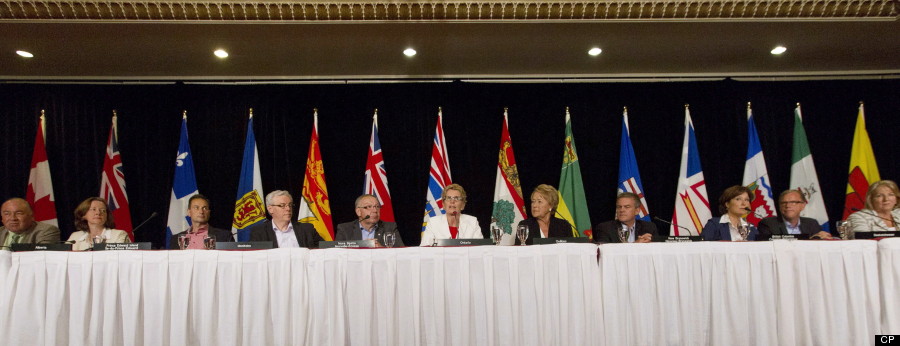
Recent weeks offer plenty of evidence of both the truculence and the maturity of the premiers. At their annual meeting in Halifax at the end of July, the provincial leaders made useful progress in sharing best practices for treating heart disease and diabetes as well as establishing a national bidding process to bring down the cost of generic drugs. All this without assistance from Ottawa.

Monday, August 06, 2012

PM doesn’t want to meet with premiers, doesn’t want ‘a big grandstand’

Prime Minister Stephen Harper, whose political style is to try to keep expectations low and over-perform, didn’t meet with Canada’s first ministers recently in Halifax and won’t meet with them in November on the economy because he doesn’t want it to  “turn into a big grandstand,” say political observers.

A former senior Conservative staffer, who did not want to be identified, said that Mr. Harper (Calgary Southwest, Alta.) is working hard to keep expectations low, which is why he did not take part in the recent premiers meeting of the Council of the Federation meeting in Halifax and will not be taking part in the upcoming finance ministers’ meeting with the provinces also in Halifax.

Thursday, August 02, 2012

Equalization tensions could ‘destroy unity’ in Canada: Ex-Bank of Canada chief David Dodge

OTTAWA — Tensions over wealth-sharing between rich and poor provinces could ultimately “destroy” national unity, former Bank of Canada governor David Dodge argues in an essay published Tuesday by a prominent national think-tank.

Dodge was the co-author of one of two essays published by the Montreal-based Institute for Research on Public Policy underlining concerns about growing wealth disparity as Ottawa and the provinces head into negotiations to renew the current equalization formula agreement, which expires in 2014.

PMO says Harper will not attend first ministers meeting

A spokesman in the Prime Minister's Office said Wednesday that Stephen Harper wouldn't attend a first ministers meeting on the economy, derailing plans by the premiers to bring him back to the table.

The provincial leaders joined together last week in calling on Harper to meet with them in Halifax in November to talk about the state of the world economy and its effects on Canadians.