Democracy Gone Astray

Democracy, being a human construct, needs to be thought of as directionality rather than an object. As such, to understand it requires not so much a description of existing structures and/or other related phenomena but a declaration of intentionality.
This blog aims at creating labeled lists of published infringements of such intentionality, of points in time where democracy strays from its intended directionality. In addition to outright infringements, this blog also collects important contemporary information and/or discussions that impact our socio-political landscape.

All the posts here were published in the electronic media – main-stream as well as fringe, and maintain links to the original texts.

[NOTE: Due to changes I haven't caught on time in the blogging software, all of the 'Original Article' links were nullified between September 11, 2012 and December 11, 2012. My apologies.]

Showing posts with label Volcker Rule. Show all posts

Monday, December 29, 2014

Fed Delays Volcker Rule, Giving Wall Street Another Holiday Gift

WASHINGTON -- Christmas came early for Wall Street this year. The Federal Reserve on Thursday granted banks an extra year to comply with a key provision of the Volcker Rule, a move that gives financial lobbyists more time to kill the new regulation before it goes into effect.

The Volcker Rule is a key element of the 2010 Dodd-Frank financial reform law that bans banks from engaging in proprietary trading -- speculative deals that are designed only to benefit the bank itself, rather than its clients. Thursday's move by the Fed gives banks an additional year to unwind investments in private equity firms, hedge funds and specialty securities projects. The central bank also said it plans to extend the deadline by another 12 months next year, which would give Wall Street a two-year reprieve through the 2016 presidential election.

Thursday, December 19, 2013

Volcker Rule Made Meaningless by Abundant Exemptions

The subject of heated debate in financial circles, the Volcker Rule, which was originally passed as part of the 2010 Dodd–Frank Wall Street Reform and Consumer Protection Act, was finally approved by regulators. It will begin taking effect in April 2014 with full compliance required by July 2015. They say the devil is in the details. Regarding the Volcker Rule, the devil is in the details of its abundant exemptions. These include a laundry list of practices and businesses that mega-banks have performed under one roof, since the 1999 repeal of Glass-Steagall, as well as the myriad perks they won along the way to that power-consolidating event.

Wednesday, December 18, 2013

The Volcker Rule Is a Maddening Case Study in How to Suffocate Wall Street Reform

The so-called Volcker Rule for policing (ha!) banking practices, approved by a huddle of federal regulating agency chiefs last week, is the latest joke that America has played on itself in what is becoming the greatest national self-punking exercise in world history.

First of all (and there's a lot of all), this rule comes in the form of nearly 1,000 pages of incomprehensible legalese embedded in what was already a morbidly obese Dodd-Frank Wall Street Reform (ha!) and Consumer Protection (ha!) Act of 2012 that clocked in at 2,000 pages, not counting the immense rafts of mandated interpretations and adumbrations, of which the new Volcker Rule is but one. These additions were required because the Dodd-Frank Act itself did not really spell out the particulars of enforcement but rather left it to the regulatory agencies to construct the rules -- which they did with "help" of lobbyist-lawyers furnished by the banks themselves. That is, the lobbyists actually wrote the rules for Dodd-Frank and everything in it, which means the banks wrote the rules. Does this strain your credulity? Well, this is the kind of nation we have become: anything goes and nothing matters. There really is no rule of law, just pretense.

Saturday, December 14, 2013

The Volcker Rule: Wins, Losses and Toss-ups

After three years, multiple missed deadlines, and at least 111 meetings between regulators and Wall Street groups (versus only twelve meetings with pro-reform groups), we finally have a final version of the Volcker Rule—and if properly enforced, it will change the business of banking for the better.

The Volcker Rule aims to ensure that banks that enjoy the backing of the federal government and the cushion of customer deposits do not get to make risky bets (or, in the language of the rule, “proprietary trades”). In other words, banks that have a taxpayer-provided parachute don’t get to BASE jump off of mountains for the thrill (and profit) of it.

Thursday, December 12, 2013

Strength of the Volcker Rule Hinges on Implementation

On Tuesday, five federal agencies approved a key financial reform intended to keep banks from making risky bets for their own profit. Known as the Volcker rule, the regulation took three years to finalize and withstood a concentrated lobbying front from Wall Street and business groups.

As recently as last month financial reformers expressed concern that the final rule would leave critical loopholes open and fail to stop banks from engaging in speculative trading, with taxpayers vulnerable to big losses. But after seventy-one pages of official guidelines were unveiled yesterday, reform advocates appear to have won their campaign for a stronger law. But because of critical gray areas in the rule, how much stability it restores to the financial system depends on implementation and enforcement.

Wednesday, December 11, 2013

Two Cheers for the New Volcker Rule

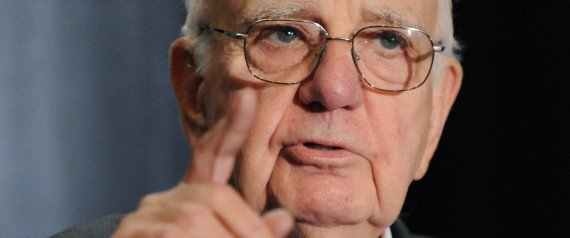
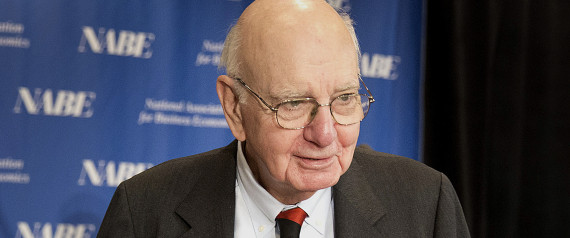
Back in the spring and summer of 2010, I spent a bit of time with Paul Volcker, the grand old man of American finance, who was busy pushing Congress and the Obama Administration to severely restrict the risky trading activities of banks that enjoy government guarantees in the form of deposit insurance and access to emergency-lending resources at the Federal Reserve. Sitting in his reassuringly modest office in Rockefeller Center, the walls lined with books, papers, and mementoes of his fishing trips, the six-foot-seven former chairman of the Fed explained his reasoning in characteristically succinct and direct fashion: “If you are going to be a commercial bank, with all the protections that implies, you shouldn’t be doing this stuff. If you are doing this stuff, you shouldn’t be a commercial bank.”

Volcker Rule Finalized With Wall Street Responsible For Judging Compliance

Big Wall Street banks face an uneasy future after U.S. regulators on Tuesday finalized the Volcker Rule, a measure that attempts to curtail big bets on certain financial instruments. But in a potential concession, the banks themselves largely will be responsible for determining whether they're in compliance.

As Wall Street, Washington and the lawyers that advise them digested the rule, investors appeared to brush off concerns that the final version would dent banks’ profitability. Share prices of banks seen as most vulnerable to the rule rose.

Tuesday, December 10, 2013

Regulators Finalize Stricter Volcker Rule

WASHINGTON (Reuters) - U.S. regulators toughened key sections of the Volcker rule's crackdown on Wall Street's risky trades on Tuesday as they finalized one of the harshest reforms after the credit meltdown.

The rule - named after former Federal Reserve Chairman Paul Volcker, who championed the reform - generally bans banks from proprietary trading, or speculative trading for their own profits.

Tuesday, February 12, 2013

Republicans Seek Volcker Rule Repeal In Exchange For New Wall Street Reforms

WASHINGTON -- After more than four years of blanket opposition to Wall Street reform, House Republicans are finally offering Democrats a deal. But there's a hefty price attached to the GOP's newfound interest in financial regulation. In return for a new policy that would force the Fed to shut down big banks when they run into trouble, Democrats would have to repeal the signature systemic risk reform they passed in 2010, known as the Volcker Rule.

Tuesday, December 18, 2012

House Republicans' Three Big Lies About the Volcker Rule

On December 13th, the House Financial Services Committee convened what is likely to be the last hearing of this Congressional session for the purposes of seeking “alternatives” to the Volcker Rule. The Volcker Rule, as I’ve written previously for The Nation, is a piece of Wall Street reform with a crucial purpose: to create a firewall that bars banks that enjoy FDIC insurance from risky, speculative gambling. On Wall Street, gambling with the firm’s money is known as proprietary or “prop” trading. This is an important rule to get right, and its final version has been delayed far too long. And unfortunately, the aim of this hearing was not implementing the regulation, or even about exploring alternatives to the Rule, but rather dragging things out to the benefit of the banks.

Saturday, May 26, 2012

Don’t bet on the reining in of JPMorgan and its ilk

Thanks to disastrous trades made by “the London Whale,” JPMorgan (JPM-N33.50-0.47-1.38%) lost more than $2-billion (U.S.) and, for a brief, shining moment, CEO Jamie Dimon lost his customary brash arrogance. In a performance worthy of a shamed Japanese executive, he apologized profusely.

Mr. Dimon’s theatrics were, of course, designed to ward off regulations – known as the Volcker Rule – that would ban banks from making speculative trades using funds plucked from insured depositors’ accounts. A ban on proprietary trading, as it is called, would ensure that the taxpayer would not be left on the hook for trades gone so wrong that they would wreck the bank.

Thursday, March 01, 2012

Why Do We Need a Volcker Rule?

As the provisions of the Dodd-Frank financial regulatory law begin to go into effect, federal oversight agencies have issued the first draft of the “Volcker Rule.” Named for former Federal Reserve chairman Paul Volcker, the Volcker Rule says that commercial banks shouldn’t be able to make risky bets with federally insured deposits. The Roosevelt Institute’s Mike Konczal talked to The Nation about what the Volcker Rule is and why it’s necessary. Here’s Mike:

The Volcker Rule is best understood as an attempt to update the New Deal–era Glass-Steagall for the twenty-first century. Glass-Steagall called for a complete separation of investment banking—the activities of underwriting and dealing with stocks and debt—from deposit taking. Consistently weakened from the 1980s onward, Glass-Steagall was fully repealed in the late 1990s to allow Citicorp to merge with an insurance company.

The Volcker Rule seeks to keep activities essential to banking within a safety net, while excluding other, riskier, activities from this safety net. There are a variety of special regulations, and protections, banks get, ranging from federal deposit insurance (known as FDIC) to access to the Federal Reserve’s discount borrowing window, designed to keep the system working through panics. Banks currently engage in a wide variety of non-banking activities with safety net protection. For example, they speculate in currencies and run hedge funds and proprietary trading desks for their own benefit. These activities made the financial crisis worse; one estimate has the major Wall Street firms suffering $230 billion dollars in prop trading losses a year into the crisis. And right now, these activities are subsidized by access to the banking safety net.

Tuesday, February 28, 2012

The Volcker Rule: Return to Sender

Paul Volcker deserves better. In the hands of Tim Geithner's Treasury, the Rule named for Volcker supposedly limiting speculative mischief by government-guaranteed banks is fast becoming a cumbersome parody of itself.

Financial regulatory officials, at the behest of Wall Street, have turned a simple bright line into a convoluted monstrosity. The questionnaire alone, inviting comments, runs 530 pages.

The bankers and their allies in government have succeeded once again in making their financial engineering too complex to regulate. The Volcker Rule, in the spirit of the 1933 Glass-Steagall Act, was supposed to simplify matters. But the regulators are helping Wall Street by adding to the complexity. See Jesse Eisenger's analysis from Propublica.

The capacity of Wall Street to create new mutations of derivatives that are not quite explicitly covered by this or that sub-sub-sub rule is of course endless. In the absence of a clear line, Wall Street can always field more lawyers than the government can spare regulators, and what an awful waste of taxpayer money.

It reminds you of Mad Magazine's Spy vs. Spy, an infinite regress of move and counter-move, giving regulation itself a bad name and providing fodder for Wall Street Journal editorial mockery.

Monday, February 27, 2012

Canada supports dark side of international finance

You can say one thing for the powers that be in the banking industry. They've got a lot of nerve.

This past week, our own finance minister, Jim Flaherty, along with Mark Carney, the Governor of the Bank of Canada, came out strongly in opposition to a modest proposal to regulate the U.S. banking system.

Their interventions followed a concerted effort by American bank lobbyists to spark international opposition to U.S. regulatory reforms.

What a shameful spectacle. Less than four years ago, the world was holding its breath for fear the crisis in the hyper-deregulated U.S. financial system would cause a second Great Depression. Now Canada and other foreign governments, cheered on by U.S. banking interests, are doing their best to block U.S. legislation that would curb the industry's worst excesses.

The initiative Flaherty and Carney attacked is a proposal by Paul Volcker, the former chair of the U.S. Federal Reserve. Simply put, the "Volcker rule" would prevent financial institutions -- U.S. or subsidiaries of foreign banks -- that are backstopped by U.S. taxpayers from behaving like hedge funds and trading for their own account.

Friday, February 24, 2012

Occupy the SEC: Former Wall Street Workers Defend Volcker Rule Against Banks’ Anti-Regulatory Push

The latest offshoot of the Occupy Wall Street movement, Occupy the SEC, has submitted a 325-page comment to the Securities and Exchange Commission that calls on regulators to resist the financial industry’s lobbying efforts to water down the Volcker Rule, a section in the Dodd–Frank Wall Street Reform and Consumer Protection Act, that aims to prevent large banks from making certain kinds of risky, speculative investments. The group is made up of former Wall Street professionals who once worked at many of the largest financial firms in the industry. We’re joined by Alexis Goldstein, who worked as a computer programmer for seven years at Morgan Stanley, Merrill Lynch and Deutsche Bank. She left Wall Street in 2010 and joined the Occupy Wall Street movement soon after the encampment began. "Banks shouldn’t behave like a hedge fund," Goldstein says. "Hedge funds are there to make money and take risky bets, and their clients tend to be these really wealthy clients. And the Volcker Rule sort of says, 'Well, wait a minute. These big banks that enjoy all this government support shouldn't be in that business."

Video
Source: Democracy Now!
Author:

Monday, November 21, 2011

'Occupy The SEC' Scrutinizes The Volcker Rule For Loopholes

NEW YORK -- A handful of protesters at Occupy Wall Street are doing what the authors of a complex piece of financial legislation may have hoped no one would do. They are reading it.

The legislation is a draft of the so-called Volcker rule, a 298-page regulatory document that came out of last year's Dodd-Frank financial reform act. As originally proposed by Paul Volcker, then chairman of the President's Economic Recovery Advisory Board, the rule was aimed in part at preventing federally backed banks from making risky trades that could ultimately cost taxpayers. But in its current form, the Volcker rule is long, dense and -- critics fear -- full of language that affords banks a lot of wiggle room.

"It's a daunting document to look at," said Alexis Goldstein, a former financial sector employee who joined the Occupy protests a few weeks ago.

Yet Goldstein, 30, and a small party of fellow Occupiers are doing just that. The group, known as Occupy the SEC, has been reading through the Volcker rule line by line, flagging passages that seem to enable banks to skirt around regulatory intentions.