Democracy Gone Astray

Democracy, being a human construct, needs to be thought of as directionality rather than an object. As such, to understand it requires not so much a description of existing structures and/or other related phenomena but a declaration of intentionality.
This blog aims at creating labeled lists of published infringements of such intentionality, of points in time where democracy strays from its intended directionality. In addition to outright infringements, this blog also collects important contemporary information and/or discussions that impact our socio-political landscape.

All the posts here were published in the electronic media – main-stream as well as fringe, and maintain links to the original texts.

[NOTE: Due to changes I haven't caught on time in the blogging software, all of the 'Original Article' links were nullified between September 11, 2012 and December 11, 2012. My apologies.]

Friday, June 15, 2012

Why blood is sometimes thicker than flexible labour rules

Close families and flexible labour markets don’t go together. That’s the conclusion of a fascinating paper by a quartet of economists. Their work should be required reading for all European politicians and for the economists and pundits around the world who seek to advise them.

One truth universally acknowledged in Europe today is that the countries of the south need to overhaul their labour markets: Rigid rules on hiring and firing and on the minimum wage are blamed for the high unemployment and subpar economic growth in these states.

ORNGE: PCs push Liberals for new ORNGE probe

The Progressive Conservatives want to cut off $150 million in ORNGE funding unless the Liberal government strikes a powerful probe to fully investigate the troubled air ambulance service.

The Tories say they’ll bring forward the budget motion this Monday. However, they will need support from the New Democrats in order to pull off the drastic move and, so far, the NDP is remaining tight-lipped on which way they’ll turn.

The Liberals were quick to accuse the Conservatives of playing politics with people’s lives over the amendment to the budget bill.

War of 1812 bicentennial glamourizes warfare

I prepped for the outbreak of birthday festivities for the war of 1812 — they start today in Toronto and Monday marks 200 years since the U.S. declared war on the British Empire — by watching the last episodes of this season’s Justified. It’s based on crime writer Elmore Leonard’s stories about Raylan Givens, U.S. marshal. They’re set in Kentucky today, and are highly violent and primitive. All growing boys get a gun, and some girls. “I killed one Crowder, I’ll kill another,” says Raylan’s 18-year-old girlfriend to the meth king of Harlan county. Fathers and sons hate, shoot and kill each other without sentiment, though there are rules. (“I ain’t goin’ anywhere, they killed my daddy,” says Crowder fils. “You came here to kill your daddy,” says Raylan. “That’s different,” is the answer.)

Budget all-nighter frustrates Flaherty: ‘This is, like, chutzpah?’

The two sleep-deprived sides of the House of Commons kept vigilant watch on each other Thursday as bleary-eyed MPs stood up and sat down, over and over again, their 24-hour marathon voting session pushing past the halfway mark.

And after 12 hours of voting, what they had on their feet –  if anything – when they got on them didn’t seem to matter much to anyone.

“I’ve got to get myself comfy, off come the shoes,” NDP MP Glenn Thibeault said, describing one of the many ways parliamentarians sought comfort heading through the 12th hour of voting on more than 800 amendments to Bill C-38.

Federal Budget 2012: MPs forgo shoes, resort to chocolate as marathon voting session continues

OTTAWA—They ate chocolate-covered coffee beans, shared a celebrity gossip magazine, switched their contact lenses for eyeglasses, took off their shoes, fell asleep in public and danced in their chairs.

Some thought the exercise was a waste of time, while others felt their country slipping away one lost vote at a time.

Bleary-eyed MPs continued a marathon round of voting on 871 opposition amendments — combined into 159 votes — to the omnibus budget implementation Bill C-38 that began after midnight on Thursday and was expected to stretch past midnight the following day.

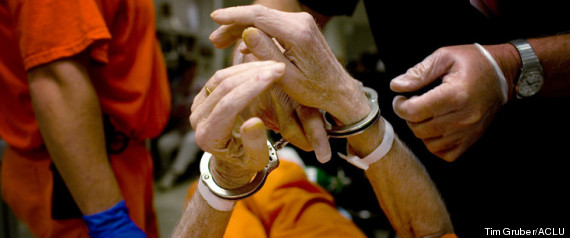
Elderly Inmate Population Soared 1,300 Percent Since 1980s: Report

The population of aging and elderly prisoners in U.S. prisons exploded over the past three decades, with nearly 125,000 inmates aged 55 or older now behind bars, according to a report published Wednesday by the American Civil Liberties Union. This represents an increase of over 1,300 percent since the early 1980s.

More than $16 billion is spent annually by states and the federal government to incarcerate elderly prisoners, despite ample evidence that most prisoners over age 50 pose little or no threat to public safety, the report said. Due largely to higher health care costs, prisoners aged 50 and older cost around $68,000 a year to incarcerate, compared to $34,000 per year for the average prisoner.

Unless dramatic changes are made to sentencing and parole policies, the number of older prisoners could soar as high as 400,000 by 2030, posing a tremendous threat to state and federal budgets, said Inimai Chettiar, a co-author of the report.

"If we continue spending on prisons the way that we are, particularly on this aging population that's low risk, we're going to get to a place where states can't afford to spend on anything else," Chettiar said.

And while elderly inmates released from prison will require medical care and other public services, a fiscal analysis by the ACLU found that states would save an average of more than $66,000 per year for each elderly prisoner they release.

Original Article
Source: huffington post
Author:  John Rudolf 

Quebec Students Spark Mass Protests Against Austerity

What started in the bitter winter as walkout against a $1,625 tuition hike in Quebec has turned into a spring of mass social unrest, sparking Canada’s first major uprising against the austerity measures that have slashed social spending and public services around the world. Now entering its fourth month and with over 160,000 college and university student supporters, the protest is North America’s largest and longest-running student strike to date. But it has become much more than that too. The government’s refusal to negotiate with students over tuition and its new law curbing the right to protest has angered millions and transformed the struggle. Now it is about stopping premier Jean Charest’s Liberal government, who students—heavily backed by labor, civil society and community groups—accuse with tearing up Quebec’s social contract.

Charting the Cozy Connections Between JPMorgan and the Senate Banking Committee

This morning, Jamie Dimon, the CEO of JPMorgan Chase, faced a Senate hearing over more than $2 billion in bank losses caused by risky hedges that blew up. Dimon said that the hedges—investments meant to protect the bank—had grown into "complex and hard-to manage risks." The losses "let a lot of people down, and we are sorry for it."

Many lawmakers are holding up the losses as evidence of the need for stronger financial regulation. The chairman of the Senate banking committee, Tim Johnson, (D-S.D.) in his opening remarks, asked for "a full accounting" of JPMorgan's losses.

Bill 78: Quebec Had No Choice But To Use Emergency Legislation, Lawyer Argues

MONTREAL - Quebec government lawyers defended a controversial protest law that is being challenged in court this week as well as in the streets virtually every night.

The government said Wednesday that Bill 78 is in the public interest and should remain intact until it can be fully argued in court.

Lawyers representing student federations, unions and other groups are trying to get parts of Bill 78 — sections dealing with public protest — temporarily suspended.

Ezra Levant Spanish Profanity: Chiquita Banana Attack Violated Ethics Rules, Broadcast Council Says

Sun News has been ordered to tell its audience it violated Canadian broadcasters’ standards when host Ezra Levant told a Chiquita Banana executive to “f*ck his mother” in Spanish last December.

The Canadian Broadcasting Standards Council, a non-governmental industry body, told the fledgling news network it has to announce twice, during prime time, that it violated broadcasters’ ethical guidelines during a taping of the Levant-hosted The Source last December.