Democracy Gone Astray

Democracy, being a human construct, needs to be thought of as directionality rather than an object. As such, to understand it requires not so much a description of existing structures and/or other related phenomena but a declaration of intentionality.
This blog aims at creating labeled lists of published infringements of such intentionality, of points in time where democracy strays from its intended directionality. In addition to outright infringements, this blog also collects important contemporary information and/or discussions that impact our socio-political landscape.

All the posts here were published in the electronic media – main-stream as well as fringe, and maintain links to the original texts.

[NOTE: Due to changes I haven't caught on time in the blogging software, all of the 'Original Article' links were nullified between September 11, 2012 and December 11, 2012. My apologies.]

Tuesday, December 06, 2011

‘People are scared and morale is devastated’

City manager Joe Pennachetti is telling his staff “a few” of their ranks have already received layoff notices ahead of a council budget vote that could push almost 1,200 people out the door.

But city staff themselves say the number of workers already let go, or about to go, is higher when you factor in people who have been working on contract for as long as a decade and aren’t seeing that contract renewed.

One Toronto Water worker said staff morale is the lowest he’s seen in 26 years, with longtime colleagues suddenly disappearing and others bursting into tears at their desks.

“People are scared and morale is devastated,” said Mark Cooper, a water information officer who works at 275 Merton St.

“Last week three people were let go, and four people the week before that. It feels like anyone on contract, who they can cut without (their having) union protection, is gone.”

Scott Walker Recall Campaign Gets Ugly As Allegations Fly

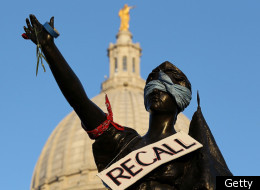
WASHINGTON -- Few races next year will carry as much symbolic importance as the campaign to recall Wisconsin Gov. Scott Walker (R). His push to strip state workers of collective bargaining rights set off a nationwide debate over the role of unions and public workers and reenergized progressives who were still recovering from the tough losses they sustained during the 2010 elections.

Both sides recognize the importance of the campaign, which is also targeting the lieutenant governor and three Republican state senators. Progressive activists are working to collect enough petition signatures to force a recall of the governor, and Walker and his allies have already started an ad campaign in response.

Underlying all this is a scattered amount of isolated, underhanded activity that may be illegal. The past weekend even saw two arrests of recall opponents.

On Sunday, a man was arrested on allegations that he defaced recall petitions.

"The suspect stood in line to sign a petition and when given the petition clipboard, he scribbled out some names on the actual form, and the recall worker took the clipboard back, and he left the scene without any incident," West Bend, Wis. police Sgt. Matt Rohlinger told the Milwaukee Journal Sentinel.

Income Inequality Rising In Most Wealthy Countries, OECD Finds

Scales continue to tip in the rich's favor the world around.

Income inequality -- the gap between a society's richest members and its poorest -- is rising not only in the United States but in most of the world's major economies, according to a new report from the Organization for Economic Cooperation and Development.

Since 1985, income inequality has grown more pronounced in 17 of the 22 countries for which the OECD has long-term data, including Mexico, Italy, Japan, Australia, Canada and the United Kingdom.

The OECD's report suggests an explanation for why the Occupy Wall Street movement has grown from a single protest site in New York's Zuccotti Park to a global phenomenon with hundreds of chapters in dozens of countries. Among other things, protesters in the Occupy movement say they oppose the concentration of wealth in the hands of fewer and fewer people.

In the United States, the incomes of the very highest earners have grown by leaps and bounds over the last quarter century, while remaining more or less flat for the vast majority of the population.

Rural Suicides Follow Medicaid Cuts

Suicide is on the increase in rural America--nowhere so much as in western mountain states like Idaho, Wyoming and New Mexico. Mental health professionals attribute it in part to cutbacks in Medicaid funding, to the recession and to the culture of the rural West.

In Idaho, somebody kills himself every 35 hours, according to a 2009 report to Idaho's governor by the state's Council on Suicide Prevention. Their report calls suicide "a major public health issue" having a "devastating effect" on Idaho's families, churches, businesses and even schools: 65 students aged 10 and 18 killed themselves in a recent five-year period.

Recently, a county sheriff in Bonneville told the Idaho Falls Post Register that his department was getting more suicide calls than in 2010—a year in which 290 Idahoans took their own lives. "We're in a spike right now," he says.

Historically the suicide rate in rural states has been higher than in urban ones. According to the most recent national data available, Alaska has the highest rate, at 24.6 suicides per 100,000 people. Next comes Wyoming (23.3), followed by New Mexico (21.1), Montana (21.0) and Nevada (20.2). Idaho ranks 6th, at 16.5. Suicide is the second-leading cause of death for Idahoans aged 15-34. Only accidents rank higher.

First Nations housing in dire need of overhaul

As the Canadian Red Cross prepares to send aid to the northern Ontario Cree community of Attawapiskat this week to help it deal with a housing crisis that has left more than 100 people living in tents and construction trailers, many other First Nations are struggling with housing problems just as grave.

A recent federal evaluation of First Nations housing concluded that the housing shortage on reserves is severe and only getting worse.

According to the February 2011 report, 20,000 to 35,000 new units would need to be built to meet current demand (the Assembly of First Nations puts the figure closer to 85,000).

Housing on reserves falls short by almost any measure and especially when compared with housing off reserve: 41.5 per cent of homes on reserves need major repairs, compared with seven per cent in non-aboriginal households outside reserves.

Rates of overcrowding are six times greater on reserve than off. In many communities, it's not uncommon to have three generations living under one roof – not by choice but by necessity.

"There are people who are living like sardines in some units," says Jonathan Solomon, chief of Kashechewan First Nation, a fly-in Cree community upstream from James Bay in northern Ontario. "Sometimes, there's 18 to 21 people living in small units, and it creates an unfit home environment."

More Icelandic bankers arrested

Iceland’s special prosecutor into the banking crisis has confirmed that raids have taken place today and that arrests have been made. The Central Bank of Iceland is among the institutions under investigation.

Special Prosecutor, Olafur Thor Hauksson told Visir.is that house searches are taking place in at least three places today as part of investigations into the central bank, MP Bank and Straumur Bank.

Stefan Johann Stefansson at the central bank confirmed that agents were in the building conducting searches; and it has also been confirmed that searches are underway at MP Bank and ALMC (formerly Straumur).

An ALMC spokesman said that the premises are indeed being searched and that the bank’s staff members are doing their best to help.

In other news, four people have so far been arrested today in connection with the special prosecutor’s investigation into Landsbanki.

One of the arrested parties is Jon Thorsteinn Oddleifsson, former Landsbanki treasury boss; and it is not yet known who the other three are.

According to Visir.is sources, the arrests concern a brand new section of the wider case against the bank and are not directly connected to searches and arrests made last week.

Origin
Source: Ice News 

BC First Nations Unite to Declare Province-Wide Opposition to Crude Oil Pipeline and Tanker Expansion

VANCOUVER, COAST SALISH TERRITORIES, BRITISH COLUMBIA, Dec 01, 2011 — First Nations, whose unceded territory encompasses the entire coastline of British Columbia, have formed a united front, banning all exports of tar sands crude oil through their territories, and effectively all of BC – whether by Enbridge in the north or Kinder-Morgan in the south.

Several new First Nations signed the Save the Fraser Declaration in a Vancouver ceremony, expanding First Nations opposition in western Canada to more than 130 Nations. These First Nations form an unbroken wall of opposition from the U.S. border to the Arctic Ocean. This is the first time that First Nations have come together publicly to declare a ban on oil tankers and pipelines on both the north and south coasts.

“North or south, it makes no difference. First Nations from every corner of BC are saying absolutely no tar sands pipelines or tankers in our territories,” said Chief Jackie Thomas of Saik’uz First Nation, a member of the Yinka Dene Alliance. “We have banned oil pipelines and tankers using our laws, and we will defend our decision using all the means at our disposal.”

Canada Aerospace Industry: India, China Competition On The Horizon

MONTREAL - Aerospace industry-watchers said Monday that emerging powers like China and India will eventually compete in aircraft manufacturing -- but it might take a while.

The head of one industry think-tank noted that Hindustan Aeronautics Limited, India's state-owned company, is heavily involved in building helicopters and plans to eventually develop its own fighters and commercial aircraft.

But Suzanne Benoit, CEO of Aero Montreal, added that India still has some catching up to do.

"It's not really a commercial company, it's a government-owned company so maybe the pace of development may not be as fast as other airframers," Benoit said in an interview Monday.

"It's not going to happen tomorrow, but you never know in India. The government may decide to put a lot of money into it."

George Soros: Global Financial System In 'Self-Reinforcing Process Of Disintegration'

Billionaire investor George Soros says that the global financial system is on the brink of collapse.

Developed countries are falling into a "deflationary debt trap," in which consumer spending falls, products become more expensive, tax revenues drop, and sovereign debt grows, Soros said last week, according to the Wall Street Journal. As a result, he said, the global financial system is in a "self-reinforcing process of disintegration."

"The consequences could be quite disastrous," Soros, who was born in Hungary, said at the tenth anniversary of the International Senior Lawyers Project.

Concern is mounting that the eurozone may break up because of market pressure on European sovereign debt, which could plunge Europe into a depression and the world into a recession. Observers are already worried that Europe could suffer a recession and subsequent slow growth for several years even if it averts a eurozone breakup, since products would remain expensive in the euro, making consumers more hesitant to buy them and forcing governments to curtail budgets even more as consumer spending falls.

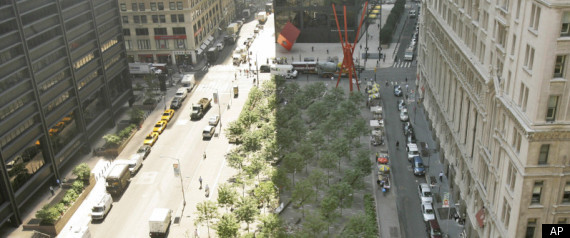
Zuccotti Park Owners, Brookfield Properties, Owe City $139,000

Mayor Bloomberg may have been on the side of Brookfield Properties during the violent raid on Occupy Wall Street in November, but now it's looking like the Mayor will want to distance himself from the owners of Zuccotti Park.

According to the city's Finance Department, Brookfield Properties and its parent company owe $139,000 in unpaid business taxes dating from 2006 to 2009.

Councilman Jumaane Williams, who was wrongly arrested this summer while attending the West Indian Parade, and was arrested again during an Occupy Wall Street protest at the Brooklyn Bridge, pointed out the blatant irony in Brookfield's financial woes:
Occupy Wall Street has been talking about economic disparity...and here's Brookfield Properties, which has worked with the mayor to keep the messengers out, not paying their share.
A spokesman for Brookfield Properties disputed the claims and said the company would be in communication with the city's finance department to work through what they deemed as an error.

Others on the list of city debtors include the Philadelphia Eagles, Rev. Al Sharpton, and the law firm Binder and Binder.

Brookfield, which reportedly owns 6.2 million square feet in midtown and 12.8 million square feet in Lower Manhattan, was at the center of controversy during the city's Occupy Wall Street demonstrations when protestors took over Zuccotti Park to pitch tents for encampment.

At the start of the protests in October, Bloomberg dismissed protestors and insisted that neither Occupy Wall Street nor Brookfield Properties were topics of the Mayor's "pillow talk." However, that quickly changed as protestors gained momentum and national attention, and Bloomberg ordered hundreds of police officers to evict protestors during the middle of the night.

Origin
Source: Huff