Democracy Gone Astray

Democracy, being a human construct, needs to be thought of as directionality rather than an object. As such, to understand it requires not so much a description of existing structures and/or other related phenomena but a declaration of intentionality.
This blog aims at creating labeled lists of published infringements of such intentionality, of points in time where democracy strays from its intended directionality. In addition to outright infringements, this blog also collects important contemporary information and/or discussions that impact our socio-political landscape.

All the posts here were published in the electronic media – main-stream as well as fringe, and maintain links to the original texts.

[NOTE: Due to changes I haven't caught on time in the blogging software, all of the 'Original Article' links were nullified between September 11, 2012 and December 11, 2012. My apologies.]

Thursday, December 15, 2011

Can Citizens United be Rolled Back?

On Thursday evening, residents of 83 towns and cities throughout the country—places like Marietta, Georgia, and East Troy, Wisconsin, and Anchorage, Alaska—will make their way to the home of a friend or neighbor or outright stranger for a night of partying. But these aren't holiday parties. They're the ground-level rumblings of a growing campaign to roll back one of the most game-changing Supreme Court decisions in recent memory, Citizens United v. Federal Election Commission.

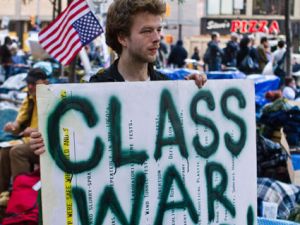
In a year packed with populist uprisings, in which Time named "the protester" its person of the year, the fight against Citizens United is gaining momentum with battle fronts in Congress, statehouses, city halls, and the homes of hundreds of Americans. The decision, handed down in January 2010 by the court's five conservative justices, effectively gave corporations the same free speech rights as people, gutted key provisions of the 2002 McCain-Feingold campaign finance law, and green-lighted unlimited spending by corporations and labor unions in American elections. Fred Wertheimer, president of Democracy 21, a pro-reform campaign finance organization, called it "the most radical and destructive campaign finance decision in Supreme Court history."
There's No Hiding From Tar Sands Oil

Recent debate over the Keystone XL oil pipeline has turned a spotlight on Canada's controversial and oil-rich tar sands, which would be the source of crude oil flowing through the pipe to the Gulf of Mexico. Tar sands oil has faced stiff criticism from environmental groups, which say that it's far dirtier than its Middle Eastern counterpart despite claims from the Canadian government and industry groups that they keep a close eye on environmental impact.

But long before the Keystone XL became a cause célèbre, tar sands oil was already ubiquitous in America: It goes to fuel our cars and corporations' trucking fleets, and it's used in the production of products from aluminum cans to asphalt. Starting last year, San Francisco-based environmental advocacy group Forest Ethics launched a campaign to encourage American companies to boycott tar sands oil and, specifically, the refineries that process it (below).


The 1 Percent, Revealed

"Class happens when some men, as a result of common experiences (inherited or shared), feel and articulate the identity of their interests as between themselves, and as against other men whose interests are different from (and usually opposed to) theirs."—E.P. Thompson, The Making of the English Working Class

The "other men" (and of course women) in the current American class alignment are those in the top 1 percent of the wealth distribution—the bankers, hedge fund managers, and CEOs targeted by the Occupy Wall Street movement. They have been around for a long time in one form or another, but they only began to emerge as a distinct and visible group, informally called the "superrich," in recent years.

Extravagant levels of consumption helped draw attention to them: private jets, multiple 50,000 square-foot mansions, $25,000 chocolate desserts embellished with gold dust. But as long as the middle class could still muster the credit for college tuition and occasional home improvements, it seemed churlish to complain. Then came the financial crash of 2007-08, followed by the Great Recession, and the 1 percent to whom we had entrusted our pensions, our economy, and our political system stood revealed as a band of feckless, greedy narcissists, and possibly sociopaths.

Peter MacKay Hotel Expenses: Minister Stayed At Pricey Accommodations In Munich And Istanbul While Staff Slept More Cheaply

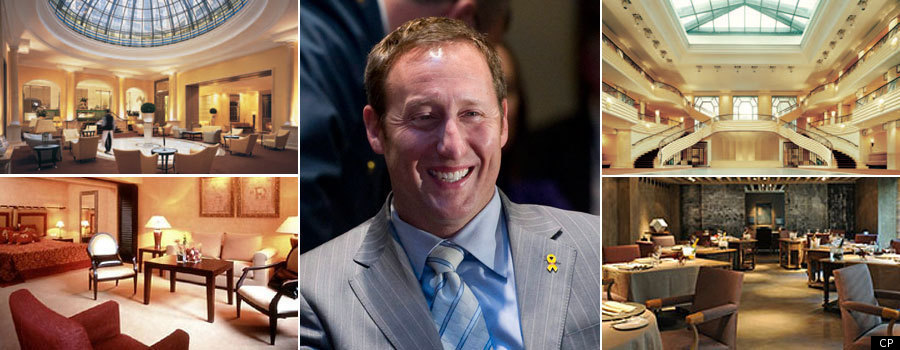
Defence Minister Peter MacKay stayed in posh hotels during trips to Munich and Istanbul while his staff stayed in much less expensive accommodations.

MacKay billed taxpayers $2,904 for the two nights he spent at the Bayerischer Hof while in Munich for a security conference in February 2010, according to information obtained by the Canadian Taxpayers Federation (CTF) under Access to Information. His staff stayed at the Munich Park Hilton for $239 during the same trip, an eight minute drive away from the Bayerischer Hof.

Previous to Mackay's luxurious Munich stay, he had been in Istanbul for a meeting of NATO defence ministers, where he billed taxpayers $2,310 for three nights at the Ceylon Intercontinental Hotel. His bill included roughly $45 for meals. His staff stayed at the same hotel during the trip, but for $276 per night as opposed to $770 per night.

The Bayerischer Hof bills itself as a hotel for those who demand the best, "From queens to Hollywood legends to pop stars." It boasts five star accommodations.

The Ceylon Intercontinental is less exclusive, but also bills itself as a five star hotel.

Asked to comment, MacKay's spokesman Jay Paxton told Huffington Post Canada booked in the same hotel in which the conference was taking place.

Harper laws for Harper government?

Is Canada governed by the rule of law -- or only by the laws acceptable to the party in power? The difference, obviously, is not mere semantics. It is the difference between democracy and authoritarianism, between constitutional government and the exercise of arbitrary power by a temporary partisan majority.

These fundamental issues arise from the Harper Conservatives' decision to abolish the Canadian Wheat Board's single desk without holding a vote among western wheat and barley growers as required by the CWB's statute.

The government believes the laws passed by one Parliament can be repealed by another -- period. But in the opinion of some constitutional scholars -- and Justice Douglas Campbell of the Federal Court -- statutes that bestow specific rights, such as the CWB's provision for a producer vote on any change to the board's mandate, are of a different order and the government is required to respect them.

Justice Campbell quotes Peter Hogg, former Osgoode Hall law dean and author of the definitive work on Canadian constitutional law. He advised governor general Michaëlle Jean during the 2008 prorogation crisis. Hogg's constitutional text, Constitutional Law of Canada, states "while the federal Parliament or provincial legislature cannot bind itself as to the substance of future legislation, it can bind itself as to the manner and form of future legislation... Moreover, the case law, while not conclusive, tends to support the validity of self-imposed manner and form requirements."

Putin rejects rerun of Russian elections

Russian Prime Minister Vladimir Putin rejected calls for a rerun of parliamentary elections, but said recent protests over the results are acceptable as long as protesters remain lawful.

"The results of this election undoubtedly reflect the real balance of power in the country," Putin said in an annual televised chat with the nation on Thursday. "It's very good that United Russia has preserved its leading position."

The prime minister — whose party suffered embarrassing setbacks in recent balloting and who himself will be running for president in March — said that the opposition may take its claims of fraud to the courts.

"The fact that people express their opinion … is an absolutely normal thing as long, of course, as everybody acts within the framework of the law," he said.

But he also accused protest organizers of working to destabilize the country on orders from the West.

"That's a well-organized pattern of destabilizing society," Putin said.

Ford denies claims that Toronto has walked away from union talks

Mayor Rob Ford took the to the airwaves Thursday morning to reject claims that the city has walked away from the bargaining table with its outside workers.

Speaking on CP24, the mayor said any accusation that City Hall has cut off negotiations with CUPE Local 416 are “factually incorrect.”

“We didn’t walk away from the table,” he told interviewer Stephen LeDrew. “We’re bargaining in good faith. That’s what we want. That’s what the taxpayers want. If the other side wants to spread stories, I can’t help that.”

The mayor was responding to a press release issued by Local 416 late Wednesday contending that city negotiators had dropped talks with the union and filed for conciliation after the union rejected a proposal to replace some full-time workers with part-time workers across multiple city divisions. Such a move would push the city one step closer to a strike or lockout in January, an outcome both union and city sources say is inevitable.

If a province-appointed conciliator cannot hammer out a deal between the parties, the Minister of Labour will issue a “No Board” report, giving both sides 17 days before they’re in a legal strike or lockout position.

“We have been and remain ready to bargain, but the city’s approach has been to use the process in an effort to provoke Local 416 and our members into a reaction,” said Mark Ferguson, president of Local 416, in the release. “Let me be perfectly clear. Our members understand what is at stake for our community and we will not be provoked.” A request for conciliation is tantamount to declaring a stalemate in collective bargaining.

MacKay spent $1,450 a night while staff settled for $275 hotel rooms

The Canadian Taxpayers Federation is accusing Defence Minister Peter MacKay of living like a king while attending conferences in Europe.

The watchdog group has uncovered hotel bills through access-to-information laws that show the minister spent $1,452 a night for a two-night stay at a luxury hotel in Munich and $770 a night for three nights in Istanbul, Turkey.

Gregory Thomas, national director of the taxpayers federation, says the bills go beyond what most people would consider reasonable and pointed out that, in the case of the 2010 Munich visit, the Defence Minister’s staff had rooms in the same hotel for $276 a night.

He says his group decided to file an access request for Mr. MacKay's expenses after it was revealed in September that the Defence Minister had a search-and-rescue helicopter pick him up from a Newfoundland fishing lodge.

Mr. Thomas denies that the group is singling anyone out and says that the federation has requests in on other ministers as well.

He says cabinet ministers shouldn't be expected to stay in “dumps” when they travel, but the federation believes Mr. MacKay could have gotten a room for the same cost as his staff.

Origin
Source: Globe 

TransCanada to boost Keystone XL pipeline

Buoyed by renewed pledges of customer support, TransCanada Corp. (TRP-T43.100.491.15%) said on Thursday it not only wants to proceed with its stalled Canada-to-Texas Keystone XL oil pipeline but to undertake a $600-million (U.S.) expansion and extension.

The company is betting its proposed expansion of the original $7-billion plan to carry Alberta oil sands crude to the Gulf Coast will hammer home Keystone’s economic benefits to politicians and trump the environmental worries that have prompted a lengthy delay in its U.S. approval process.

TransCanada said shippers for Keystone XL, target of vocal protests by green groups and Hollywood celebrities for much of 2011, have backed a 19-per-cent increase in capacity as well as plans to build an extension to Houston-area refineries.

The move, which is subject to the delayed regulatory approval, would boost capacity for the oil sands crude to 830,000 barrels a day from 700,000.

It would also double the refining capacity on the Gulf Coast accessable by Keystone XL, the Calgary-based company said. It expanded the proposal after an “open season” in which customers made conditional shipping commitments.

The beefed-up proposal has no bearing on the U.S. State Department’s deliberations on approving the project, TransCanada spokesman Terry Cunha said.

Rob Ford: Land transfer tax will be reduced next year


Mayor Rob Ford says the land transfer tax will be reduced next year, perhaps by 25 per cent.

During his election campaign, Ford promised to abolish the tax immediately upon taking office. Late in the campaign, he said he might have to wait until 2012. He has hedged further as mayor, promising to abolish the tax by the end of his four-year term.

In an interview with CP24’s Stephen LeDrew on Thursday morning, he said, “We’re going to start working on that this year.”

“I can’t say we’re gonna wipe it out this year, but it might be a quarter this year, a half next year, or — you know, but we’re gonna do it piece by piece. You’re gonna see a portion of the land transfer tax, I don’t know how much right now, be gone by the end of next year,” Ford said.

Ford has repeatedly argued that Toronto does not have the money to pay for its programs and services even with the lucrative tax, which is expected to generate about $300 million in 2011. He will face stiff council resistance if he attempts to reduce it.