Democracy Gone Astray

Democracy, being a human construct, needs to be thought of as directionality rather than an object. As such, to understand it requires not so much a description of existing structures and/or other related phenomena but a declaration of intentionality.
This blog aims at creating labeled lists of published infringements of such intentionality, of points in time where democracy strays from its intended directionality. In addition to outright infringements, this blog also collects important contemporary information and/or discussions that impact our socio-political landscape.

All the posts here were published in the electronic media – main-stream as well as fringe, and maintain links to the original texts.

[NOTE: Due to changes I haven't caught on time in the blogging software, all of the 'Original Article' links were nullified between September 11, 2012 and December 11, 2012. My apologies.]

Showing posts with label Financial Crisis. Show all posts

Wednesday, June 24, 2015

Greece Rejects Creditors' Proposal, Calls Plans 'Absurd'

ATHENS, June 5 (Reuters) - Greek Prime Minister Alexis Tsipras on Friday spurned "absurd" terms of proposed aid from lenders and delayed a debt payment to the International Monetary Fund, prolonging an impasse that threatens to push Greece into default and out of the euro zone.

In a defiant speech aimed at winning parliament's backing for his rejection of the austerity-for-aid package, Tsipras balanced indignation with confidence that a deal was "closer than ever before" to keep his country inside the currency bloc.

Sunday, January 29, 2012

Euro crisis, protest movements shape Davos meeting

Europe's crippling debt crisis dominated the world's foremost gathering of business and political leaders, but for the first time the growing inequality between the planet's haves and have-nots became an issue, thanks largely to the Arab Spring uprisings, the Occupy movement and other protests around the globe.

The mood at the end of the five-day meeting in Davos was somber, and more than 2,500 VIPs headed home Sunday concerned about what lies ahead in 2012. Plenty of champagne flowed in this alpine ski resort — but the atmosphere was flat and the bubbling enthusiasm of some past World Economic Forums was noticeably absent.

Despite some guarded optimism about Europe's latest attempts to stem the eurozone crisis, fears remain that turmoil could return and spill over to the rest of the world. And there were no answers to the widening inequality gap, but a mounting realization that economic growth must include the poor, that job creation is critical, and that affordable food, housing, health care and education need to part of any solution.

Just before the forum began, the International Monetary Fund reduced its forecast for global growth in 2012 to 3.3 percent from the 4 percent pace it projected in September. Many other economic forecasters also predict a slowing economy, including New York University's Nouriel Roubini, who is widely acknowledged to have predicted the crash of 2008 and who said he might be “even slightly more bearish” on the new IMF forecast.

Wednesday, December 07, 2011

A hitchhiker’s guide to the global financial meltdown

Lost in the maze of the great Save Europe debt rescue?

You should be – the whole exercise is no more than an extension of the same snake oil economics that caused the meltdown in the first place. And where is it all going? To capitalism without capital and democracies without democracy.

Here is the hitchhiker’s guide to the universe of the global financial meltdown.

We now have the central banks of foreign countries on different continents offering to “help” the beleaguered Eurozone. Having failed to convince Germany to “pool” its wealth with the debt of its profligate southern cousins to avoid a giant Euro-pouff, the world is now willing to spread that debt globally by easing up the flow of US dollars to cash-strapped European banks.

This is because the European banks are not lending to each other. Instead, they are making huge deposits in the European Central Bank (ECB) – just like U.S. banks are making deposits at the Federal Reserve and getting interest. The only thing that these troubled European banks care about is the European Stability Fund (ESF), the backstop of last resort that’s supposed to bail out troubled banks and even countries. They should be happy. The Euro finance ministers have all but decided to raise the draw of the fund quite a bit, from 440 billion to over a trillion euros. Trouble is, no one has actually raised the money yet for the big Top Up. The solution is really another problem – a flood of more printed money.

Friday, December 02, 2011

The Self-Inflicted Recession


There are simple solutions the European Central Bank can yet pursue to avoid a systemic crisis.


The economic news out of the eurozone is getting worse every day, and so is the contagion to the rest of the world. The OECD (Organization for Economic Co-operation and Development), the club of 34 mostly high-income countries, has now lowered its projection for eurozone growth for 2012 from two per cent (in May) to just 0.2 per cent. According to its report, the 17-member eurozone economy already “appears to be in a mild recession.” For the U.S., the forecast for next year was lowered from three per cent to 2.1 per cent.

Forecasts for China, India, and Brazil have also been lowered significantly since May. From Asia to Latin America, the problems of the eurozone are reverberating as international banks contract credit, big investment projects are cancelled or postponed, stock markets and real-estate prices fall, and investor and consumer confidence drops.

Tuesday, September 06, 2011

Odds of a second credit crash rising

In Crosstown Traffic, Jimi Hendrix sang: "can't you see my signals turn from green to red / And with you I can see a traffic jam straight up ahead." In global financial markets, the signals have changed from green to red.

But rather than a simple traffic jam, a full scale credit crash may be ahead.

Wednesday, August 24, 2011

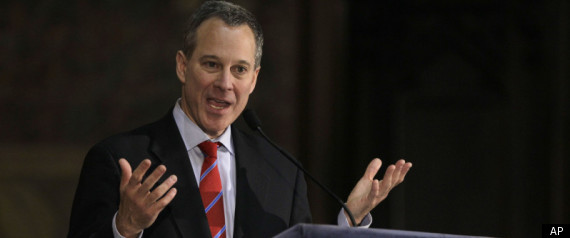
New York Attorney General Kicked Off Government Group Leading Foreclosure Probe

WASHINGTON -- New York Attorney General Eric Schneiderman on Tuesday was kicked off the committee leading the 50-state task force charged with probing foreclosure abuses and negotiating a possible settlement agreement with the nation's five largest mortgage firms, according to an email reviewed by The Huffington Post.

Schneiderman was one of roughly a dozen state attorneys general leading the talks with the five companies, alongside representatives of the U.S. Department of Justice, the Department of Housing and Urban Development and other federal agencies. The government launched the negotiations in the spring after widespread reports of foreclosure irregularities, such as so-called "robo-signing" and illegal home seizures, emerged.

Tuesday, August 16, 2011

What financial crises teach us about economic democracy

The left can learn an important lesson from the financial upheavals that are becoming routine these days. As elites scramble to confront each successive crisis, they prove by example that which they consistently deny: there is an alternative to the dictates of the free market.

One of the most politically disempowering aspects of neoliberal capitalism is the mantra that we were powerless to resist economic forces. We are constantly told that there is no help for our economic complaints. The free market created the situation, and market forces reign supreme.

In particular, governments are portrayed as powerless to override the dictates of the market. Politicians supposedly have no power to resist the punishing discipline of the invisible hand. Sorry for your troubles, have a nice day.

Thursday, July 14, 2011

GAO Report On Proprietary Trading Slammed By Senate Democrats As 'Misleading'

A new government report on banks' controversial practice of trading and investing for their own profit was condemned Wednesday by congressional Democrats who called the practice "woefully incomplete" and "misleading," adding that it failed to reckon with the risks to the broader financial system.

The Volcker Rule, which required banks to sell off their operations that engaged in this so-called proprietary trading, was one of the most contentious elements of financial regulatory reform last year. Proponents argued that the rule was necessary to prevent banks from profiting at the expense of their customers and, ultimately, American taxpayers who stepped in when their complex bets on mortgages went bad. Banks complained that the rule would hurt their profits, while at the same time arguing that the extent of such speculation was not big enough to pose a risk to the financial system. The Government Accountability Office was brought in as something of a referee, commissioned to conduct a study to assess the true extent of such trading practices and whether losses in that area can contribute to the instability of financial institutions.

The GAO report released Wednesday appeared to give ammunition to Wall Street by concluding that such trading only constitutes a small share of its revenue and, thus, does not present much of a risk to the financial system. Critics, including the primary authors of the provisions that limit such activity, countered that the study was flawed because it failed to grapple with the full extent of banks' trading. The report could lead to momentum against enforcing the Volcker rule.

Sens. Jeff Merkley (D-Ore.) and Carl Levin (D-Mich.) sent a strongly worded letter to the GAO, criticizing the auditor for not looking at the full scope of proprietary trading operations. The report was "woefully incomplete," said the pair because it only collected data from the six largest banks' stand-alone units, where only a fraction of such trading occurs, rather than from across all bank divisions.

Full Article
Source: Huffington 

Tuesday, June 14, 2011

Obama warns of 2nd financial crisis

Congress must raise the American national debt ceiling or risk causing another global financial crisis, says U.S. President Barack Obama.

In an interview Tuesday with NBC's Today show, Obama said "the full faith and credit of the United States is the underpinning not only of our way of life, it's also the underpinning of a global financial system. We could actually have a reprise of a financial crisis, if we play this too close to the line. So we're going be working hard over the next month," he said.

But Obama also expressed confidence that Republican leaders want to avoid such a situation and said he expected lawmakers will reach agreement on how to increase the debt limit "in a sensible way."

The government has said it will exceed its $14.3-trillion debt ceiling on Aug. 2.

Later in the day, the chairman of the U.S. Federal Reserve, Ben Bernanke, urged Republicans to support a vote to raise the ceiling. He said threatening to block the increase to gain deeper cuts in federal spending could backfire and worsen the economy.

Bernanke, in a speech in Washington, renewed warnings that even a short delay in making payments on the nation's debt would cause severe disruptions in financial markets, damage the dollar and raise serious doubts about the nation's creditworthiness.

Full Article
Source: CBC News 

Thursday, June 02, 2011

Reckless Endangerment: How Outsized Ambition, Greed, and Corruption Led to Economic Armageddon

A prominent Wall Street analyst predicted this week that not a single top executive at Goldman Sachs will face criminal prosecution for the company’s role in causing the financial meltdown of 2008. “I think there is a genuine sense out there that there are two sets of rules: one for big and powerful institutions that are deemed to be too powerful to fail, and the rest of us, Main Street,” says our guest Gretchen Morgenson, the Pulitzer Prize-winning business reporter who has written extensively on how the U.S. government has failed to prosecute any of the top figures who played a role in the economic crash. Morgenson and Joshua Rosner are co-authors of the new book Reckless Endangerment: How Outsized Ambition, Greed, and Corruption Led to Economic Armageddon.