Democracy Gone Astray

Democracy, being a human construct, needs to be thought of as directionality rather than an object. As such, to understand it requires not so much a description of existing structures and/or other related phenomena but a declaration of intentionality.
This blog aims at creating labeled lists of published infringements of such intentionality, of points in time where democracy strays from its intended directionality. In addition to outright infringements, this blog also collects important contemporary information and/or discussions that impact our socio-political landscape.

All the posts here were published in the electronic media – main-stream as well as fringe, and maintain links to the original texts.

[NOTE: Due to changes I haven't caught on time in the blogging software, all of the 'Original Article' links were nullified between September 11, 2012 and December 11, 2012. My apologies.]

Showing posts with label EPA. Show all posts

Saturday, October 24, 2015

As Underground Fire Smolders Near Radioactive Waste, EPA Dismisses Concerns

A St. Louis-area community is on edge as a 5-year-old fire burning underneath a landfill threatens to interact with nearby nuclear waste, with potentially deadly consequences.

Residents in Bridgeton, Missouri, met in a packed church Thursday to discuss a solution to the growing problem that has county and school officials talking emergency evacuation plans, according to Fox 2 Now.

Wednesday, August 26, 2015

The Clean Power Plan Is Barely Better Than Kyoto; IPCC Says: We Must Remove CO2 From the Atmosphere

The EPA's Clean Power Plan is 12 percent more stringent than the Kyoto Protocol, yet since 1978, the US has emitted as much carbon dioxide as we emitted in the previous 228 years. Globally, since 1984, our civilization has emitted as much carbon dioxide as in the previous 236 years.

The new EPA carbon regulations in the Clean Power Plan require about the same carbon dioxide emissions reductions as what was proposed at the Rio Earth Summit in 1992, when we as a global society first recognized that climate pollution was a problem. What resulted was the Kyoto Protocol, and its proposal to limit carbon dioxide emissions to 7 percent below 1990 levels in the US and similar levels in other developed countries.

Attorneys General File Petition To D.C. Court To Block EPA Carbon Rule For Power Plants

WASHINGTON, Aug 13 (Reuters) - Fifteen state attorneys general petitioned a federal court in Washington on Thursday to block new U.S. rules to curb carbon emissions from power plants, in the first of several expected legal challenges to the Obama administration measure.

States that oppose the Environmental Protection Agency's Clean Power Plan filed for the stay in the U.S. Court of Appeals for the D.C. Circuit. The states asked for a ruling by Sept. 8, one year before they need to submit compliance plans to the EPA.

Saturday, August 22, 2015

EPA Accidentally Spills Millions Of Gallons Of Waste, Turning River Orange

DENVER (AP) — The mustard-colored muck that spilled from a Colorado mine and surged into a river contains heavy metals including lead and arsenic, federal environmental officials confirmed Friday, but they didn't immediately discuss amounts in the water or health risks.

The spill also contained cadmium, aluminum, copper and calcium, the Environmental Protection Agency said. During a public meeting in Durango, EPA Regional Director Shaun McGrath did not mention whether the elements posed a health hazard but said local authorities were right to close the Animas River to human activities.

Tuesday, June 30, 2015

The Supreme Court Just Delivered A Victory To Coal Plants That Want To Emit Unlimited Mercury

Power plants may continue to be able to emit unlimited mercury, arsenic, and other pollutants thanks to the Supreme Court, which on Monday took steps toward invalidating the first-ever U.S. regulations to limit toxic heavy metal pollution from coal and oil-fired plants.

In a 5-4 ruling, the Supreme Court found fault with the Environmental Protection Agency’s Mercury and Air Toxic Standards, commonly referred to as MATS.

Saturday, June 27, 2015

EPA Report Puts a Staggering Price Tag on Climate Inaction

According to a report released Monday by the Obama administration, doing nothing to rein in greenhouse gas emissions would cost the United States billions of dollars and thousands lives.
The findings come as part of an attempt by the Environmental Protection Agency to quantify the human and economic benefits of cutting emissions in an effort to reduce global warming. The report is the latest piece of President Obama's recent climate push and provides a tool that he hopes to use in negotiations at the UN climate talks in Paris later this year.

Wednesday, April 08, 2015

The Senate’s Biggest Climate Deniers Are Demanding The EPA Explain Climate Models To Them

A group of Senate Republicans notorious for denying climate science sent a letter to the Environmental Protection Agency on Wednesday, demanding that the agency explain the science it used to justify proposed regulations on carbon dioxide emissions. Much of the letter asks for the EPA to compare climate projections with data about what has actually happened, suggesting that if the projections have been wrong, they shouldn’t be used to make inferences about climate change in the future.

Sunday, March 29, 2015

This EPA Rule Will Save Thousands of Lives—if the Supreme Court Upholds It

Few regulatory battles have gone on as long as the 25 years it's taken for the Environmental Protection Agency to regulate mercury, arsenic and other toxic pollution from large power plants. Before it finally takes effect next month, the EPA's mercury rule will face its final obstacle Wednesday in arguments for Michigan vs. EPA at the Supreme Court.

Hundreds of thousands of people have died because of the delay. While the vast majority of power plants already have the pollution equipment to meet the rule, the regulation in full effect will annually prevent as many as 11,000 premature deaths and 130,000 cases of asthma. A rule that costs $9.6 billion a year will deliver public health benefits up to 10 times as much—worth anywhere between $37 billion and $90 billion—to say nothing of the suffering prevented. The EPA targets coal-fired power plants because the sector is responsible for half of all U.S. mercury emissions and 62 percent of arsenic emissions. On a day to day basis, these emissions can irritate the eyes, skin, and breathing. Over time, they poison the lungs and kidneys and cause birth defects.

Tuesday, March 03, 2015

Another Attempt To Tell The EPA What Science It Can Use From House Republicans

Two very special bills are scheduled for consideration in the House of Representatives on Tuesday: one is called the Secret Science Reform Act, and the other is called theScience Advisory Board Reform Act. Taken together, these bills would significantly change how the Environmental Protection Agency uses science to craft regulations intended to protect the environment and public health.
If it became law, the “Secret Science” bill would prohibit the EPA from using science that includes private data, or data that can’t be easily reproduced. Bill sponsor Lamar Smith (R-TX) says this would stop “hidden and flawed” science from being the basis of EPA regulations, though many scientific organizations have disagreed with the characterization of their data.

Wednesday, February 04, 2015

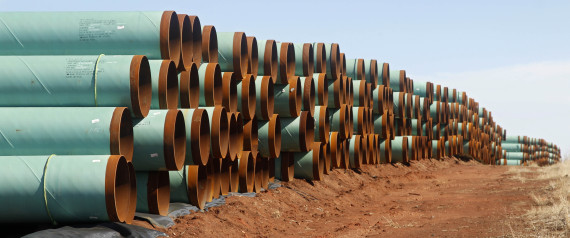
EPA Comments Challenge State Department Conclusions On Keystone's Climate Impacts

WASHINGTON -- The Environmental Protection Agency issued comments on the State Department’s environmental analysis of the Keystone XL pipeline, stating that development of the Canadian oil sands “represents a significant increase in greenhouse gas emissions" compared to other types of oil.

The State Department issued its Final Supplemental Environmental Impact Statement (FEIS) in January 2014. Agencies were given time to comment on the analysis, which was extended while the administration awaited a decision in a legal case challenging the proposed pipeline route through Nebraska.

Wednesday, November 26, 2014

House Passes Bill That Makes It Harder For Scientists To Advise The EPA

While their Senate colleagues were engaged in a fiery debate over the fate of the Keystone XL pipeline, the House on Tuesday quietly passed a bill that environmentalists say would hamper the Environmental Protection Agency’s ability to use the best scientific information when crafting regulations to protect public health and the environment.

The House voted 229-191 to pass H.R. 1422, which would change the rules for appointing members to the Science Advisory Board (SAB), a group that gives scientific advice to the EPA Administrator. Also called the Science Advisory Board Reform Act, the bill would make it easier for scientists with financial ties to corporations to serve on the SAB, prohibit independent scientists from talking about their own research on the board, and make it more difficult for scientists who have applied for grants from the EPA to join the board.

Tuesday, November 11, 2014

Mitch McConnell Says His Top Priority Is To ‘Get The EPA Reined In’

On Thursday, incoming Senate Majority Leader and Kentucky Republican Mitch McConnell said that when it comes to serving his home state, his top priority is “to try to do whatever I can to get the EPA reined in.”
In his first one-on-one interview since his landslide re-election for a sixth term, McConnell told the Lexington Herald-Leader that he is convinced that coal has a future and that he feels a “deep responsibility” to stop the EPA from regulating carbon dioxide emissions at coal-burning power plants. He said he won a number of coal-producing counties for the first time this election, but that it was a “disappointment” that the state House didn’t go to the GOP on Tuesday night as it would have helped him in his crusade to block the Obama administration’s efforts to promote low carbon, clean energy.

Tuesday, November 26, 2013

U.S. Methane Study Says Emissions 50 Percent Higher Than EPA Estimates

WASHINGTON (AP) — The United States is spewing 50 percent more methane — a potent heat-trapping gas — than the federal government estimates, a new comprehensive scientific study says. Much of it is coming from just three states: Texas, Oklahoma and Kansas.

That means methane may be a bigger global warming issue than thought, scientists say. Methane is 21 times more potent at trapping heat than carbon dioxide, the most abundant global warming gas, although it doesn't stay in the air as long.

Monday, September 09, 2013

EPA Quietly Withdraws Two Proposed Chemical Safety Rules

WASHINGTON -- The Environmental Protection Agency this week quietly withdrew two draft rules dealing with the regulation of chemicals. The potential rules were in limbo at the Office of Management for several years.

One of the rules was a proposal to add Bisphenol A (BPA), a chemical included in many water bottles and other plastic products that has been linked to a number of potential health concerns, to the list of "chemicals of concern" that would be subject to more scrutiny. The EPA also proposed listing eight different types of phthalates, another group of chemicals often used in plastic products, and several types of flame retardants known as polybrominated diphenyl ethers (PBDEs).

Tuesday, April 23, 2013

EPA once again criticizes State Department's review of Keystone XL pipeline

WASHINGTON - The powerful U.S. Environmental Protection Agency has once again rebuked the State Department over its positive environmental assessment of TransCanada's proposed Keystone XL pipeline.

In a lengthy, highly technical letter sent Monday to the top State Department officials overseeing the pipeline permit process, the EPA raises serious concerns about the project's carbon footprint and criticizes the department's draft analysis.

Friday, April 19, 2013

West Fertilizer Co. Told The EPA There Was 'No' Risk Of Explosions: Report

Officials at the West Fertilizer Co. plant where a massive explosion killed as many as 15 people and injured more than 160 on Wednesday told the Environmental Protection Agency and local authorities that the factory presented no risk of explosion.

The company wrote that there was “no” risk of fire or explosion on a required emergency planning report, according to a review of the documents by the Dallas Morning News.

Wednesday, January 16, 2013

EPA's Water Contamination Investigation Halted In Texas After Range Resources Protest

WEATHERFORD, Texas (AP) — When a man in a Fort Worth suburb reported his family's drinking water had begun "bubbling" like champagne, the federal government sounded an alarm: An oil company may have tainted their wells while drilling for natural gas.

At first, the Environmental Protection Agency believed the situation was so serious that it issued a rare emergency order in late 2010 that said at least two homeowners were in immediate danger from a well saturated with flammable methane. More than a year later, the agency rescinded its mandate and refused to explain why.

Monday, January 07, 2013

Lisa Jackson's EPA Resignation A Protest Against Approval Of Keystone Pipeline?

WASHINGTON - The head of the U.S. Environmental Protection Agency resigned abruptly last week, reportedly to protest the Obama administration's apparent plans to approve TransCanada's Keystone XL pipeline in the coming months.

The American environmental movement is abuzz following a New York Post report that Lisa Jackson suddenly quit the post because she doesn't want to be at the helm of the agency when the White House rubber-stamps the controversial project.

EPA's Fracking Study May Dodge Water Contamination Frequency Issue

PITTSBURGH (AP) — An ongoing U.S. Environmental Protection Agency study on natural gas drilling and its potential for groundwater contamination has gotten tentative praise so far from both industry and environmental groups.

Glenn Paulson, the EPA's science adviser, describes the project as "one of the most aggressive public outreach programs in EPA history."

Wednesday, December 12, 2012

The EPA Is Letting Energy Companies Pollute Our Drinking Water

Federal officials have given energy and mining companies permission to pollute aquifers in more than 1,500 places across the country, releasing toxic material into underground reservoirs that help supply more than half of the nation's drinking water.

In many cases, the Environmental Protection Agency has granted these so-called aquifer exemptions in Western states now stricken by drought and increasingly desperate for water.