Democracy Gone Astray

Democracy, being a human construct, needs to be thought of as directionality rather than an object. As such, to understand it requires not so much a description of existing structures and/or other related phenomena but a declaration of intentionality.
This blog aims at creating labeled lists of published infringements of such intentionality, of points in time where democracy strays from its intended directionality. In addition to outright infringements, this blog also collects important contemporary information and/or discussions that impact our socio-political landscape.

All the posts here were published in the electronic media – main-stream as well as fringe, and maintain links to the original texts.

[NOTE: Due to changes I haven't caught on time in the blogging software, all of the 'Original Article' links were nullified between September 11, 2012 and December 11, 2012. My apologies.]

Monday, July 18, 2011

First Nations make first step towards better future. Ottawa ignores them

A few days ago in Moncton, Assembly of First Nations National Chief Shawn Atleo spoke about the need to repeal the Indian Act and abolish the Department of Aboriginal Affairs. In the national media there didn’t appear to be much disagreement with his position which is an understandable reaction when one considers the state of the First Nations relationship with Ottawa and the appalling living conditions on many reserves. Essentially Atleo took the first step and laid out his vision of the future. Atleo’s vision included abolishing the Department of Aboriginal Affairs and replacing it with two smaller entities, one that would support a government-to-government relationship and the other to provide services to First Nations communities.

The natural tendency of any bureaucracy when ideas such as Atleo’s are floated and end up earning major media coverage is to go into defence mode. It would be interesting to know how much time the department, the minister’s office and PMO spent working on defensive talk points and looking at what is wrong with Atleo’s suggestion as opposed to what are the benefits to both First Nations and the government of his suggestions.

Calling China an ‘important ally,’ Baird turns cold shoulder to fugitive

Foreign Affairs Minister John Baird, in Beijing to warm ties, has signalled the Harper government feels little sympathy for Chinese fugitive Lai Changxing.

Mr. Lai’s case has dogged relations between Beijing and Ottawa for more than a decade, as the Chinese fugitive fought his extradition, arguing he would be executed or abused if he’s returned home.

But after four years of quiet in his case, Canadian immigration authorities opined last week that he would not be mistreated if sent back to China. The government moved quickly deport him until a court order issued last Wednesday stalled the efforts.

Tea Party Republicans to push for huge cuts

Tea Party-backed Republicans will likely dominate the House of Representatives this week, pushing a spending cut plan that stands little chance of passing either legislative chamber even though a potential U.S. default on its debt is just over two weeks away.

With the stalemate continuing and time growing short, House Republicans were gearing up to push even harder on their plan that dramatically cuts spending, rules out any tax increases and calls for a balanced-budget amendment to the U.S. Constitution.

However, such a plan is unlikely to be passed by the Democratic-controlled Senate. That makes the effort primarily an opportunity for House Republicans, particularly dozens of new lawmakers elected with the support of the small government Tea Party movement, to symbolically show their steadfastness in demanding huge cuts in government spending, opposition to higher taxes and ideological purity in balancing the budget.

As he introduced 3-year-old Emily to the cherished rural oasis, where sheep bleats drown out highway hum, Justin Sampson paused to consider a Toronto without Riverdale Farm.

“I’ve been coming here since I was 4 years old. My mother used to bring us here all the time. Now I can bring my daughter here, and it’s free,” he said. “It blows my mind that (Mayor Rob Ford) could think of closing it down.”

As Torontonians digested the latest city consultant’s report, which also suggests closing zoos at High Park and Centre Island, and the Toronto Environment Office, Deputy Mayor Doug Holyday asked them to keep an open mind and tell councillors what needs to survive.

Activist claims Doug Ford bullied him

The city's compliance audit committee will meet on Wednesday to consider allegations that four right-leaning councillors broke elections law. The stakes are high, and so are tensions.

The committee ordered an audit of Mayor Rob Ford's campaign financial statements in May after assessing a complaint by library board vice-chair and left-leaning activist Adam Chaleff-Freudenthaler. A new group fronted by Chaleff-Freudenthaler, Fair Elections Toronto, filed additional complaints in June about the financial statements of conservatives Doug Ford, Giorgio Mammoliti, James Pasternak and Michael Thompson.

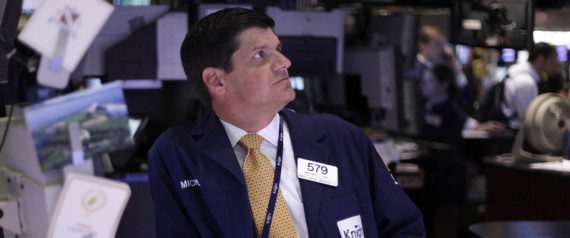
U.S. Default Would Likely Cause Stocks, Bonds, Dollar To Collapse

NEW YORK -- Time is running out for Washington to raise the country's borrowing limit and avoid a default. Wall Street isn't panicking yet. But if the unthinkable happens, a default could strike financial markets like an earthquake.

"If we just get higher longer-term interest rates, we'd be lucky," said John Briggs, Treasury strategist at the Royal Bank of Scotland.

What might markets look like after a default?

The tremors from even a short-lived default could take unpredictable paths. Stocks, bonds and the dollar would likely plummet in the immediate aftermath.

Winds of Change in the Prairies

Its monopoly may be ending, but the Canadian Wheat Board is still crucial to farmers.


If Prime Minister Stephen Harper really cares about free choice for farmers, he should first try to save the Canadian Wheat Board (CWB).

or many Prairie farmers, this may very well be the last harvest season in which they are required, by law, to transact with the CWB. Come fall, they may be able to sell their barley and wheat to whomever they want without risking jail time. Historically, market volatility in the Prairies has been managed through wheat pooling and the international sale of wheat solely through this overriding legislative board. The Conservatives have made it clear that they intend to reform, as soon as possible, how we sell wheat and barley for human consumption to the world.

Twentieth-Century Laws for 21st-Century Tech

The Electronic Communications Privacy Act (ECPA) is part of the U.S. code that was enacted in 1986 with the stated goal of striking a balance between privacy rights associated with new forms of electronic communication and the need for law enforcement to have the tools necessary to do their jobs effectively. Though it may have been avant garde for its time, this law is now out of date and hopelessly out of touch with the realities of computing in the internet age.

Digital Due Process (DDP) is a coalition of major online entities, privacy advocates, educational institutions, etc., that have a common objective:
To simplify, clarify, and unify the ECPA standards, providing stronger privacy protections for communications and associated data in response to changes in technology and new services and usage patterns, while preserving the legal tools necessary for government agencies to enforce the laws, respond to emergency circumstances, and protect the public.

The Debt Limit Ought to Worry Canadians, Too

If you have been following the U.S. debt-limit negotiations, you will undoubtedly have heard U.S. Treasury Secretary Timothy Geithner’s repeated warnings that failure to raise the debt limit would have catastrophic consequences for the U.S. economy: The credit rating of the United States would be downgraded, interest rates would rise, the safety and security of the dollar would be questioned, and the American economy would plunge back into a deep recession.

Yet, readers might be interested to learn that the effect of not raising the debt limit could have a nasty impact on the Canadian economy as well – perhaps worse than what followed the recent financial crisis. After all, the Canadian economy is inextricably linked to that of its southern neighbour, and bad economic news for the United States can spell bad news for Canada.

Immigration to Canada drops by 25 per cent

Canada let 25 per cent fewer immigrants into the country in the first quarter of this year compared to the same period in 2010, raising concerns the Conservative government is embarking on a bold plan to restrict the country’s immigration levels.

The number of permanent resident visas issued by Citizenship and Immigration Canada between January and March fell from 84,083 in 2010 to 63,224 this year, according to figures obtained by the Star.

The latest department numbers show a decline across the board, with visas for skilled workers down 28 per cent, family-sponsored relatives down 14 per cent, and refugees dropping by 25 per cent.

The significant drop in visas comes on the eve of public consultations Immigration Minister Jason Kenney is holding on the country’s immigration levels and classes of people that should be allowed in. The first meeting was held in Calgary last week, and another is scheduled in Toronto Wednesday.