
Democracy Gone Astray

Democracy, being a human construct, needs to be thought of as directionality rather than an object. As such, to understand it requires not so much a description of existing structures and/or other related phenomena but a declaration of intentionality.
This blog aims at creating labeled lists of published infringements of such intentionality, of points in time where democracy strays from its intended directionality. In addition to outright infringements, this blog also collects important contemporary information and/or discussions that impact our socio-political landscape.

All the posts here were published in the electronic media – main-stream as well as fringe, and maintain links to the original texts.

[NOTE: Due to changes I haven't caught on time in the blogging software, all of the 'Original Article' links were nullified between September 11, 2012 and December 11, 2012. My apologies.]

Saturday, January 14, 2012

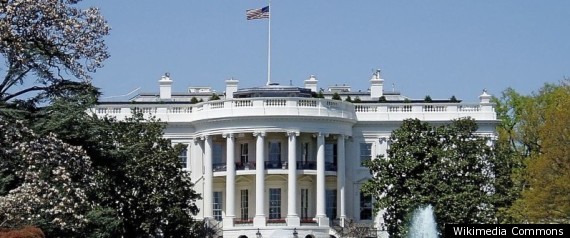
White House Threatens Veto Of Indefinite Detention Bill

WASHINGTON -- Accusing the Senate of "political micromanagement" of national security, the White House Friday stood by its threat to veto a defense bill over controversial military detention provisions.

The National Defense Authorization Act passed Thursday by the Senate contains a section that spells out the military's power to detain Americans indefinitely without trial and mandates military detention for some terrorism suspects.

The White House warned last month that senior advisers would recommend a veto, saying the detainee provisions could restrict the ability of law enforcement to combat terrorism and "make the job of preventing terrorist attacks more difficult."

It also contended that rather than clarifying the rules, the bill was adding uncertainty to the difficult legal landscape around detentions. Civil libertarians and many senators opposed to the detainee section charged that the bill was trampling Americans' basic rights to due process.

The Senate sought to soothe the objections Thursday night by adding an amendment that says the provision will not affect current law on detainees.

It won almost unanimous passage in the Senate, but the compromise was not sufficient for the White House.
White House Will Not Support SOPA, PIPA

Saturday marked a major victory for opponents of proposed anti-piracy legislation Stop Online Piracy Act (SOPA) and PROTECT IP Act (PIPA), which would target foreign-based websites violating U.S. copyrights.

House of Representatives bill SOPA and its Senate counterpart PIPA are designed to punish websites that make available, for example, free movies and music without the permission of the U.S. rights holders. Opponents of the bills, however, worry that the proposed laws would grant the Department of Justice too much regulatory power. Google Chairman Eric Schmidt has called the measures "draconian." Other Internet giants who oppose the bill include Facebook, eBay, Mozilla, Twitter, and Huffington Post parent company AOL.

The White House on Saturday officially responded to two online petitions, "Stop the E-PARASITE Act" and "Veto the SOPA bill and any other future bills that threaten to diminish the free flow of information," urging the President to reject SOPA and PIPA.

The statement was drawn up by Victoria Espinel, Intellectual Property Enforcement Coordinator at Office of Management and Budget, Aneesh Chopra, U.S. Chief Technology Officer, and Howard Schmidt, Special Assistant to the President and Cybersecurity Coordinator for National Security Staff. They made clear that the White House will not support legislation that disrupts the open standards of the Internet.

"While we believe that online piracy by foreign websites is a serious problem that requires a serious legislative response, we will not support legislation that reduces freedom of expression, increases cybersecurity risk, or undermines the dynamic, innovative global Internet," the statement read in part.

Occupy DC: We're Not Leaving McPherson Square

WASHINGTON -- District of Columbia Mayor Vincent Gray may have turned up the pressure on the federal government to remove the Occupy DC encampment from McPherson Square, but Occupy DC says their protest isn't going anywhere.

The protesters issued a media release on Friday with a to-the-point headline: "Occupy DC Is Not Leaving McPherson Square, Will Not Cave to Mayor Gray's Political Posturing."

In the release itself, the protesters claim a move to evict them from McPherson Square, where they have been camped since Oct. 1, would be unconstitutional and would cause more problems than it would solve:
Washington, D.C. -- Mayor Gray's call for the National Park Service to unconstitutionally evict Occupy DC is more dangerous than the problems it would purportedly solve. As Bill Line with the National Parks Service helpfully reiterated for Mayor Gray, Occupy DC is being treated as a 24-hour vigil, which the Park Service cannot shut down. "First Amendment rights and free speech rights are what are at issue here," Line said to WTOP.
The DC Department of Health memo that Mayor Gray has cited to justify eviction of the encampment recommends a different course of action: "working together to develop a monitoring and public education plan to reduce the risk of these concerns..." It is unclear why the Mayor's recommendation contradicts that of a team of sanitation experts.
Occupy DC will gladly work with the city, as we have worked with the Park Service from day one, to address sanitation and health concerns while maintaining the encampment in McPherson Square. Rats and sanitation are a citywide problem, and Occupy DC will be happy to resolve them in our camp.
Forceful evictions have significantly endangered lives in other occupations, and would be completely counterproductive to ensuring the safety of occupiers, especially since the cited sanitation concerns have not harmed anyone to date. Many who call McPherson Square home rely on the food and shelter the encampment provides. Eviction would not protect them from the freezing weather, but force them to endure it without the tent, food and blankets available at Occupy DC.
The Occupy the Vote DC members of Occupy DC hope that, despite this setback, their work with the mayor's office for DC statehood will help improve the relationship between the city and Occupy DC. We're all in this together.
Given Mayor Gray's background in activism, he should know that protesting injustice can be messy. But a mess is a poor reason to shut down a mass movement.

Original Article
Source: Huff 

B.C. Premier Balks At Federal Health Funding Plan

B.C. Premier Christy Clark says announced changes to federal government health-care transfers to the provinces won’t work for British Columbia, where a rapidly growing senior population is dramatically increasing medical costs to the province.

The federal finance minister announced last month that after the 2016-17 fiscal year, Ottawa will institute a change in the per-capita funding system that would be tied to Canada’s gross domestic product, but is guaranteed to be at least three per cent. The annual health-care funding increases to the provinces are currently six per cent.

Clark told CBC News Friday that provinces will need “an age-adjusted per capita formula implemented” in order for the federal plan to work sufficiently.

“You cannot allocate health-care dollars on a per capita basis until you adjust it for age,” Clark said in Vancouver during an interview with Rosemary Barton on the CBC Newsnet program Power & Politics. “You just can’t run a country or look after senior citizens [unless] that’s the way you do it.”

Clark said the fastest growing demographic in B.C. is people over 85, and the province would be especially hard hit unless the per-capita formula changes.

“It costs an average $22,000 a year for health care for someone who is over 85 versus $2,000 for someone who is 29 years old,” the premier said.

B.C. Finance Minister Kevin Falcon said B.C. would lose as much as $250 million a year under the new formula as it's currently conceived.

Clark said the issue has to be resolved or economic balances in the country could be disrupted.

“We’ll be looking at a massive change, migration of money across the country from provinces where many older people live to provinces where many younger people live.”

Clark did praise the federal decision to give provinces more responsibility for health-care policies, saying it is a step in the right direction.

“They are going to vacate the policy field … which provincial premiers have been asking for for something like 30 years, [to] do the policy in health care. So I think that’s a great thing.”

Clark was speaking in advance of a meeting of Canada’s premiers this weekend.

The Council of the Federation meeting begins in Victoria Sunday.

Original Article
Source: Huff 

The real pipeline debate

The start of hearings about the proposed Northern Gateway pipeline to take Alberta oil to the west coast has been notable mostly for the venomous invective hurled about by the interested parties. Yet beneath the exaggerated charge and counter charge, the hawk-eyed can discern the very earliest stages of a national debate that will preoccupy us for the next decade or two.

Like it or not, Canada’s economic strength has always been closely tied to natural resources. We are abundantly blessed with them, we have great expertise in extracting and processing them, we have one of the world’s great markets for financing them, and we have spent liberally on pipelines and railways and ports to take them to market.

In return, natural resources have generally been kind to us. Growing global demand has driven up the price we get for them while the cost of many imports, such as manufactured goods, has remained stable or fallen. This improvement in what the economists call the terms of trade is a major cause of Canada leading the G7 in terms of income growth in recent years.

The phenomenal economic development of countries like China and India, with their insatiable appetite for our resources, has broadened markets for what we produce. That doesn’t eliminate the risk of falls in resource prices, but it makes extended declines less likely for the foreseeable future.

Canada, EU trade deal near

A close-to-completed trade agreement between Canada and the European Union will likely require towns and cities in Canada to open up bidding on their biggest-ticket spending to foreign companies.

The Comprehensive Economic Trade Agreement will probably be concluded by the end of the year, Prime Minister Stephen Harper said Thursday during his visit to the Halifax Shipyard. But a final deal is rumoured to be closer to completion and may be brought to Parliament within the next month or two.

Canadian beef, pork and seafood exporters could enjoy a boom in profits if EU tariffs are lifted. On the other end, according to those familiar with the talks, one Canadian market to which the European negotiators hope they’ll gain admission is municipal contracts, including those for transportation and construction projects, waste management systems, and smaller goods and services tenders.

The market includes spending by hospitals, airports, school boards and universities, according to the Federation of Canadian Municipalities.

Halifax Regional Municipality announced this week that it had awarded a contract for an online electronic voting system to a Spanish firm, raising eyebrows in the city. Coun. Dawn Sloane (Halifax Downtown) was unhappy with the decision and said she wanted to look into creating a "buy local" policy for future procurements.

Government pulls out of language training

The federal government is getting out of the business of providing language training to its employees, throwing 179 teachers and instructors across Canada out of work.

The move - which started with downsizing in the 1990s, and intensified after a 2006 Treasury Board decision - marks the first time in decades that the government won't be directly offering French and English training to public servants to meet the language requirements of their jobs.

The Canada School of the Public Service, which runs language training, notified employees about the cut in a national conference call Friday, along with plans to help departments manage the transition to using private language schools. Most of the jobs are in the National Capital Region, but the majority were term positions. About 66 of the positions were permanent jobs and those workers may find jobs in other departments.

Larry Rousseau, vicepresident for the National Capital Region at the Public Service Alliance of Canada, said the government decision to turn all teaching to the private sector will invariably erode the quality of instruction and undermine the strides made in bilingualism within the public service.

"This was purely an ideological cut," he said. "It shouldn't have happened and the only reason I can find is that the government has made a decision that this will play well in the heartland and show we are getting out of the business of making people bilingual."

Inside Canada's battered EI system

Jobless Canadians wait over 8 weeks for EI cheques, minister adds resources to deal with backlog

Like many Canadians, Marie Ferguson struggled to get her employment insurance after she was laid off last August.

But unlike many Canadians, Ferguson knew what to do about it.

That's because for nearly four years she worked in the Kingston EI processing centre of Service Canada.

It's the branch of the federal Human Resources department that's supposed to help Canadians get their entitlements.

When Ferguson applied for employment insurance herself, she ran in to some of the same frustrations it had been her job to try to fix.

"I knew exactly what had happened and I was able to tell them how I wanted it resolved. I had to put in a dire need request," she says from her home in Westport, Ont.

"And then they tried to deny me that, saying 'how could I justify it was a dire need?' when I was talking about needing my income because my children were getting ready to go back to school. Providing for my children is a dire need."

After the global economic meltdown in 2008, Service Canada got an infusion of more than 3,000 term workers across Canada.

The Queen is not Canadian

Dump Janice Kdy the Queen? You have to give the Young Liberals of Canada points for idealism, if not political savvy.

In their attempt to add the future of Canada's monarchy to the agenda of their party's current national convention, the Young Libs have opened up one of our most enduring cans of worms. Again.

Like a clarion call - to mix in another layer of metaphor - the issue has roused all the usual suspects (including this one) and thrust us onto our favourite soapboxes.

Including the soapbox dedicated to the institution's Canadianness. The Liberal youngsters, who should have known better, resolved to "sever formal ties with the British Crown." Red flag to a bull.

It's not the British Crown, Canada's relentless monarchists pointed out with outraged vigour. It's the Canadian Crown.

So it is. It's there in our symbols, legal language, apparatus of nationhood. We live in a constitutional monarchy. We understand.

Elizabeth II is the Queen of Canada. We get it.

So why does everyone in the world, including probably most Canadians, see her as the British Queen? What are we missing?

Could it be because Elizabeth, Queen of Canada, is not actually Canadian?

Social Welfare State, American-Style, Means Relief For The Rich

WASHINGTON -- Republican presidential contender Mitt Romney has taken to accusing President Barack Obama of trying to turn the United States into a European-style social welfare state.

The hyperbole about Obama's actions aside, the United States already is a social welfare state -- almost right up there with the Europeans -- if you measure the total amount of drain on the Treasury caused by spending and subsides on such things as health care and retirement.

The one big difference is that in the American social welfare state, a lot of the benefits go to the rich.

"We spend a tremendous amount on private social welfare through tax subsidies," said Christopher Faricy, a political science professor at Washington State University whose forthcoming book is about our divided welfare state.

"It just goes to a drastically different population than what we usually associate with welfare programs," Faricy said.

Direct government social welfare spending pays for such signature programs as Social Security, Medicare, Medicaid, food stamps and unemployment.

But there's also a whole other world of social-welfare measures in the tax code -- called tax expenditures -- that benefit individuals and companies.

The two biggest tax breaks with a social welfare purpose are the exemptions for employer-sponsored health benefits (which cost the U.S. Treasury about $184 billion a year in foregone revenue) and for contributions to 401(k) and other retirement plans and pensions ($113 billion).