Democracy Gone Astray

Democracy, being a human construct, needs to be thought of as directionality rather than an object. As such, to understand it requires not so much a description of existing structures and/or other related phenomena but a declaration of intentionality.
This blog aims at creating labeled lists of published infringements of such intentionality, of points in time where democracy strays from its intended directionality. In addition to outright infringements, this blog also collects important contemporary information and/or discussions that impact our socio-political landscape.

All the posts here were published in the electronic media – main-stream as well as fringe, and maintain links to the original texts.

[NOTE: Due to changes I haven't caught on time in the blogging software, all of the 'Original Article' links were nullified between September 11, 2012 and December 11, 2012. My apologies.]

Showing posts with label Corporate Extortion. Show all posts

Sunday, September 08, 2024

Elon Musk Wants Me Fired. The People of San Francisco Want Him Taxed

There’s a narrative about San Francisco that is as persistent as it is incorrect: The city’s post-pandemic struggles are the result of progressive policies run amok.

This was certainly the sentiment behind billionaire Elon Musk, who reportedly lives in Texas, calling for me, a democratically elected representative in San Francisco, to be “fired.” His post on X, formerly Twitter, alleged that I was arguably the person “most responsible for the destruction of San Francisco.” In late September, he wrote that I “should go to prison.”

Wednesday, July 25, 2018

Uber threatens to leave if Quebec insists on stricter rules

Uber is threatening to cease operations in Quebec next month if the province doesn't back down on new, stricter rules regulating the ride-hailing service.

Jean-Nicolas Guillemette, director general of Uber Quebec, said the service will shut down Oct. 14 if nothing changes.

On that date last year, the two sides agreed to a pilot project that allowed the ride-hailing company to operate.

Friday, May 27, 2016

How corporate rights protections are threatening farmers' right to seed

As I write, spring seeding on farms across the country is well underway.

I love this time of year. As a kid growing up on the Prairies, March, April and May were always a special time. While the kids played in the dwindling puddles of mud and water, farmers were monitoring soil conditions, readying machinery and checking on their store of seed grains.

Friday, July 31, 2015

Borrow $10,000, Owe $25,000: The Face Of Predatory Lending In Canada

Donna Borden believes she was the victim of predatory lending, but she refuses to play that role any longer.

She had already paid $25,000 on a subprime, $10,000 loan when Borden says she decided enough was enough. Fed up, she stopped paying and started fighting.

Wednesday, April 29, 2015

Cities and States Pay Massive Secret Fees to Wall Street

California’s report said $440 million. New Jersey’s said $600 million. In Pennsylvania, the tally is $700 million. Those Wall Street fees paid by public workers’ pension systems have kicked off an intensifying debate over whether such expenses are necessary. Now, a report from an industry-friendly source says those huge levies represent only a fraction of the true amounts being raked in by Wall Street firms from state and local governments.

“Less than one-half of the very substantial [private equity] costs incurred by U.S. pension funds are currently being disclosed,” says the report from CEM, whose website says the financial analysis firm “serve(s) over 350 blue-chip corporate and government clients worldwide.”

Tuesday, March 03, 2015

Toronto Real Estate Board demands brokers halt online sales stats

It’s about to get tougher to sleuth out how much homes are selling for in Toronto.

This week, three real estate brokers are cutting off customers’ online access to recent final home sales prices — coveted information that can help buyers and sellers gauge a property’s worth.

The trio are the latest to give in to a threat made by the Toronto Real Estate Board (TREB) to stop doling out home sales information or risk losing a lifeline to all privileged industry data.

Monday, December 15, 2014

Premier Foods tells suppliers: Give us money or face losing our business

Premier Foods has been criticised for asking suppliers to hand over money or face losing business with the company.

Premier, which owns some of Britain’s most popular food brands, including Mr Kipling, Oxo and Bisto, has written to its suppliers requesting an “investment payment”.

Firms that do not pay up risk being taken off its approved 1,000-strong supplier list.

Friday, September 12, 2014

Apple Wants You To Pay For Things With An iPhone — But There’s One Nagging Problem

Forgetting your wallet at home may no longer be a problem when picking up prescriptions or incidentals, as the nation’s biggest drugstore chain and other major retailers partner with Apple and its new mobile payment system. Apple’s new mobile payment system — Apple Pay — could certainly make life for consumers much easier. But the move also makes the iPhone a virtually indispensable — and invaluable –piece of property that will be even more vulnerable to security risks if lost, stolen or hacked.

Wednesday, February 13, 2013

Do GMO Crops Really Have Higher Yields?

According to the biotech industry, genetically modified (GM) crops are a boon to humanity because they allow farmers to "generate higher crop yields with fewer inputs," as the trade group Biotechnology Industry Organization (BIO) puts it on its web page.

Buoyed by such rhetoric, genetically modified seed giant Monsanto and its peers have managed to flood the corn, soybean, and cotton seed markets with two major traits: herbicide resistance and pesticide expression—giving plants the ability to, respectively, withstand regular lashings of particular herbicides and kill bugs with the toxic trait of Bacillus thuringiensis, or Bt.

Saturday, July 07, 2012

William Johnson Plays CEO For A Day, Earns $44 Million In 'Corporate Highjacking'

One guy just got paid $44 million to be CEO for a day.

In an apparent corporate coup, Duke Energy, an electric power holding company that recently merged with Progress Energy, appears to have reneged on the spirit of its merger agreement with Progress, the Los Angeles Times reports. The merger agreement stipulated that the new company would have Progress' William Johnson as chief executive and Duke's James Rogers as executive chairman, according to The New York Times.

Thursday, May 31, 2012

Who Will Benefit from Haiti’s Gold Rush? Haitian Government Embraces U.S., Canadian Mining Firms

After years of rumors that mining companies were exploring in Haiti, Canadian and U.S. corporations now confirm they have permits to mine gold in more than 1,000 square miles in northern Haiti. Haiti’s new prime minister says the estimated $20 billion worth of minerals in Haiti’s hills could help liberate it from dependency on foreign aid and rebuild from the devastating 2010 earthquake. But many worry the mines will be a boom for foreign investors and a bust for local communities. We speak to Jane Regan, lead author of "Gold Rush in Haiti: Who Will Get Rich?" The report by Haiti Grassroots Watch was published Wednesday in The Guardian and Haïti Liberté. "You’ve got a perfect storm brewing whereby you’re looking at giant pit mines in the north, in a country that’s already environmentally devastated, and giant pit mines being run by Canadian and American companies," Regan says. "Most of the money that’s made and most of the gold that’s dug up will go straight north."

Video
Source: Democracy Now!
Author: ---

Saturday, March 03, 2012

Why an MRI costs $1,080 in America and $280 in France

There is a simple reason health care in the United States costs more than it does anywhere else: The prices are higher.

That may sound obvious. But it is, in fact, key to understanding one of the most pressing problems facing our economy. In 2009, Americans spent $7,960 per person on health care. Our neighbors in Canada spent $4,808. The Germans spent $4,218. The French, $3,978. If we had the per-person costs of any of those countries, America’s deficits would vanish. Workers would have much more money in their pockets. Our economy would grow more quickly, as our exports would be more competitive.

There are many possible explanations for why Americans pay so much more. It could be that we’re sicker. Or that we go to the doctor more frequently. But health researchers have largely discarded these theories. As Gerard Anderson, Uwe Reinhardt, Peter Hussey and Varduhi Petrosyan put it in the title of their influential 2003 study on international health-care costs, “it’s the prices, stupid.”

Thursday, February 23, 2012

Gas prices could rev up to record highs by May. Here’s why

Prepare to pay more for gas than ever before.

By May, gas prices in the GTA could ratchet up by anywhere from 5 cents to 20 cents per litre.

Prices at the pump have already climbed by about 7 cents to 128.7 cents per litre in the last month. And while it is normal for gas prices to climb in the spring as motorists drive more and refineries close for maintenance, there are more factors at play this year.

How high can the prices get?

Jason Toews, co-founder of Gasbuddy.com anticipates prices reaching a record-breaking 150 cents to 155 cents per litre by May. Last year gas prices reached a record high of 140.6 cents.

Petroleum analyst Robert McKnight says prices will reach between 143 cents to 147 cents a litre by April. That is a 12 to 15 per cent increase from the pump price you see today, he said.

Michael Ervin, vice-president of Calgary-based Kent Group, has a more conservative prediction of 4 cent to 7 cent per litre increase — in line with a normal seasonal increase.

Thursday, February 09, 2012

Chinese ‘frustrated’ by Northern Gateway regulatory delays


Chinese oil executives are growing frustrated with regulatory delays in plans for the Northern Gateway pipeline, even as interest in Canadian oil and gas surges in the energy-hungry country, the head of Enbridge Inc. (ENB-T39.130.040.10%) says.

Enbridge chief executive officer Pat Daniel said despite keen interest here in Canadian oil and gas reserves, this seemingly made-in-heaven match is threatened by delays in the company’s efforts to establish a $5.5-billion, 1,177-kilometre pipeline to carry bitumen from Alberta’s oil sands to a deep sea port at Kitimat, B.C., for shipping to Asian markets.

“They’re frustrated, as we are, in the length of time it takes,” Mr. Daniel said in an interview on the sidelines of Prime Minister Stephen Harper’s mission to China. “They’re very anxious to diversify their supply, they’re very dependent on the Middle East for crude.

“[Canada] seems like the perfect match that should last a long time, but if you don’t move it along, people do lose interest. We don’t have forever,” he continued. “The fundamentals in the business can change and you must take advantage of opportunities if and when they present themselves.”

Mr. Daniel said they hope to have approvals completed within two years and construction in three, so that oil can begin flowing by late 2016 or early 2017, despite heavy opposition from environmental groups and first nations who fear the impact of an oil spill on some of Canada’s most untouched wilderness and coastline.

The 65-year-old executive joined Mr. Harper on a trade mission that is the nearest the Prime Minister has come to resuming the Chrétien-era Team Canada-style missions, with five cabinet ministers and three dozen industry leaders.

Tuesday, November 22, 2011

Reporter Greg Palast Exposes How U.S. “Vulture” Funds Make Millions By Exploiting African Nations

American "vulture" investors, including a top funder of the Republican Party, have demanded that African nations pay over half a billion dollars for old debts – for which the investors paid only a few million. One New York vulture speculator, Peter Grossman of FG Capital Management, is demanding $100 million from the Democratic Republic of Congo. Is he collecting a legitimate debt from the Congo — or is the vulture’s claim based on a stolen security? Greg Palast reports from the Congo, Bosnia and New York in the joint investigation by the BBC, the Guardian and Democracy Now!

Video
Source: Democracy Now! 

Wednesday, November 09, 2011

Stop the Big Bank Payday Predators

While Occupy Wall Street has brought needed attention to inequality and downward social mobility—long ignored by the mainstream media and the political establishment—there are also groups that have been in the trenches for years, struggling day in and day out, doing the tough organizing that is needed if OWS’s vision is to be achieved.

One such group is National People’s Action (NPA), a network of community organizations in cities, towns and rural communities across the country working to advance a national economic and racial justice agenda. NPA—along with unions and community and faith-based groups, and coalitions like The New Bottom Line—has long played a leading role in the fight to hold banks accountable, stop foreclosures, promote housing rights and protect immigrant and workers’ rights, among other vital campaigns.

Now NPA and its allies are shining a light on the connection between the Big Banks and the predatory payday loan companies, and running a sustained campaign to get the banks to withdraw their financing of those companies. Earlier this year, NPA and the Public Accountability Initiative released a report entitled The Predators’ Creditors that details how the Big Banks finance these payday loan sharks whose shops are nearly two and one-half times more likely to locate in African-American and Latino communities, even when other factors like income are considered.

Tuesday, November 01, 2011

TransCanada warns against review of Keystone XL route

TransCanada Corp. (TRP-T42.09-0.28-0.66%) has issued a stark warning over the lengthy delay that will be created if Nebraska succeeds in demanding a new route for its Keystone XL project.

State legislators begin a special session Tuesday afternoon to consider a rule that would enable them to move the controversial pipeline away from sensitive ecological areas.

TransCanada has marshalled legal opinions questioning the state’s ability to enact such a rule. And it has cast doubt on whether a such a bill will even garner enough political support to pass.

But on Tuesday morning, it also warned that forcing a new route could delay construction of the pipeline by more than three years – and, it suggested, the refineries whose contracts underpin the project may not stick around that long.

“If the route is arbitrarily moved to another location, we would suspect that we would have to restart” an environmental review process, TransCanada chief executive officer Russ Girling said in a corporate conference call.

Thursday, October 13, 2011

Corporate Citizenship: How Public Dissent In Paris Sparked Creation Of The Corporate Person

WASHINGTON -- Of all the Occupy Wall Street refrains, one of the most memorable is, "I refuse to believe that corporations are people until Texas executes one." But, clever as it is, the quip looks to the wrong end of the life cycle: The only thing more corrupt than the legal concept of corporate personhood is the way a Gilded Age judge birthed it.

The discontented have been occupying the streets for a long time. But the convulsions with which the ruling class in America reacted to the Paris Commune of 1871 make Fox News' coverage of Occupy Wall Street sound fawning.

The Paris Commune was the first international incident followed daily in the United States. While President Barack Obama complains about the 24-hour news cycle today, its roots stretch back to Cyrus Field's transcontinental telegraph cable, which allowed the elites of America to focus intently on the two-month uprising and ultimate slaughter of thousands of Parisians. Cyrus Field's brother and his family were in Paris at the time, and a third brother, Supreme Court Justice Stephen Field, obsessively tracked the news back in the states. It was the Paris uprising that transformed Stephen Field from a mundanely corrupt judge in the paid service of the railroads to a zealous crusader for all corporations, with the aim of suppressing what he and other leaders saw as the threat of democracy from below.

For much of the first U.S. century, it was an accepted fact that the people, through their legislators, had the power to pass laws that businesses were required to obey. After the Civil War, Reconstruction-era statutes and constitutional amendments -- particularly the 14th Amendment -- strictly limited the ability of legislators to restrict the rights of the recently freed African Americans.

Tuesday, August 23, 2011

Fed's $1.2 Trillion In Financial Sector Loans 'A Classic Case Of Moral Hazard'

During the 2008 financial crisis, when the nation's banking system seemed on the verge of collapse, President George W. Bush authorized a $700 billion bailout of the financial industry. The U.S. Treasury implemented that program, known as TARP, in an effort to stave off economic catastrophe.

At the same time, and in the years that followed, the Federal Reserve was undertaking its own rescue operation, in the form of private, previously undisclosed loans to banks and other institutions -- lending as much as $1.2 trillion, nearly twice the amount of the Treasury bailout, according to a data analysis performed by Bloomberg News and published on Monday.

The scope of the Fed's private lending had previously only been guessed at, but figures obtained under the Freedom of Information Act by Bloomberg News show that the nation's central banker issued loans to more than 300 institutions between August 2007 and April 2010, including over 100 loans of $1 billion or more.

While the Fed's loans likely helped to prevent a complete implosion of the global banking system, analysts say they fear the loans may have contributed to an atmosphere of complacency on Wall Street. Banks that received emergency cash infusions during the crisis may now believe the Fed will always be there to bail them out of trouble, the thinking goes.

"It is a classic case of moral hazard," Dimitri Papadimitriou, president of the Levy Economics Institute of Bard College, told The Huffington Post.

The Federal Reserve itself had argued that the details of its emergency loans should be kept out of the public eye, claiming that the reputations of the firms involved could suffer if they were seen to be taking money from the government in order to stay afloat. Many of the banks that borrowed from the Fed had previously appealed to the Supreme Court to keep those records secret.

However, an invocation of the Freedom of Information Act forced the Fed to release more than 29,000 pages of documents, revealing the extent to which the financial sector relied on Federal Reserve dollars during the worst days of the crisis.

Given the extraordinary size of the loans, the public has a right to know what happened, said David Jones, an executive professor at the Lutgert College of Business at Florida Gulf Coast University.

"It's completely valid at some point to say, 'Who did the borrowing?'" Jones told The Huffington Post. "It was appropriate, under this special set of circumstances, to divulge the information."

Among the largest borrowers were Bank of America, which borrowed $91.4 billion; Goldman Sachs, which was in debt for $69 billion; JPMorgan Chase, which borrowed $68.6 billion; Citigroup, which borrowed $99.5 billion and Morgan Stanley, the biggest borrower of all, to which the Fed loaned $107 billion.

In addition, the Fed issued sizable loans to a number of foreign banks, including the Royal Bank of Scotland, which borrowed $84.5 billion; Credit Suisse Group, which borrowed $60.8 billion and Germany's Deutsche Bank, to which the Fed lent $66 billion. Nearly half of the 30 largest borrowers were European firms, according to Bloomberg News.

While the amount of lending that took place is remarkable, some argue that the Fed's error was not in issuing the loans, but rather in doing so without setting stronger policy reform conditions for the money.

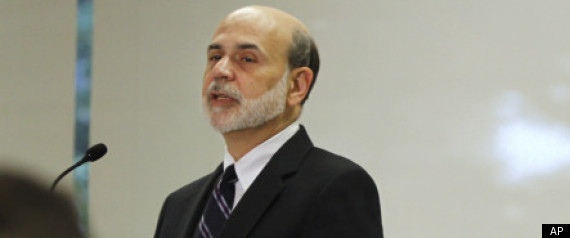
Dean Baker, co-director of the Center for Economic and Policy Research, told The Huffington Post that Federal Reserve Chairman Ben Bernanke could have attached a "quid pro quo" to the emergency loans -- stipulating, for example, that the money would only come through if the banks agreed to do business in a less risky way going forward.

"This is the moment all the banks were on their backs," Baker said. "The Fed ran to the rescue and got nothing in return."

A previous disclosure in December found that the Fed issued $9 trillion in low-interest overnight loans to banks and other Wall Street companies during the crisis. The $1.2 trillion figure represents the peak amount of outstanding loans, which occurred on December 5, 2008, according to Bloomberg News.

Some critics contend that while the Fed was right to support the financial sector, the government didn't do enough to help ordinary citizens who were also seeing their wealth evaporate during the crisis.

Papadimitriou told The Huffington Post that the Fed issued many of its biggest loans during the Bush administration, and that "they didn't appear to have any difficulty supporting the financial sector, but very much difficulty supporting the real sector, households."

Consumer spending suffered and unemployment spiked in the wake of the financial crisis, and the economy remains weak today. Output is low, consumer confidence is down and millions are still out of work -- factors that have some economists worried about the possibility of a double-dip recession.

The TARP bailout, led by the Treasury, was the subject of much popular ire when it occurred, since it was seen as a case of the government throwing money at the financial sector at the expense of everyday Americans. Similarly, the Fed's $1.2 trillion in emergency loans were primarily aimed at keeping major financial institutions on their feet.

"One would assume banks are too interconnected, you have to help all of them," Papadimitriou said. "But if you take households in total, they are also all interconnected. They are also too big to fail."

Origin
Source: Huffington 

Wednesday, August 17, 2011

Striking Verizon Workers Are an Example to Us All

The Verizon Corporation is asking its workforce to accept wage and benefit reductions—despite being a very profitable company. Morgan Stanley’s recent analysis shows Verizon’s net income from ongoing operations was $13.9 billion in 2010, up more than 16 percent from 2007. No wonder Verizon’s stock has outpaced that of the S & P index and other telecommunication’s firms, something Verizon itself brags about in its last annual report. How, then, can Verizon freeze current workers’ pensions and eliminate pensions for new workers? Ask their workers to accept reductions in holidays (to seven), reduced sick pay and the substitution of the current health plan with one having high deductibles and contributions? The unions involved estimate that benefit and wage reductions would total $20,000 per worker each year.

Understandably, the workers have gone on strike. This labor conflict, however, is a microcosm of a broader trend in our economy, one that is not healthy for overall growth and certainly not conducive to improved living standards for America’s working families.