Democracy Gone Astray

Democracy, being a human construct, needs to be thought of as directionality rather than an object. As such, to understand it requires not so much a description of existing structures and/or other related phenomena but a declaration of intentionality.
This blog aims at creating labeled lists of published infringements of such intentionality, of points in time where democracy strays from its intended directionality. In addition to outright infringements, this blog also collects important contemporary information and/or discussions that impact our socio-political landscape.

All the posts here were published in the electronic media – main-stream as well as fringe, and maintain links to the original texts.

[NOTE: Due to changes I haven't caught on time in the blogging software, all of the 'Original Article' links were nullified between September 11, 2012 and December 11, 2012. My apologies.]

Tuesday, February 28, 2012

The Commons: Stephen Harper decides to play poker

The Scene. Rising just before Question Period, the NDP’s David Christopherson read aloud from the official opposition’s indictment.

“Canadians demand answers. They deserve better than another five-year runaround by the Prime Minister before their next inevitable guilty plea. The Prime Minister has it within his power to get to the bottom of this today, to identify the guilty parties and to ensure that they are prosecuted to the full extent of the law,” he ventured, “or the Prime Minister will have proven that in no time at all he has become exactly that which he used to loathe.”

He stretched the vowel sound of this last word for the sake of indignation. Seated across the way, making a rare Monday appearance, the Prime Minister noticeably bounced in his spot with a guffaw. He chuckled again a moment later when Nycole Turmel suggested special by-elections might soon be in order.

The opposition members, their outrage pent up after four days of allegation and accusation, could not contain themselves.

Harper ignores opposition calls for by-elections in ridings hit by robo-calls

Prime Minister Stephen Harper brushed off accusations of electoral fraud in the Commons Monday and rejected opposition calls to hold by-elections in affected ridings.

Opposition parties have managed to knock the Conservative government off course in recent days with allegations that dirty tricks skewed races in the 2011 federal election by discouraging people from voting.

“Voters want the government to protect them against electoral fraud,” NDP Leader Nycole Turmel said. “Is the Prime Minister prepared to force by-elections to restore voter trust?”

Mr. Harper challenged his political rivals to produce proof of Tory misbehaviour.

“The Conservative Party of Canada has denied such allegations,” he said. “We don’t have any such information. If the NDP has – and I am not sure that is the case – then the NDP must turn it over to Elections Canada.”

Prime Minister Stephen Harper denies using dirty tricks in Canada’s 2011 federal election

OTTAWA—Prime Minister Stephen Harper is deflecting calls for an independent probe into alleged dirty tricks in the last federal election, telling opposition MPs to take their concerns to Elections Canada.

Oppositions MPs are seeking an independent probe and police investigation into what they call a systemic effort to suppress votes in the 2011 elections.

“(Voters) want the government to protect them against electoral fraud . . . Is the Prime Minister prepared to force by-elections to restore voter trust?” said Interim NDP Leader Nycole Turmel.

But as Liberals and New Democrats denounced what they branded as the worst election fraud in Canada’s history, Harper taunted the opposition to back up their claims with proof.

“We don’t have any such information. If the NDP has — and I’m not sure that is the case — then the NDP must turn that information over to Elections Canada,” Harper said in question period.

Robo-call accusations raise uncomfortable questions

MONTREAL—If there is a tactical scheme behind the so-called voter suppression scandal, it is not readily apparent in the list of allegedly abused ridings put forward by the opposition parties.

Only a small fraction of the 50 federal seats where the margin of victory was less than 5 per cent last May — and where presumably every vote counted — are alleged to have been targeted by fraudulent calls.

Liberal ridings such as Brampton-Springdale and Ajax-Pickering that were known to be high on the Conservatives’ to-win list (and that they did win) were apparently not plagued by such calls.

On the other hand, a substantial number of the three dozen ridings on the opposition list were safe Conservative seats.

Take the Ontario riding of Wellington-Halton Hills. On May 2, former Conservative minister Michael Chong kept the seat with a majority of 26,000 and 63 per cent of the vote. He clearly needed no help to get re-elected.

Monday, February 27, 2012

U.S., Iran Poised For Mine Warfare In The Persian Gulf

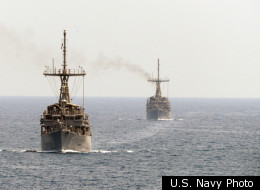
If the tense confrontation with Iran ignites into war, strategists say they expect Iran will strike with thousands of deadly sea mines to try to halt oil tanker traffic and take out American warships.

In the shallow, crowded waters of the Persian Gulf, mines pose a sobering challenge. When the U.S. Navy has faced a massive mine threat there in the past, it has failed to protect even its own ships.

Now, both Iran and the United States seem poised to fight it out again. Iran has acquired a stockpile of 2,000 to 3,000 mines, including "smart'' Chinese-built mines that could track and target U.S. warships, according to a report by Anthony Cordesman of the Center for Strategic and International Studies, a nonpartisan think tank in Washington.The 660-pound warhead carried by one such mine could puncture the hull of a U.S. aircraft carrier, the report says.

But the Navy says this time it's prepared for a mine war, with a four-ship fleet of high-tech counter-mine vessels patrolling the Gulf, along with airborne sensors, robot submarines, a squadron of mine-hunting dolphins and sea lions on standby -- and two decades worth of operational experience off the coast of Iran.

The Coalition Against Iranian Oil: Winners and Losers

On January 23, the E.U. enacted new sanctions targeting Iran, including an oil embargo, with the aim of pressuring Iran's economy in order to spur changes in the government's stance over its nuclear program. The current E.U. ban on Iranian oil is actually the third attempt by outside powers to use oil as a tool of economic pressure on Iran in the last 50 years.

The first instance occurred in 1951, following the nationalization of Iranian, when the Anglo-Iranian Oil Company (known today as British Petroleum) imposed sanctions against Iranian oil and sought to prevent other countries from purchasing. However, this attempt failed to dissuade other foreign purchasers.

The second attempt took place, after the Islamic Revolution in Iran, when the U.S. implemented an oil embargo against Iran and stopped importing Iranian oil. Prior to this action, the U.S had been a major consumer of Iranian oil, importing about 500 thousand barrels of oil per day. However, the U.S. embargo had a negligible effect on Iranian output, as Iran succeeded in redirecting its oil to other markets after a few months.

Now in early 2012, the effectiveness of using an oil embargo as a tool of economic pressure is being questioned once again: will the current E.U. ban on Iranian oil force Iran to change its attitude regarding its nuclear program? If the oil ban leads to a dangerous oil price rise in the midst of fragile global economy, how many countries are actually willing to stop buying oil from Iran? And how long can such an embargo be maintained?

Mandatory Ultrasound Laws Violate Women's Rights and Bodies

For decades, the radical right has been chipping away at women's access to reproductive health care. After the 2010 elections, these attacks escalated into an outright War on Women. Now, the Republican presidential primaries are offering a disturbing glimpse into the supposed conservative vision for this country. In this right-wing utopia, women will no longer be able to exercise the right to control their bodies, plan their families or safeguard their own health. The church and the state will tell women what is best for them, and religious entities' "liberty" will consistently trump individual women's right to live and work free from discrimination and in accordance with their own religious and moral beliefs.

Much of the current he-man chest thumping is done for the benefit of voters who might be swayed to cast their ballots for the GOP based largely on social issues. And, as demonstrated in Virginia this week, conservative politicians are perfectly capable of putting on the brakes when proceeding with a piece of their anti-woman agenda appears to be backfiring.

Still, the right-wing commitment to keeping women in check is surprisingly strong and reveals a frightening disrespect, even contempt for women who aren't sufficiently submissive. Turning the clock back includes shaming women for their sexuality and punishing them for terminating a pregnancy (which is still legal, by the way). This brings us to one of the more degrading tactics up the radical-right sleeve: mandatory ultrasound laws.

Keystone XL: TransCanada To Build Texas, Oklahoma Leg Of Pipeline Ahead Of Approval

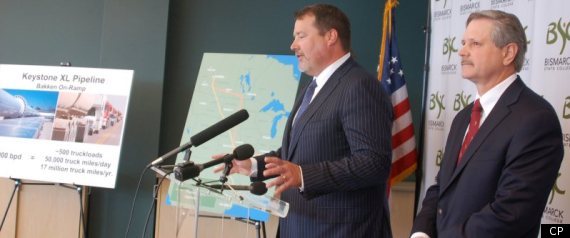
CALGARY - Energy giant TransCanada plans to build the most urgently needed portion of its controversial Keystone XL oil pipeline as a US$2.3-billion stand-alone project.

The Gulf Coast project will be subject to regulatory approvals, but because it will not cross the Canada-U.S. border, it will not need the U.S. presidential approval that tripped up the company's original proposal to pipe crude from Alberta to Texas.

The Calgary-based pipeline company (TSX:TRP) said Monday the Cushing, Okla., to Gulf Coast leg — meant to relieve a supply glut of oil in the middle of the U.S. and boost prices and producers' bottom lines — should be in service by mid to late 2013.

"The Gulf Coast Project will transport growing supplies of U.S. crude oil to meet refinery demand in Texas," said TransCanada CEO Russ Girling in a release

"Gulf Coast refineries can then access lower cost domestic production and avoid paying a premium to foreign oil producers. This would reduce the United States' dependence on foreign crude and allow Americans to use more of the crude oil produced in their own country."

Omnibus Crime Bill Amended By Senate Committee

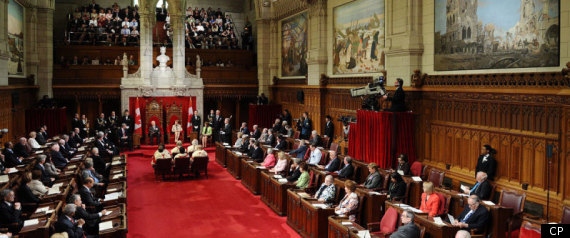
The Senate Legal and Constitutional Affairs committee passed Conservative amendments to the government's controversial omnibus crime legislation Monday morning, signalling the government's admission that at least some parts of the bill need changing.

C-10, an omnibus bill folding together some nine previous pieces of Conservative legislation the government did not pass in previous minority Parliaments, was pushed through the House of Commons before Christmas and is in the final stages of review before the Senate committee.

The committee is mid-way through its clause-by-clause review of the 152-page bill's provisions and could complete its work by the end of the day Monday.

The Conservative amendments passed so far include changes to the provisions allowing victims of terrorism to sue those responsible for the crimes.

Canada supports dark side of international finance

You can say one thing for the powers that be in the banking industry. They've got a lot of nerve.

This past week, our own finance minister, Jim Flaherty, along with Mark Carney, the Governor of the Bank of Canada, came out strongly in opposition to a modest proposal to regulate the U.S. banking system.

Their interventions followed a concerted effort by American bank lobbyists to spark international opposition to U.S. regulatory reforms.

What a shameful spectacle. Less than four years ago, the world was holding its breath for fear the crisis in the hyper-deregulated U.S. financial system would cause a second Great Depression. Now Canada and other foreign governments, cheered on by U.S. banking interests, are doing their best to block U.S. legislation that would curb the industry's worst excesses.

The initiative Flaherty and Carney attacked is a proposal by Paul Volcker, the former chair of the U.S. Federal Reserve. Simply put, the "Volcker rule" would prevent financial institutions -- U.S. or subsidiaries of foreign banks -- that are backstopped by U.S. taxpayers from behaving like hedge funds and trading for their own account.