Democracy Gone Astray

Democracy, being a human construct, needs to be thought of as directionality rather than an object. As such, to understand it requires not so much a description of existing structures and/or other related phenomena but a declaration of intentionality.
This blog aims at creating labeled lists of published infringements of such intentionality, of points in time where democracy strays from its intended directionality. In addition to outright infringements, this blog also collects important contemporary information and/or discussions that impact our socio-political landscape.

All the posts here were published in the electronic media – main-stream as well as fringe, and maintain links to the original texts.

[NOTE: Due to changes I haven't caught on time in the blogging software, all of the 'Original Article' links were nullified between September 11, 2012 and December 11, 2012. My apologies.]

Thursday, June 16, 2011

Harper’s bullying causes labour pains

Ken Lewenza called it “distasteful, immoral and unconstitutional.’’

In the Prime Minister’s Office, around the Conservative cabinet table and in the corporate suites of Air Canada, they had another name for it.

It was called victory.

In the ideological world of Stephen Harper, where unions are not to disrupt business and their collective bargaining rights are to be ignored, labour disputes will be met with the biggest, most blunt instrument that a majority government has in its arsenal.

In the Air Canada settlement announced Thursday, the bully won.

Under the threat of back-to-work legislation, Lewenza and the Canadian Auto Workers had nowhere to go.

They settled for essentially what was on the table when their members walked.

Organized labour in Canada better duck.

The twin interventions in labour disputes at Air Canada and Canada Post have drawn back the blinds on one unshakeable tenet of the Harper majority.

He will not let unionized workers take a bite out of this economy, even if, in the case of Air Canada, it hadn’t even nibbled quite yet.

Harper is also sending a powerful message to other unions that are trying to protect long-held pension rights and to any public service unions itching for a fight with him over looming government cuts.

And he is again displaying the cozy relationship this government has with Air Canada, a romance so strong it sparked an unnecessary diplomatic split with the United Arab Emirates.

Publicly, the lightning-quick threat of back-to-work legislation was all about protecting the fragile Canadian economy.

But the real reason was the future of workers’ pensions in this country and the burden these are becoming for Canadian business.

When the government bailed out Air Canada in 2009, it was with the specific condition that they get their pension costs under control.

So, in this case, if Air Canada needed a little bit of help to deal with a pesky union, Labour Minister Lisa Raitt was only too happy to oblige.

While Raitt said the legislation, tabled but not even yet debated, focused both sides at the table, in reality what it did was rattle the union to the point that it signed something it had already rejected.

Even though the airline said its management staff replacing unionized customer service employees meant business as usual, Raitt maintained she had to intervene before service was interrupted.

The Harper government then allowed a company it owns, Canada Post, to lock out its workers then signalled it would legislate them back to work, taking away their bargaining rights.

Jack Layton and his New Democrats have called the measures “draconian” and an attack on workers who have endured cutbacks and now face lost pensions, while Air Canada CEOs walk away with millions.

By bringing down such a club, so early in the bargaining process Harper can do nothing but buy a heap of hostility from working men and women in this country.

Already Lewenza was musing about a Canadian Labour Congress-led war against the Harper government, challenging the constitutionality of its back-to-work threats.

Raitt said since 1950, back-to-work legislation has been used by the federal government 32 times and she has never used it before.

What she didn’t say was that in a minority government, she wouldn’t have been able to get away with it.

It’s not as if Air Canada is a chronic strike problem for this or any other government.

They have not had a work stoppage since pilots walked off the job 13 years ago.

CUPW, for all its history of labour militancy, has had 14 years of peace with its employer.

But in the new world of the Harper majority, none of this matters.

An assault on workers’ rights is underway.

Origin
Source: Toronto Star  

Air Canada reaches tentative deal with striking workers

Air Canada staff are headed back to work on Friday morning after the union representing its customer service staff reached a tentative agreement with the airline.

"We have a unanimous tentative agreement recommended by the bargaining committee," Canadian Auto Workers union president Ken Lewenza told reporters at a news conference Thursday afternoon.

"It was a tough battle," he said, adding that the union was "reasonably successful" in the bargaining process.

The sticky issue of pensions is now partly resolved. Existing employees will not see a change in their benefit plan, Lewenza said, but a different plan for new hires will have to be hammered out with the help of a mediator.

"There's no question we would have preferred to win it at the bargaining table," Lewenza said.

The new agreement, which will last four years, will be presented to the union membership for ratification in the next four or five days.

It trumps a move by the government to table back-to-work legislation on Thursday. The law, which will not be debated, would have forced picketers back to work by early next week and forced an arbitrated settlement.

Full Article
Source: Ottawa Citien 

Misdirection in Goldman Sachs’s Housing Short

Goldman Sachs appears to be trying to clear its name.

The compelling Permanent Subcommittee on Investigations report on the financial crisis is wrong, the bank says. Goldman Sachs didn’t have a Big Short against the housing market.

But the size of Goldman’s short is irrelevant.

No one disputes that, by 2007, the firm had pivoted to reduce its exposure from mortgages and mortgage securities and had begun shorting the market on some scale. There’s nothing wrong with that. Don’t we want banks to reduce their risk when they see trouble ahead, as Goldman did in the mortgage markets?

Nor should shorting itself be seen as a bad thing. Putting money behind a bet that a stock (or bond or commodity or derivative) is overpriced is necessary for the efficient functioning of capital markets. Short-sellers can keep prices from getting out of whack and help deflate bubbles.

The problem isn’t that Goldman went short and reduced risk — it’s how.

To establish many of its short positions, the Senate report says, Goldman created new securities, backed them with its good name, and then strung together misleading statements to its customers about what it was actually doing. By shorting the way it did, the bank perverted the market instead of correcting it.

Take Hudson Mezzanine, a $2 billion collateralized debt obligation created by Goldman in 2006. In marketing material, the firm wrote that “Goldman Sachs has aligned incentives with the Hudson program.”

I suppose that was technically true: Goldman had made a small investment in the C.D.O. and therefore had an aligned incentive with the other investors. But the material failed to mention the firm’s much larger bet against the C.D.O. — a huge adverse incentive to its customers’ interests.

Goldman told investors that the Hudson assets had been “sourced from the Street,” which most investors would understand to mean that Goldman had purchased the assets from other broker-dealers. In fact, all the assets had come from Goldman’s own balance sheet, the Senate report found.

In his April 2010 testimony to the Senate, Goldman’s chief executive, Lloyd C. Blankfein, argued that Goldman was merely making a market in these securities and derivatives, matching willing and sophisticated buyers and sellers. But Goldman was acting like an underwriter, not a market maker.

As the underwriter, Goldman threw its marketing muscle behind Hudson Mezzanine and other C.D.O.’s. When the bank’s salespeople ran into trouble selling the securities, they begged for help from the executives who created them. One requested material to give to clients about “how great” the sector was. One needed the aid to get a client to invest, to be “THERE AND IN SIZE,” according to e-mails cited in the report.

Full Article
Source: ProPublica 

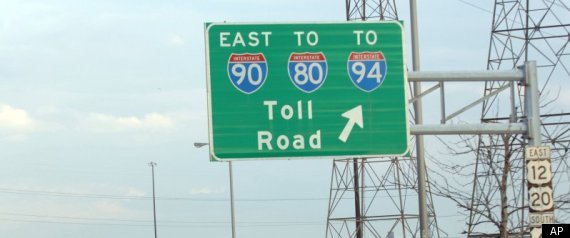
Toll Road Privatization: As Ohio Considers It, Indiana Serves As Cautionary Tale

WASHINGTON -- In two weeks, the cost of traveling the 157-mile length of the Indiana Toll Road will rise more than 2 percent, from $8.80 to an even $9, for those who pay the toll in cash. The fare will jump a full buck for truckers hauling semi-trailers, from $35.20 to $36.20.

The July 1 toll hike may not seem so painful, until you consider that those tolls were about half of their soon-to-be rates only five years ago -- and that they hadn’t risen for two decades prior to that. Even harder to swallow for some drivers, truckers in particular, is the fact that their growing contributions go not to the State of Indiana but to overseas investors who've leased the toll road from the state.

"Saying we're less than thrilled would put it really mildly," says Todd Spencer, executive vice president at the Owner-Operator Independent Drivers Association, a trade group that represents truckers. "In Indiana, over the span of a few years, we've watched truck tolls more than double."

In 2006, under the orchestration of Gov. Mitch Daniels (R), the state struck a deal to lease the road for a period of 75 years to Australia-based Macquarie Group and Spain-based Cintra. The investors paid the state $3.8 billion upfront in exchange for the right to collect tolls. The investors are required to maintain and upgrade the road for the duration of the lease.

It's still too early to tell how good or how rotten a deal the state got. In fact, there are those who believe Macquarie and Cintra may have greatly overpaid for the highway, and Daniels himself has gloated that the arrangement was "the best deal since Manhattan was sold for beads." (Daniels' office did not respond to questions about the deal.)

But what can't be denied is that the road is getting more expensive to travel on. And no one knows how expensive it might get. (So far the rates have not been raised on drivers with transponders, but that will change in 2016, when those drivers will start paying the cash rates.) The road's leaseholders can now raise the toll annually at one of three rates -- at a flat two percent, at the percentage increase in the consumer price index or at the percentage increase in gross domestic product -- whichever is highest. Over the course of the coming decades, Hoosiers can expect to learn a hard lesson in compound interest, long after Gov. Daniels is gone.

Full Article
Source: Huffington 

Coal Ash Industry Sees Massive Job Losses If EPA Rules Proceed

An industry-funded report released late Wednesday suggests that federal regulation of coal combustion residuals, or coal ash, currently being considered by the Environmental Protection Agency would result in as many as 316,000 lost jobs and as much as $110 billion in lost economic activity over a 20-year period.

But environmental groups were quick to label the report as a cynical and misleading ploy timed to coincide with markup of legislation aimed at blocking the EPA from regulating coal ash -- which contains a variety of chemicals like arsenic, selenium, lead and mercury -- as hazardous waste.

Coal ash disposal is currently unregulated at the federal level, but the EPA is weighing two options for bringing the post-combustion leftovers from power plants under the purview of the Resource Conservation and Recovery Act.

Under the first option, coal ash -- which can include a wide range of waste materials like fly ash, bottom ash and others -- would be treated as a "special waste" under Subtitle C of that legislation, which governs hazardous wastes. A second option would deal with the material under Subtitle D of the statute, which governs non-hazardous wastes. This option would simply set national guidelines, but leave it to states and the industry to implement them. The coal ash industry opposes both of these regulatory designations.

The United States produces more than 130 million tons of coal ash annually, according to the American Coal Ash Association, an industry group. Roughly 43 percent of that is used as an additive in concrete products, bricks, shingles and other materials. The rest is disposed of in loosely regulated holding ponds and landfills.

Full Article
Source: Huffington 

JPMorgan Chase Challenges Capital Requirements As Regulators Prepare Basel Rules

Executives at JPMorgan Chase aren't happy about the prospect of the government telling them how much money they must hold over for a rainy day.

The Federal Reserve is considering increasing the amount of solid capital that the largest banks must hold against losses, a measure proposed by international regulators. When banks are required to hold a higher portion of their financing as capital reserves, it reduces their relative amount of borrowing and gives them a stronger buffer, regulators say, making the financial system safer by discouraging risk and bolstering a bank's defenses.

But this extra requirement for the largest banks will hinder these institutions' ability to make loans and compete internationally, said JPMorgan chief risk officer Barry Zubrow, in prepared remarks for a Congressional hearing Thursday.

Nearly three years after the worst financial crisis since the Great Depression, a debate rages about how best to mitigate the next crisis, while still allowing banks to perform their role in financing to the broader economy. Zubrow's comments echo a sentiment expressed across the banking industry for months: that hindering the ability of banks to take risks hurts their ability to extend loans. In JPMorgan's case, the current requirements are sufficient, Zubrow said, and the bank's performance during the financial crisis should be enough proof.

"The regulatory pendulum clearly has now begun to swing to a point that risks hobbling our financial system and our economic growth," Zubrow said in his prepared testimony.

JPMorgan has been a vocal skeptic of new regulations. The firm's chief executive Jamie Dimon asked a pointed question of Federal Reserve Chair Ben Bernanke last week, expressing a fear that the host of new rules will critically hamper the financial sector. Bernanke conceded that he wasn't aware of any research that could allay Dimon's concern.

Full Article
Source: Huffington 

Obama Administration Caved On For-Profit College Regulations, Insiders Say

A year ago, the Obama administration crafted a set of proposed regulations aimed at limiting abuses by the swiftly growing for-profit college industry.

The initial draft threatened severe consequences for institutions that churned out large numbers of graduates with outsized debts and meager job prospects: Schools would quickly lose access to the multi-billion dollar pool of federal student aid dollars that supplies the vast majority of their profits.

But when the Department of Education delivered the final rules earlier this month, they were substantially weakened from the initial draft, adding a three-year grace period before severe sanctions will kick in -- a major triumph for the industry’s lobbyists and their relentless pressure campaign on the Obama administration.

Those familiar with the deliberations say the industry successfully convinced the Obama administration to soften the rules by sowing fears that a stricter approach would prompt Congress -- also the target of intense lobbying -- to step in and revoke the regulations altogether.

“It’s absolutely accurate to say they caved in to the industry,” said Robert Shireman, a former deputy undersecretary of education, who was involved in crafting the original draft of the regulation. “But I understand the political dynamics of being in an administration and needing to take a step forward in the face of a hostile Congress. The right thing for this issue is for it to survive.”

A Department of Education spokesman declined to comment directly on Shireman’s assessment, but defended the regulation, saying the rules will go a long way toward “Helping programs improve, weeding out bad actors in the industry and protecting the interests of students and taxpayers.”

The industry's lobbying was so well-financed and well-coordinated that it altered the view of what was possible inside the Obama administration: The focus shifted from seeking to craft the strongest rule to instead making do with incremental progress, avoiding the sort of action that would trigger congressional intervention aimed at protecting the industry.

Full Article
Source: Huffington 

Hayden, Chertoff Buck Republican Call To Bring Troops Home From Afghanistan

WASHINGTON -- Republican presidential hopefuls Mitt Romney and Jon Huntsman want a faster withdrawal of U.S. troops from Afghanistan, and a growing number of GOP members of Congress have also concluded it's time to end the fight.

But two former U.S. officials who helped lead President George W. Bush's war on terrorism say the killing of Osama bin Laden and the mounting cost of the Afghan campaign are no reason to leave just yet.

"We will be in a stronger political position for a political outcome for this if we sustain relatively constant force levels through this fighting season and for at least the 2012 fighting season," said Michael Hayden, the former director of both the National Security Agency and the Central Intelligence Agency, at a policy briefing Thursday. "Give war a chance."

Former Secretary of Homeland Security Michael Chertoff said that despite rising anger among lawmakers over Pakistan's duplicity -- the latest outrage, its reported arrest of informants who helped make the successful raid on bin Laden's complex possible -- President Barack Obama should not high-tail it out of the region.

Full Article
Source: Huffington 

Employee Ownership: The Road to Shared Prosperity

Several years ago I met Drew Morris, the CEO and primary owner of a 500-person solenoid manufacturing company, at a restaurant within sight of his factory just outside Rochester, New York. At the time he was approaching retirement and had just begun the process of selling his successful business to his employees through an Employee Stock Ownership Plan, or ESOP. As we waited for lunch to be served, a television nearby displayed a Wall Street ticker and a well-coiffed anchor prattling on excitedly about the latest financial news. During a pause in our conversation, Morris, most assuredly not a man of the left, suddenly jabbed his finger at the TV. “That’s not capitalism!” he sneered. He then pivoted in his seat and pointed forcefully out the window toward his plant: “That’s capitalism!”

Morris’s terminology may have been indistinct, but his meaning was very clear. Starting in 1910, his family and other members of that upstate community built something out of nothing. Generations of workers and their families had earned a living at his company. Morris was justifiably proud of what they had created and optimistic about what lay ahead for the business. But he was also angry about the financial culture that had emerged and seemed to take over during his career. That culture, centered on Wall Street, dominating the airwaves, had claimed the mantle of capitalism. But Morris disagreed with the claim. He did not respect that culture; it did not represent him.

Morris is not alone. The National Center for Employee Ownership, in Oakland, California, estimates that 11,000 companies, collectively employing more than 12 million workers, have followed the ESOP path. They operate in all sectors of the economy and range in size from fifty to nearly 150,000 employees. Many of the owners of these businesses are hostile toward or at least skeptical of government. So it is ironic that they learn that the solution to their succession challenge is made possible by federal law. Employees are not likely to have enough disposable cash to purchase the company when their employers decide to sell. ESOP tax laws make the sale possible by permitting the creation of legal trusts, established on behalf of employees, that can borrow the necessary funds. As the loans are paid off, employees take ownership of the firm.

In the thirty-six years since the first ESOP law was passed, the concept has gained broad bipartisan support. California Representative Dana Rohrabacher, one of the most conservative members of Congress, sees ESOPs as a training ground for a property-loving and therefore conservative working class. On the other end of the spectrum, left-leaning Vermont Senator Bernie Sanders sees ESOPs and similarly structured cooperative ownership companies as vehicles for retaining jobs in the United States while striking at the heart of an otherwise plutocratic economic system.

Full Article
Source: The Nation 

Fighting Foreclosure in Boston

Twenty-four-year-old Harvard Law School student Sam Levine parks the silver Nissan hybrid he has driven into Boston’s working-class Mattapan neighborhood. The wind hits him in the face as he steps onto Thetford Avenue. He is wearing black jeans, his dark hair slightly mussed and gelled into place. With him are two fellow students, third-year Marielle Macher and second-year Avis Bohlen. Marielle is wearing a coat under which is a red T-shirt with the words Project No One Leaves written on the front. Avis is power-dressed in a skirt and svelte sweater. The trio could pass for actors in a Gap ad.

It had taken about an hour to reach Mattapan from the Harvard Legal Aid Bureau, with Sam navigating Boston’s notorious traffic. During the ride, the group passed the time talking about jobs they were lining up for the summer and musing on the female voice commands of Marielle’s GPS gadget. The students believe “she” is moody today.

As the lawyers-in-training approached their target neighborhood—cruising the back streets past Harambee Park, where a gaggle of long-necked geese spotted the grass, into a landscape of ramshackle, untended homes—they read off a list of twenty-four recently foreclosed properties published in a local realty journal. They are stopping at each house on the list, scouting to see if the property seems abandoned (broken or boarded-up windows, weeks of uncollected mail, trash strewn in the yard and so on). If it does, they move on. But if there is even a glimmer of a chance that the house is still inhabited, they park and approach the front door. When a resident answers, they quickly go into their patter about foreclosure rights and the danger of scam artists—who may be (or may already have been) in contact, promising the moon in exchange for a few thousand dollars—and they explain that Harvard’s law students are willing to work gratis on the case.

When no one’s home, they hang a red plastic bag on the door knob or slip it through the mail slot. Inside is literature about the foreclosure process; the Legal Aid Bureau, which has been working with several other regional law schools to offer legal services to owners and tenants facing foreclosure; and Project No One Leaves (PNOL), a consortium made up of lawyers, activists and a community development financial institution that is pursuing an innovative strategy to keep local residents in their homes.

Since the housing market collapsed, more than 3,500 homes in Boston have gone into foreclosure; some weeks, more than 100 properties are repossessed. In this city, as elsewhere in the country, a disproportionate number of shoddy subprime loans were issued to African-Americans—their terms deliberately obfuscated, their punitive provisions setting up borrowers to fail. As a result, from 2006 onward a huge number of the foreclosures in Boston have claimed properties owned by African-Americans. The scale of the dispossession is threatening to wreck not just individual aspirations but entire neighborhoods.

Boston Community Capital (BCC), the literature explains, has been buying distressed properties from banks and then selling them back to the original owners at just above the current market value, thus allowing the owners to stay in their homes with a more affordable monthly payment on a new, fixed-rate mortgage. It’s a good deal for everyone involved: the banks sell the foreclosed properties for more than they would typically expect, the owners get to keep their homes, neighborhoods that would otherwise end up increasingly abandoned and dilapidated get a shot at staying afloat, and BCC captures funds by selling the property at 25 percent more than what it paid. BCC also locks in a chance at bringing in more money by having each owner sign an agreement stipulating that BCC will receive a share of the profit if the owner flips the home, a move that encourages residents to stay put.

Full Article
Source: The Nation