Democracy Gone Astray

Democracy, being a human construct, needs to be thought of as directionality rather than an object. As such, to understand it requires not so much a description of existing structures and/or other related phenomena but a declaration of intentionality.
This blog aims at creating labeled lists of published infringements of such intentionality, of points in time where democracy strays from its intended directionality. In addition to outright infringements, this blog also collects important contemporary information and/or discussions that impact our socio-political landscape.

All the posts here were published in the electronic media – main-stream as well as fringe, and maintain links to the original texts.

[NOTE: Due to changes I haven't caught on time in the blogging software, all of the 'Original Article' links were nullified between September 11, 2012 and December 11, 2012. My apologies.]

Friday, July 27, 2012

Harper’s high risk gambit: building a national energy economy

The political economy of energy resource development and export is the biggest and most important issue to hit Canadian politics since the fight over Quebec secession and battle over free trade.

Now that Harper has his majority and passed the Omnibus Budget Bill to get unfinished business out of the way, he has taken on the huge and risky task of implementing his Conservative government’s agenda to create a national energy economy. He lost the battle over a national security commission when the Supreme Court of Canada ruled against him but he really did not present a very strong case to the Court. He likely feared winning hands down because it would have forced him to go up against the premiers of Alberta and Quebec, both of whom strongly opposed a national security commission.

Ottawa reducing health funding by $36 billion over 10 years, premiers say

HALIFAX - Canada's premiers and territorial leaders say they stand to lose almost $36 billion in health transfers over a 10-year period if Ottawa proceeds with its disputed plan to alter how it calculates the payments to the provinces and territories.

Manitoba Premier Greg Selinger released the figures Friday on the final day of the Council of the Federation meeting in Halifax, saying the federal formula will cut billions out of equalization and health funding.

Disgraced Barclays executive in line for $13.6 million payout

LONDON — A former senior Barclays executive involved in the interest rate manipulation scandal is set to receive a $13.6 million payout, a compensation package that could add to the scrutiny of the British bank.

Jerry del Missier, the bank’s former chief operating officer who resigned this month, has been a central figure in the firestorm.

Ex-Harper aide Bruce Carson charged with influence peddling

Bruce Carson has been charged with one count of influence peddling following an investigation by the RCMP.

The 66-year-old former top adviser to Prime Minister Stephen Harper with a history of fraud convictions had been facing accusations of alleged influence-peddling and illegal lobbying after it was alleged that he told Ottawa-based water purification company H20 Pros that he could use his connections to arrange deals with First Nations communities.

In a news release issued Friday, the RCMP's A Division said Carson is "alleged to have accepted a government commission for a third party in connection with a business matter relating to the government."

The turning tide: Canadians and our energy future

Hands down one of the most interesting events at the Council of the Federation meetings in Halifax, Nova Scotia to date was a joint presentation by Merran Smith from Clean Energy Canada at Tides Canada, Steven Guilbeault from Équiterre, and Gil McGowan at the Alberta Federation of Labour on what Canadians want from a national energy strategy. The springboard was a poll conducted on behalf of Tides Canada by Harris-Decima (1005 Canadians polled between July 5-9, 2012; results valid at +/- 3.1 per cent).

The results are striking. It's clear that a vast majority of Canadians want Canada to reduce its reliance on fossil fuels (66 per cent), to create more clean energy jobs (74 per cent), to reduce carbon emissions to slow down climate change (67 per cent), and to improve its energy efficiency (82 per cent). A minority (33 per cent) wants Canada to focus on exporting more oil and gas.

The pipeline debate is detached from reality

If you are looking for evidence that Canada’s political leaders are completely detached from everyday reality, consider the current dust-up over the Northern Gateway pipeline.

It is all about the spoils: is British Columbia getting its fair share of the resource bonanza promised by the pipeline, should Alberta be forced to compensate its unhappy neighbour for environmental risks, and what about the rest of Canada? How do Ontario and Quebec grab their share of the loot?

Or, its about the Constitution: does an enabling province have the right to demand a share of another’s energy wealth and, if so, won’t this make the country unmanageable? And what is the role of the federal government when provinces spar: impassive observer, or impartial arbiter?

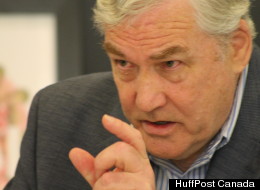
Conrad Black: Privatizing Prisons 'A Catastrophic Idea'

Former media mogul Conrad Black has long been a fan of free markets, but when it comes to prisons, the ex-inmate says profits should have no place.

Privatizing the country's prions is “a catastrophic idea,” he told The Huffington Post Canada during an editorial lunch meeting.

Black, who served nearly four years in a federal U.S. prison, in total, after being convicted on charges fraud and obstruction of justice related to his time as head of Hollinger International, said the penal system is “fundamentally not a commercial matter.”

Canada, of all places, should understand climate change

Ontario and Quebec have been baking for months. The fields have turned beige, starved for water. In Vancouver, by contrast, it’s been wet most of the year.

Britain, with the Olympics opening today, has experienced the wettest year since record keeping began, which in Britain means a long time ago. In Russia, too, widespread flooding in the south has caused massive disruptions.

Militarism on rise in Conservative Canada

Six and half years into Harper’s Conservative government Canada has become so militaristic that the head of the armed forces can demand a new war and few bat an eye.

Two weeks ago the Chief of the Defence Staff Walter Natynczyk told the Canadian Press “We have some men and women who have had two, three and four tours and what they’re telling me is ‘Sir, we’ve got that bumper sticker. Can we go somewhere else now?’” The General added that “you also have the young sailors, soldiers, airmen and women who have just finished basic training and they want to go somewhere and in their minds it was going to be Afghanistan. So if not Afghanistan, where’s it going to be? They all want to serve.”

U.S. senator urges Washington to use China’s bid for Nexen as leverage

U.S. Senator Charles Schumer said on Friday that the Obama administration should use a bid by China’s state-run CNOOC for Canadian oil company Nexen Inc. as leverage to fix long-standing trade and investment issues with China.

Mr. Schumer wrote to Treasury Secretary Timothy Geithner on Friday, saying he does not object to the $15.1-billion (U.S.) deal on its merits, but suggested the government should require China to address some thorny foreign investment and trade issues.