Democracy Gone Astray

Democracy, being a human construct, needs to be thought of as directionality rather than an object. As such, to understand it requires not so much a description of existing structures and/or other related phenomena but a declaration of intentionality.
This blog aims at creating labeled lists of published infringements of such intentionality, of points in time where democracy strays from its intended directionality. In addition to outright infringements, this blog also collects important contemporary information and/or discussions that impact our socio-political landscape.

All the posts here were published in the electronic media – main-stream as well as fringe, and maintain links to the original texts.

[NOTE: Due to changes I haven't caught on time in the blogging software, all of the 'Original Article' links were nullified between September 11, 2012 and December 11, 2012. My apologies.]

Showing posts with label Oil Leaks. Show all posts

Monday, July 27, 2015

Apache Canada's $16K Fine For Pipeline Spill Not Nearly Enough: Environmental Groups

EDMONTON - An energy company with a history of pipeline problems has been fined and warned by Alberta's regulator for a 2013 spill that sent millions of litres of salty water into the muskeg.

But environmental groups say Apache Canada's $16,500 penalty isn't even a slap on the wrist.

"It's more like a wave in the general direction of a wrist," Keith Stewart of Greenpeace said Tuesday.

Tuesday, June 24, 2014

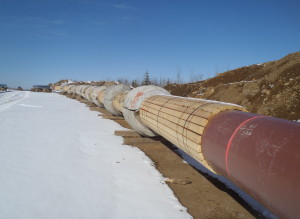
Canada's 500,000 Leaky Energy Wells: 'Threat to Public'

A new University of Waterloo report warns that natural gas seeping from 500,000 wellbores represent "a threat to environment and public safety" due to groundwater contamination, greenhouse gas emissions and explosion risks wherever methane collects in unvented buildings and spaces.

The 69-page report on wellbore leakage cowritten by three expert UofW professors outlines a longstanding and largely invisible engineering problem for Canada's oil and gas industry.

It also calls for dramatic reforms in monitoring and regulation including greater engineering oversight of the cementing of wellbores and "doing it right in the first place."

Saturday, December 07, 2013

Third Apache Pipeline Leak Releases Additional 1.8 Million Litres of Produced Water in Northern Alberta

A third leak recently discovered on Apache Canada’s property near Zama City in northwestern Alberta has released an estimated 1.8 million litres of wastewater onto 5 hectares of land, according to the Alberta Energy Regulator (AER).

The spill was discovered on Friday, October 25th after an operator investigated a volume discrepancy at Apache’s Shekilie site, reports the Northern Journal. The leak is believed to have begun on October 3rd, according to Apache.

Wednesday, October 30, 2013

Oil And Gas Pipeline Incidents In Canada Doubled In A Decade: Report

The number of safety-related incidents involving federally regulated Canadian pipelines has doubled in little more than a decade, with the number of reported spills tripling during that time, according to an investigative report at the CBC.

According to data obtained by the network from the National Energy Board, the number of annual incidents rose to two per 1,000 kilometres of pipeline by 2011, up from one per 1,000 kilometres of pipeline in 2000.

Nearly 300 Pipeline Spills In North Dakota Have Gone Unreported To The Public Since January 2012

BISMARCK, N.D. (AP) — North Dakota, the nation's No. 2 oil producer behind Texas, recorded nearly 300 oil pipeline spills in less than two years, state documents show. None was reported to the public, officials said.

According to records obtained by The Associated Press, the pipeline spills — many of them small — are among some 750 "oil field incidents" that have occurred since January 2012 without public notification.

Saturday, August 13, 2011

Shell Oil Leak: Company Fighting To Fix Scotland Flow Line

AMSTERDAM -- Royal Dutch Shell PLC said Friday it is trying to stop oil leaking from a flow line at one of its drilling platforms in the North Sea off the coast of Scotland.

Spokesman David Williams confirmed the leak was ongoing late Friday, but would not provide details beyond a company statement.

Shell said it cannot specify how much oil may have escaped, but it knows which line leaked and said the flow has been stemmed as the underwater well has been shut in and the line at the Gannet Alpha platform is being de-pressurized.

Gannet is 110 miles (180 kilometers) east of Aberdeen, Scotland.

Shell said it has a remote-controlled vehicle searching for the leak. Meanwhile, a plane is monitoring the surface, and a vessel with cleanup equipment is at the spot.

A spokesman for the U.K. Department of Energy and Climate Change said his agency is responding to the incident and will investigate. The agency understands "from Shell that there is a finite amount of oil that can be released," the spokesman added. He did not give his name in accordance with government policy.

Origin
Source: Huffington  

Tuesday, July 12, 2011

Potential Keystone Pipeline Leaks Underestimated, Study Finds

A study released Monday suggests that the worst-case spill scenarios contemplated by TransCanada, the company behind a proposed 2,000-mile pipeline linking oil deposits in Canada to the American Gulf Coast, are grossly underestimated -- and that hundreds of rivers, streams and aquifers are vulnerable to toxic oil contamination.

The analysis, conducted by a professor of civil engineering at the University of Nebraska-Lincoln at the request of the environmental group Friends of the Earth, examined methods used by TransCanada to calculate spill scenarios for an existing leg of the pipeline system, known as Keystone, and determined that the company made "flawed and inappropriate assumptions about the frequency and severity of expected spills from its pipelines."

Among other things, the analysis concludes that while TransCanada has estimated that the proposed Keystone XL expansion pipeline would experience 11 significant spills of more than 50 barrels, or 2,100 gallons, of crude oil over a 50-year lifespan, "a more realistic assessment is 91 significant spills."

The analysis also suggests that TransCanada tweaked its spill factor calculations to produce an estimate of one major spill on the 1,673 miles of pipeline about every five years. But an examination of government data on spill rates for similar pipelines, according to the study, suggests that Keystone would experience "a more likely average of almost two major spills per year."

In just one year of operation, the existing leg of the pipeline has had one significant spill and 11 smaller spills.

The study also concluded that the amount of time it would take to shut down the proposed pipeline should a leak occur at or near a river crossing -- among the most environmentally sensitive points along any pipeline -- could be as much as 10 times greater than that assumed by TransCanada.

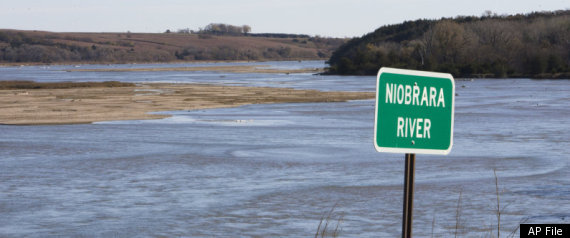
A recent pipeline rupture on an ExxonMobil pipeline dumped more than 40,000 gallons of oil into the Yellowstone River in Montana, heightening concerns about the potential impacts of the much larger Keystone XL project.

Keystone XL would cross nearly 2,000 rivers in six states.

"I'm not anti-pipeline, and I'm not pro-pipeline," said John S. Stansbury, the author of the analysis. "I drive cars and I use oil. What I wanted was to provide what would be unbiased calculations on what the impacts be, so decision makers can have all the information they need."

Full Article
Source: Huffington