 South Carolina state trooper Sean Groubert was arrested on Wednesday and charged with assault and battery of a high and aggravated nature after a video emerged of him shooting a driver named Levar Jones that he pulled over for a seat belt violation. In the video, Groubert’s vehicle is seen pulling up to a black man exiting a white SUV, and Groubert is heard telling Jones “can I see your license please?” When Jones turns around to recover his license from the vehicle, however, Groubert immediately begins screaming “get out of the car! get out of the car!” and firing his gun at the unarmed man.
Showing posts with label South Carolina. Show all posts
Showing posts with label South Carolina. Show all posts
Friday, September 26, 2014
Video Shows South Carolina Cop Shooting Black Man Without Any Apparent Provocation
South Carolina state trooper Sean Groubert was arrested on Wednesday and charged with assault and battery of a high and aggravated nature after a video emerged of him shooting a driver named Levar Jones that he pulled over for a seat belt violation. In the video, Groubert’s vehicle is seen pulling up to a black man exiting a white SUV, and Groubert is heard telling Jones “can I see your license please?” When Jones turns around to recover his license from the vehicle, however, Groubert immediately begins screaming “get out of the car! get out of the car!” and firing his gun at the unarmed man.Sunday, August 24, 2014
South Carolina Woman Arrested For Cursing In A Grocery Store

Saturday, April 19, 2014
South Carolina Panel Approves Expansion Of 'Stand Your Ground' Law To Include Unborn Children

Opponents of the bill, sponsored by state Sen. Katrina Shealy (R), said the legislation is redundant under the state’s existing "Stand Your Ground" law, arguing that no situation exists in which an unborn child would be threatened when the mother was not.
Wednesday, December 18, 2013
Nikki Haley May Have Violated Occupy Protesters' Free Speech Rights, Court Finds
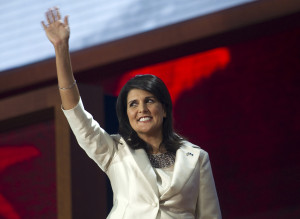
Nineteen Occupy Columbia protesters were camped out on November 16, 2011 when Haley had them arrested on two hours notice. The Fourth Circuit Court of Appeals found Monday that their arrest may have been unconstitutional, because they were arrested without a formal rule change banning sleeping, and so their lawsuit can continue.
Friday, September 06, 2013
Columbia, South Carolina Rescinds Decision To Criminalize Homelessness
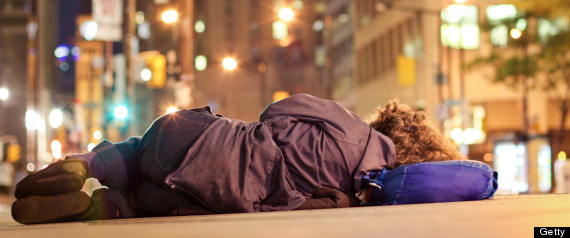
Columbia’s city council decided on Tuesday to reverse its unanimous vote that would have given homeless people the choice to either go to a remote shelter or get arrested, according to the Free Times. The council apologized, backtracked on its decision and said it would give homeless people the option to go to the shelter, but would not force them to.
Thursday, August 22, 2013
Columbia, South Carolina Criminalizes Homelessness In Unanimous Vote
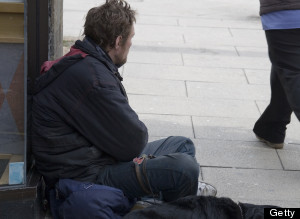
Concerned that Columbia has become a “magnet for homeless people,” and that businesses and the area’s safety are suffering as a result, council members agreed on Aug. 14 to give people on the streets the option to either relocate, or get arrested, according to the city’s “Emergency Homeless Response” report.
Wednesday, December 19, 2012
South Carolina Bill Would Criminalize Obamacare
 South Carolina is considering outlawing Obamacare.
Five Republican South Carolina state representatives introduced a bill last week that, if passed, would send people to jail for trying to implement the Affordable Care Act in South Carolina.
Under the bill, federal officials, employees and contractors implementing Obamacare could face a jail sentence of up to 5 years, and state officials and employees implementing Obamacare could face a jail sentence of up to 2 years.
Friday, April 27, 2012
ALEC Has Special Exemption In South Carolina's Lobbying Law

ALEC has insisted that it is the victim of a "well-funded, expertly coordinated intimidation campaign." It also denies accusations that it is a lobbying firm pressing state lawmakers to pass conservative legislation, though ethics watchdog group Common Cause has filed a lawsuit with the IRS, alleging that ALEC is a lobbying group and challenging its nonprofit status.
Yet there's no doubt that ALEC is an influential organization among conservative legislators, and that the extent of its reach is just beginning to become clear. It is such an integral group in some circles, in fact, that South Carolina law actually carves out a special ethics exemption just for ALEC.
Sunday, January 22, 2012
Cultural Populism Catapults Gingrich to South Carolina Victory

How did he do it? In short, cultural populism. Gingrich won among voters in every income bracket below $200,000. Romney won the metropolitan counties surrounding Charleston and Columbia, while Gingrich carried the rest of the state. The class discrepancy was notable from Gingrich’s and Romney’s rallies. The former crowds included a few buzzcuts, camouflage and non-ironic moustaches. The latter’s were dominated by khaki pants and polo shirts.
Gingrich pursued this strategy along several different tracks:
Cultural reverse-snobbery. On Friday night Gingrich held his final campaign rally just outside Charleston on the USS Yorktown, an aircraft carrier that now serves as a military museum. Amid the retro warplanes Gingrich was introduced by Bud McFarlane, a former Naval officer who served in President Reagan’s National Security Council, and Major General James Livingston, a retired Congressional Medal of Honor winner. “Tomorrow we start taking our country back,” said Livingston, in a classic conservative formulation that lets the listener fill in which groups of foreign invaders they will take it back from.
Friday, January 20, 2012
The Religious Right Roars Back in South Carolina
Greenville
The national media like to cite the fact that a majority of Iowa Republican caucus-goers are evangelical or born-again Christians (57 percent this year) as evidence that Iowa is a bastion of social conservatism. In South Carolina, evangelical Protestants account for not just a majority of Republican voters: they are a majority of religiously active residents in the state. And not all evangelicals are the same. There is a depth and intensity to the social conservatism here. And the candidates are behaving accordingly. They aren’t changing their positions, but they are offering religious frames and justifications for them. After hearing constantly about jobs and the budget deficit, we’re starting to hear a lot more about morality, family and values.
If you drive west on Route 378 from Myrtle Beach, South Carolina, to the State Capitol in Columbia, you’ll pass more churches than businesses. These aren’t mega-churches in the feel-good Rick Warren mold, with their Christian rock bands and squishy environmentalism. These are typically small, plain white buildings, not much larger than the trailers and ranch houses that surround them, with modest signs advertising their Baptist or Methodist faith. This isn’t the suburban West; it’s the rural South. The gospel churches here preach is old-time religion. In the words of a lifelong resident of the region, “It’s fire and brimstone: repent or you’ll burn in Hell.”
Stop at a convenience store in Marion County, near the Pee Dee River, and you’ll see a few unusual signs. One, in the parking lot, warns that alcohol consumption is prohibited and adds “No Profanity.” (The sign says that the parking lot is under the supervision of the Marion County Police Department. A web search by this reporter could not ascertain what the penalty is for getting caught swearing in a convenience store parking lot.) In the men’s room you might find a strange admonishment on the condom dispenser: Hygeia Corp of Kannapolis, North Carolina, warns you that while they’ll sell you a condom for four quarters, the best way to avoid contracting HIV is to abstain from sex until marriage and to be monogamous within marriage.
The national media like to cite the fact that a majority of Iowa Republican caucus-goers are evangelical or born-again Christians (57 percent this year) as evidence that Iowa is a bastion of social conservatism. In South Carolina, evangelical Protestants account for not just a majority of Republican voters: they are a majority of religiously active residents in the state. And not all evangelicals are the same. There is a depth and intensity to the social conservatism here. And the candidates are behaving accordingly. They aren’t changing their positions, but they are offering religious frames and justifications for them. After hearing constantly about jobs and the budget deficit, we’re starting to hear a lot more about morality, family and values.
If you drive west on Route 378 from Myrtle Beach, South Carolina, to the State Capitol in Columbia, you’ll pass more churches than businesses. These aren’t mega-churches in the feel-good Rick Warren mold, with their Christian rock bands and squishy environmentalism. These are typically small, plain white buildings, not much larger than the trailers and ranch houses that surround them, with modest signs advertising their Baptist or Methodist faith. This isn’t the suburban West; it’s the rural South. The gospel churches here preach is old-time religion. In the words of a lifelong resident of the region, “It’s fire and brimstone: repent or you’ll burn in Hell.”
Stop at a convenience store in Marion County, near the Pee Dee River, and you’ll see a few unusual signs. One, in the parking lot, warns that alcohol consumption is prohibited and adds “No Profanity.” (The sign says that the parking lot is under the supervision of the Marion County Police Department. A web search by this reporter could not ascertain what the penalty is for getting caught swearing in a convenience store parking lot.) In the men’s room you might find a strange admonishment on the condom dispenser: Hygeia Corp of Kannapolis, North Carolina, warns you that while they’ll sell you a condom for four quarters, the best way to avoid contracting HIV is to abstain from sex until marriage and to be monogamous within marriage.
Wednesday, January 18, 2012
South Carolina Primary 2012: In Rural County, Long Wait For Job Creators

Standing outside the state workforce office as he waits for a ride, the 40-year-old South Carolina native opens up a backpack filled with evidence of his long struggle with unemployment: a stack of updated résumés, some fruitless job leads and certificates from continuing-education courses he's completed at the local tech college. A construction worker by trade, Parker has racked up certificates to run a backhoe, a bulldozer, a front-end loader and an excavator.
Even so, all he managed to land was a part-time stint at a local McDonald's.
"I have everything I should need, and I'm still applying," says Parker, who's wearing a pressed burgundy button-down shirt, his chest-length dreadlocks pulled back neatly in a ponytail, so any potential employer would "know I mean business."
"I work hard," he goes on. "My paperwork's clean. I have a high school diploma, a résumé. I've got no criminal record."
Parker may be a victim of geography more than anything else. He lives in South Carolina's Marlboro County, a mostly rural region surrounding the town of Bennettsville and hugging the North Carolina border. The county is battling a wince-inducing unemployment rate of roughly 16 percent, or nearly double the national rate. During the worst days of the Great Recession, it climbed to an eye-popping 21 percent.
In short, this part of South Carolina isn't anything like Iowa or New Hampshire, the two previous presidential nomination stops, both of which have been far more insulated from the jobs crisis. Globalization has not been kind to the I-95 corridor in South Carolina, and jobs can be hard to find even in a healthy economy. Although few of the candidates are likely to do more than drive through or fly over Democratic-leaning, mostly African-American Marlboro County, it is in many ways an actualized vision of the GOP platform, a free-market fever dream of low taxes, cheap and abundant labor, little union presence and even less regulatory burden.
Subscribe to:
Comments (Atom)